
 For Owners
 For Sales
 For Production
 For Finance
 Presentations
 Shops
 Product Mockups
 Client Portals
 Product Search
 CRM
 Decorator Matrix
 Suppliers
 Navigation & Dashboards
 Production Management
 Reports & Analytics
 commonsku Payments
 Essentials
 Advanced
 Enterprise
 Customer Stories
 Events
 Blog
 eBooks
 skucast (Podcast)
 Ask skucast
 Webinars
 ROI Calculator
 FAQ

SECTIONS
RELATED RESOURCES
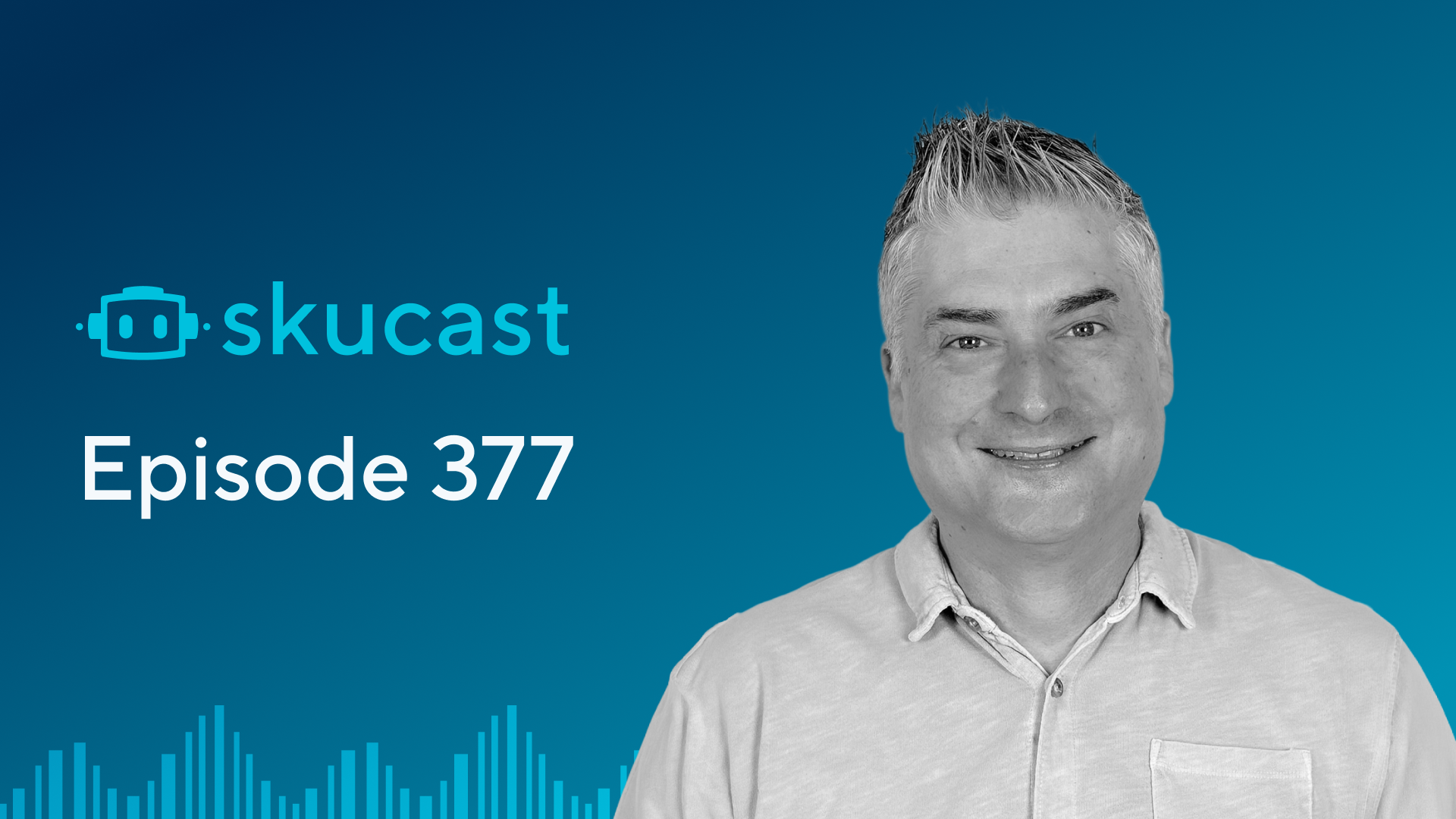
Episode 377: The Joy of Giving Back with Dave Shultz
No video selected
Select a video type in the sidebar.
David Shultz has helped build clean water towers on two continents and raise millions for the children's hospital in his hometown. Ask him what has stayed with him most, and he reaches for two handmade cards from kids in Mexico and Vietnam. One of them reads, "Thank you for the clean water."
Dave, as we all call him at commonsku, is our Chief Partnerships Officer and a 26-year industry veteran. He is the 2027 recipient of PPAI's H. Ted Olson Humanitarian Award, which honors one person's commitment over many years to improving lives and communities. He would rather talk about anything other than himself, so Bobby Lehew asked about the causes instead.
On today's show, Dave shares the stories behind PromoCares, Water4Good, and Big Slick, along with his advice for anyone in promo who wants to give back and isn't sure where to begin.
It Started in a Bar in Raleigh
PromoCares began around 2018, when Dave, Danny Rosin, Roger Burnett, and Bill Petrie sat around a bar in Raleigh trying to work out a way to spotlight the companies in promo doing good. The all-volunteer group has since found that fundraising is what it does best.
Its biggest campaign, Water4Good, raised $304,000 last year for clean water towers in six countries, with major financial backing from the team at Hit and build expertise from Planet Water.
Dave has joined builds in Mexico and Vietnam. Part of the day goes to putting up the tower (no engineering degree required). The rest goes to soccer, dancing, and hand-washing lessons with the kids. One tower costs about $25,000, produces 1,000 to 1,500 liters of clean water an hour, and runs without electricity.
The Poker Night That Outgrew Poker
Big Slick started in 2010, when Kansas City natives Paul Rudd, Jason Sudeikis, and Rob Riggle organized a poker tournament for the pediatric cancer program at Children's Mercy. The first-year goal was $50,000. They raised about $150,000, and the weekend has now brought in more than $34 million.
The poker is long gone, but the name stayed (it's the term for an ace-king opening hand in Texas Hold'em). Dave's connection goes back to the University of Kansas, where he and Paul Rudd were roommates in a 130-year-old fraternity house. The event is still run almost entirely by the hosts' friends and families.
Time, Treasure, or Talent
Dave's advice for getting involved is short. You don't need a lot of money, a lot of time, or a grand vision. Pick a cause that has touched your family or your community and offer time, treasure, or talent, whichever you have. His own first industry volunteer role was a seat on his regional association board, PPAM.
The second half of the advice came from experience. At one point he was serving on half a dozen boards and committees at once, and it was too much. He now focuses on the few he cares about most, surrounds himself with people who are smarter and more talented than he is, and gets out of their way.
It hasn't been one-way, either. Some of Dave's closest friendships today came out of volunteering, at home and abroad.
"You get back as much as you give, for sure."
— Dave Shultz, commonsku
In this episode, we also discuss:
- Why Dave keeps guitars on the wall behind his desk, and what flying planes and racing Ironmans teach him that music doesn't
- Growing up on a NATO base in Belgium, where the neighborhood kids didn't share a language
- The Mount Kilimanjaro climb he organized for a local women's shelter
- The mentors who shaped him, including a boss who had a farming saying for every business problem
- The Todd Henry line from skucamp that stuck with him: "Our legacy is not the work, it's the people"
More than 950 distributors run their business on commonsku's connected workflow. Book a demo to see how.
Ask skucast
Want more of Dave, or any of the 350+ guests who've been on the show? Ask them directly. It's free.
Try Ask skucast →Show Notes: Key Timestamps & Topics
[00:03:42] PromoCares and the Raleigh bar conversation that started it
[00:04:41] Water4Good and what clean water changes for a community
[00:06:22] On the ground at tower builds in Mexico and Vietnam
[00:07:47] Big Slick, from poker tournament to $34 million for Children's Mercy
[00:11:10] Where to start: time, treasure, or talent
[00:13:50] Saying no and surrounding yourself with smarter people
[00:16:01] Music, flying, and Ironmans as two ends of the balance beam
[00:17:08] Born in Korea, raised on a NATO base: where the instinct to give began
[00:19:10] The thank-you cards that keep him coming back
🎙️ Read Full Episode Transcript +
[00:00:06] Bobby: As we publish today's episode, it's Thanksgiving weekend in the US, and there's no better time to be talking about giving. Now, some of you may know that our very own Dave Shultz, Chief Partnerships Officer at commonsku, has been named the 2027 recipient of PPAI's prestigious H. Ted Olson Humanitarian Award.
[00:00:24] PPAI is home to thousands of members from nearly 15,000 member companies, and this award recognizes a single individual who has shown a commitment over many years to improve lives and change their communities for the better. Dave has helped build water towers on 2 continents, helped raise millions for the children's hospital in his hometown, and he's someone we're honored to call friend and colleague.
[00:00:46] On today's show, we're exploring the work of giving. Welcome to the skucast, the podcast for innovators and maverick thinkers in the promotional product space. My name is Bobby Lehew. I'm glad you're here. As I mentioned, Dave Shultz is Chief Partnerships Officer here at commonsku and a 26-year industry veteran.
[00:01:04] Now, anyone who works with Dave will tell you this is the most fitting honor. I've never known anyone more consistently positive and generous and genuinely himself. Busy, stressed, on stage or off, he's always the same Dave we know and love. Now, talking about yourself is one of the hardest things to do, and Dave would rather talk about anything else.
[00:01:25] So today, we let him talk about the causes he supports and his advice to you on how to give back in your own communities and to your own causes. Today's episode is brought to you courtesy of us at commonsku. Over 950 distributors powering $1.8 billion in network volume rely on commonsku's connected workflow.
[00:01:43] Process more orders, connect your team, and dramatically grow your sales. To learn how, visit commonsku.com. Now here's my chat with our friend, Dave.
[00:01:54] Bobby: Dave, welcome back to the skucast.
[00:01:57] Dave: Thanks, Bobby. How are you?
[00:01:58] Bobby: I'm good, man. I know talking about yourself is the hardest thing in the world to do.
[00:02:04] Dave: Yeah, I think you and I can both relate on that.
[00:02:07] Bobby: Yeah. It's funny, doing events with skucon and skucamp, one of the most interesting experiences I've had is with so many different speakers to the industry through the years. I mean, they're in the 100-plus, right? Almost every one of them has trouble writing their own bio because it's hard to talk about yourself, right?
[00:02:22] So anyways, acknowledgement that's hard, but today we get to talk about all the cool things that are happening in the industry and what you've had a hand in. So first of all, congratulations, my friend.
[00:02:31] Dave: Thank you.
[00:02:32] Bobby: It's just... I have no words. For those of us that work with Dave, let me tell you some insight about Dave.
[00:02:38] And this is funny because Catherine and I were just talking about it this week. Dave, we were talking about you, and the conversation went like this: I have never known anyone, and this is a true statement, it's not hyperbole, I have never known anyone to be the same Dave that I know and work with all the time.
[00:02:55] I've seen you stressed. I've hardly ever seen you at 1:00 AM in a bar, but that's 'cause of me, not you. But the fact that you are just the same Dave is just such a gift to all of us. But anyways, it was just funny that we were having that conversation. You're near and dear to a lot of us.
[00:03:11] Dave: Oh, I appreciate that. Thank you.
[00:03:14] Bobby: So let's shift the spotlight off of you and talk about the organizations. You know, you've got a few amazing organizations. As I mentioned in the intro, this is a huge honor for the industry every year, and for you to be nominated and selected, we're just so proud of you. Those of us that work beside you are like, "Hell yeah, that's exactly right."
[00:03:33] But one of the organizations you do a lot of work for is PromoCares, and that's run by an all-volunteer board. You're one of its founders. Tell us about it.
[00:03:42] Dave: Yeah, it's very near and dear to my heart. PromoCares started, I think it was 2018, when Rosin and Roger Burnett and Bill Petrie and I were sitting around in a bar in Raleigh during one of Danny's Band Together charity events, and tossing around an idea: how can we promote companies in the industry that are doing good, initiatives in the industry related to things like sustainability, ethical sourcing, giving back, and more.
[00:04:06] And over the years we've roped in folks like Mandi Rudd, Meg Erber, Denise Taschereau, Kate Nash, Scott Pearson, Karie Cowden, more recently Liz Wimbush and Nathan Cotter, and a marketing committee, obviously, that's doing a lot of the work now, but still, like, volunteers. And really, at the end of the day, it's a group of people who believe that the promotional products industry, despite the trinkets and trash legacy, so to speak, we have an incredible opportunity to do good in the world, to make us better people, to make our industry better people, and that's kinda what it's all been about.
[00:04:38] Bobby: Yeah. Yeah. Speaking of, tell us a little bit about Water4Good.
[00:04:41] Dave: Yeah, that one's been a big one. I think over the years we have figured out that what we are really good at is spearheading these types of fundraising initiatives. Initially our charter had all sorts of different pillars that we were going after, from education to everything else, and we've done some of that.
[00:04:55] I think when we started PromoCares, neither ESP nor SAGE had the ability to search products that had give-back components to them or sustainability criteria, things like that. And so they both do now, and I think we've made a lot of progress in that area. But we have gotten really good at the fundraising events, and the Water4Good in particular has been our biggest, for sure.
[00:05:14] And I have to give a huge shout-out to CJ and Nathan Cotter and the team at Hit, who have really thrown their financial support behind this one. But there's so many other people that have been involved as well. But they really helped us kind of get this off the ground, and the numbers are amazing for sure.
[00:05:29] I'm incredibly proud of what we have accomplished in a financial sense. But I think really the win, particularly for those of us who have been lucky enough to go on these builds, is when you're standing in one of these communities that have never had access to clean water, the numbers become less important than the impact they're having. And it really makes you forget about how much we take water for granted. Every day we turn on a faucet, we fill a glass, we take a shower, I make my silly little cappuccino in the morning, like we don't give it a second thought. And for some of these communities, access to safe water can truly and fundamentally change their lives.
[00:06:03] Fewer illnesses, more time the kids get to spend in school. They don't have to take time off as much. So it's been a real pleasure to be involved in that particular campaign.
[00:06:13] Bobby: Last year's campaign raised $304,000, I believe, for towers in 6 countries, and you went with a team of folks to do this. Tell us about that.
[00:06:22] Dave: Yeah, 2 years ago I went on a build in a rural part of Mexico, outside of Mexico City, about 3 or 4 hours I think we drove outside of Mexico City. And then last year I got to do one in Vietnam, and the experience is very similar regardless of where you are. You go into these small communities where they typically put these up in schools where the children haven't had access to clean water. So the day is broken apart by actually constructing one of these towers. You don't need to be an engineer, by the way.
[00:06:51] The staff from Planet Water are very good at helping us put these things together. But it takes the better part of a day to build one and put it up. And the other half of the day is spent with the kids playing games, playing soccer, learning how to dance, meeting the families.
[00:07:05] And then an educational component where you're sitting in the classroom with these kids and they're learning about proper hand-washing techniques, how to use these devices. And it's pretty amazing. I think it's about $25,000 right now to put one of these towers up, so not extremely expensive. And that tower provides 1,000 to 1,500 liters of clean water an hour. No electricity required. Some of these things have been running anywhere from 15 to 20 years with very little maintenance. So it's very impactful to these small communities when you go in there and you get to meet these kids and see what type of impact you're having on their lives.
[00:07:38] Bobby: Yeah, that's cool. That's PromoCares. That is Water4Good. All of that over here. Now, tell us about Big Slick. What is Big Slick, and how did you get involved?
[00:07:47] Dave: Big Slick is, it's almost impossible to explain until you've experienced it, and we have a lot of good friends in the industry that have experienced it. But it is a charity event in Kansas City that started back in 2010. We have a number of Kansas City celebrities that came together to put this together.
[00:08:03] In particular, Paul Rudd, Jason Sudeikis, Rob Riggle, all Kansas City guys, decided to put together an event to raise money for Children's Mercy Hospital in Kansas City, in particular the pediatric cancer arm of the hospital. And it started as a poker tournament back in 2010, and that's where I get this question a lot.
[00:08:21] What does Big Slick mean? Big Slick is actually a term for when your opening hand in Texas Hold'em, you have an ace and a king. That's where the term came from. We don't have a poker tournament anymore, but the name stuck, so it's been Big Slick now since 2010. But it's grown into this ridiculous, wonderful weekend of comedy, music, celebrity appearances, fundraising that still continue to support pediatric cancer research and care at Children's Mercy.
[00:08:45] And the 3 original hosts over time brought in David Koechner, Eric Stonestreet, and Heidi Gardner. So we have 6 hosts now, all with a Kansas City tie. Yeah, and this'll be year 18 for us in 2027.
[00:08:56] Bobby: That's amazing. 18. You're 18 and raised more than $34 million, if I got that number right?
[00:09:02] Dave: Yeah. Our goal in year 1 in 2010 was, we hoped that we could raise $50,000 for Children's Mercy Hospital, and I think in year 1 we raised about $150,000 and everybody thought, "Well, we should do it again." And I think year 2 we raised $250,000, and then it's gone up every year. Last year we raised close to $4.5 million, and so we're over the $35-ish million mark now.
[00:09:27] Bobby: Yeah. That is, wow. That is amazing. Dave, a lot of folks may not know this, but there's a connection between you and Paul Rudd. You and Paul were college buddies, right? You were actually roommates.
[00:09:37] Dave: We were, yes. We lived in a, what was it, 130-year-old fraternity house at the University of Kansas. And I talked about the celebrities who started it and who are involved now. We don't have any paid employees, other than a liaison at the hospital. We are made up of the friends and families of these celebrities that put on this event every year. And so you had Paul and all of his friends that are involved, kind of our ambassadors team, so to speak, the ones that are getting people from place to place all weekend.
[00:10:04] Jason Sudeikis' mom is a travel agent. She books travel for all the celebrities that come to town. Gloria and Mandi Rudd are heavily involved in putting on the celebrity softball game on Friday night. Rob Riggle's family is involved in putting on the show on Saturday night, and Heidi and Eric's siblings are involved in just about everything as well.
[00:10:20] So it truly is a family and friends affair over the years that has brought this event to fruition.
[00:10:26] Bobby: It really is. Dave, what is that event? You've been in the thick of... If anyone knows putting on big events, this is a ton of work, and it's an amazing charity, but it is a lot of work. And I wanna ask you a little bit about just the work of giving, because as folks are tuning in, we of course are here to honor you, and you're not gonna let us do that 'cause you're gonna talk about the charities.
[00:10:46] But I wanna know your advice on helping our leaders who are listening, managers, owners, salespeople, folks that are involved, they wanna get more involved in things like this. So let's switch the conversation to that a little bit, just the work of giving. What advice would you give to those, in light of your experience, who really wanna give back?
[00:11:03] They're not quite sure where to start, but they know they're inspired by your story. They're inspired by the work that you've done through these charities. Where do they start?
[00:11:10] Dave: Yeah, I think sometimes people get worried because they think they have to have a lot of money or a lot of time or some grand vision for changing the world, and you really don't. It's just find something you care about. Maybe it's a cause that touched your family or something happening in your community, and start small.
[00:11:26] I think it wasn't until the exercise of me having to go down the rabbit hole and look back at the last 20 years and find photos from things I've been involved in, for PPAI to be able to publish this, that I found old things that I did 20 years ago that I almost didn't remember.
[00:11:43] Just small fundraisers here and there. I organized a climb of... This wasn't small in terms of the effort. We climbed Mount Kilimanjaro in Africa to raise money for a local women's shelter. The money we raised was very small, and maybe not such a big impact for the center itself, but find something that somebody's involved in, start small. And whether it's time, treasure, or talent, do what you can. I don't have millions of dollars to donate to these organizations, but I have some good skills, some silly skills that have come into play over the years to help support these events, and that's how you do it.
[00:12:13] And in the industry, I think my first volunteer gig was joining my local regional board. So I joined PPAM, and that started the slippery slope of me being on a dozen boards and committees over the years in the industry as well as what I was doing outside the industry. So just find something small and get started.
[00:12:30] Bobby: We often think of joining an organization like this, an initiative or nonprofit, to change the world. Often it is the people who get involved at that level who are the ones who are changed. And so there's this interesting thing happening where you signed up to change the world, and it's often the people that are trying to make the change that are changed themselves.
[00:12:50] Just looking back at those photos that you were going through, how do you think that's changed Dave Shultz?
[00:12:55] Dave: You learn about these opportunities around the world and the needs, and I feel like the more you do, you meet new people, you learn about new causes, one thing leads to another, and you're on a PPAM board, and then all of a sudden you're standing in a village in Mexico helping build towers.
[00:13:11] It can be a slippery slope for sure, but some of my closest friendships today over the years are from the experiences of volunteering for these various organizations and the things we've experienced in our local community and abroad in various parts of the world.
[00:13:23] So definitely, you get back as much as you give, for sure.
[00:13:28] Bobby: There's a point in volunteering where it is work, and it does take energy to stay plugged in, particularly as you get bigger and you're working in these organizations. How do you stay motivated when working on such big projects with ambitious goals? And I'm thinking of the leaders who are listening who might need encouragement as they are in the middle of similar initiatives, not just folks that haven't really jumped in.
[00:13:46] What have you learned as a leader leading these initiatives? What kind of keeps you in the game?
[00:13:50] Dave: Yeah, don't overdo it, of course. I said start small, but there was a period of time where I think I counted a half a dozen boards and committees I was on at the same time, and it was too much. And I was not good at saying no. I would roll off one PPAI committee, and they would call the next day and say, "Can you join this other one?"
[00:14:06] And I just kept saying yes. I think I realized over time that if you want 100% out of me, I can't be doing 12 different things at once. So find the ones you really care about and focus on those and leave others to work on the rest. But truly, from a leadership perspective, you just have to surround yourself with people who are smarter than you and more talented than you and ideally just enough to believe whatever you're proposing is actually possible, and that's how we've gone about it.
[00:14:30] In Water4Good, the thought of putting towers up in half a dozen countries around the world seems impossible, and then you get folks like Planet Water involved who are experts in doing this. You get folks like CJ and Nathan involved at Hit who have the financial capacity to help fund these towers and send people all the way to Vietnam from their team to help put them up. And then you get out of their way, for the ones that are actually able to do it. And with PromoCares, it's been interesting because who has the capacity ebbs and flows. So there are certain campaigns we've done where I've been heavily involved, and Mandi's been heavily involved, and there's other campaigns where we just don't have the capacity, and others have taken that on and taken the lead, and that's really the best way, I think, to tackle these when they all require a lot of work.
[00:15:11] But we're all professionals. We have companies to run. We have kids to raise. We have other things going on in our communities, and so it can be a juggling act some days, for sure.
[00:15:20] Bobby: You qualify as one of those most interesting men in the industry because you are a pilot, so you fly. You've run Ironmans, so you have been doing just the craziest things, like your music. And for those that don't know, go check out Dave Shultz anywhere, Instagram, and listen to Dave's music.
[00:15:39] Dave always does this opening number for skucamp, records this insane video, usually with him, sometimes 6 Daves, 12 Daves doing music. You're multi-talented. You're ambitious. You do a lot of things. What has all of that given you? What has that taught you? And I'm sorry for the broad question, but it's just all these interesting things.
[00:15:58] People are like, "Dave's such an interesting guy. He does these things."
[00:16:01] Dave: Well, yeah, I think I can explain it as like there's not any one thing that I'm an expert in, but I can do a shit ton of things half-assed. I'll put it that way. Music I can do, pardon the French, half-assed. You've seen the videos. I think music is a way for me to help remind me that not everything valuable in life needs to be productive.
[00:16:20] Sometimes creating something just for the joy of it is enough.
[00:16:23] Bobby: I love that.
[00:16:23] Dave: The guitars are behind me for a reason.
[00:16:25] If I am stressed out or I can't break through with an idea that we're working on, be it professional or from a volunteer perspective, I'll grab a guitar off the wall and I will strum a few chords of a silly song, and that usually helps me break through.
[00:16:38] And at the other end of the spectrum, things like flying a plane or doing an Ironman, it's a completely different perspective, and it requires a massive combination of preparation, discipline, and humility, and my music maybe doesn't require any of those things. So it's kinda two ends of the balance beam there, to try and keep my whole life in balance, I suppose.
[00:16:59] Bobby: Dave, you've mentored a lot of people through your example. Whether you like it or not or known it or not, you've mentored a lot of people through your example. Who mentored you?
[00:17:08] Dave: I think the notion of being involved in give-back situations or helping people around the world or what have you, that comes from just the way I was raised. I was laughing the other day. It's like, if you think about it, volunteerism goes all the way back to when I was conceived, because my dad was stationed in Seoul, Korea at the time. It was the tail end of the Vietnam War. And because Seoul wasn't a combat zone, my mother was allowed to go with him if she had a reason to be there. So I was born in Korea while she was volunteering for the Peace Corps. And that just kinda carried on in life. And I think in various places around the world, there was a period of time where we lived in Belgium, and it was not on a US military base, it was on the NATO headquarters base.
[00:17:50] And so our neighbors, like the kids on one side of me, their parents were Italian Air Force, I think, and on the other side it was like Danish Navy. And so all these kids that we played together in this neighborhood didn't actually speak the same language, and just found ways to communicate and hang out together.
[00:18:05] And the travel bug has been part of my life forever, and traveling to small villages in Africa and Southeast Asia and Central America, what have you, you learn a lot about yourself and you learn a lot about the rest of the world, and it gives you a certain amount of compassion for things that we take for granted here. And that's how it started. And then from a professional aspect, I think every job I've had, which has not been many in this industry, I've been in 2 places. I've been at DistributorCentral and I've been at commonsku. And the owner of DistributorCentral and TradeNet Publishing was a farmer, and he had all these funny colloquialisms that he would use about, "Less pigs at the trough, more pigs at the trough."
[00:18:40] Like you name it, he had all these farming sayings. But they had some underlying business tone to them. And then working with the folks on PromoCares, I feel like they are my mentors versus the other way around. And ditto for Mark and Catherine. I've really enjoyed working for them, and before I worked for them, aspired to work for them.
[00:18:56] And so they've been great mentors in the business world as well. And yeah, hopefully I've helped a few people along the way as well.
[00:19:02] Bobby: Dave, last question. Looking back across the water towers, the races, the kids that you've helped, Kansas City, what has stayed with you the most?
[00:19:10] Dave: I think the actual experiences. If I think about Big Slick or I think about Water4Good or any of those, it's, in addition to the friendships of course, what happens after somebody says, "I've got this crazy idea." It's standing in those villages and playing with those kids.
[00:19:26] I pulled these out because this will kinda give you an idea. Like this is a card the kids in Mexico wrote for me. And this one was from the kids in Vietnam, and it says, "Thank you for the clean water." You know, what do you say to that? You can help a family or a child, whether it's here in Kansas City at the pediatric cancer center or it's in a small village in Vietnam. There's not much that can make you feel better than that. Whether it was a small effort, a massive effort, you traveled down the street or around the world, I think those kinds of moments are what make you keep coming back for this.
[00:20:12] I know at Big Slick we have celebrities that come back every year because it's one of those rare charities where you get to spend a weekend at the hospital meeting the kids and the families that are benefiting from the money you're raising. And there's not much to get you motivated more than that. All the moments in between, the laughter, the ridiculous adventures, the conversations, the friends you meet, all of that will keep you coming back time and again. So I would highly recommend it to anyone that wants to get involved in things like this and be able to really make a difference.
[00:20:41] I think it was... Was it Todd Henry at skucamp this year that said, "Our legacy is not the work, it's the people"? And I think that plays well into what I've had the opportunity to experience.
[00:20:52] Bobby: Dave, that's exactly how the rest of us feel working with you, my friend. Thank you for joining us today, and it was really hard to show up and talk about yourself, but you got to talk about all the charities that you've been involved in. So there you go. The trade-off was real. Yeah. Thanks, my friend.
[00:21:03] And I have to tell you, I know I repeated myself from the intro, but for those of us that work with Dave, he's the real deal. We love Dave. We love you. Thank you for being such a big influence in our lives. The team loves you, and we just can't wait to see what you do next.
[00:21:16] Dave: Thanks, Bobby.
Frequently Asked Questions
Who is David Shultz?+
David (Dave) Shultz is Chief Partnerships Officer at commonsku and a 26-year veteran of the promotional products industry. He is the 2027 recipient of PPAI's H. Ted Olson Humanitarian Award, a founder of PromoCares, and part of the friends-and-family team behind Big Slick in Kansas City. He shares the stories behind that work on skucast Episode 377.
What is the H. Ted Olson Humanitarian Award?+
The H. Ted Olson Humanitarian Award is presented by PPAI (Promotional Products Association International) to an individual who has shown a commitment over many years to improving lives and changing communities for the better. David Shultz, Chief Partnerships Officer at commonsku, is the 2027 recipient. He talks about the causes behind the award on skucast Episode 377.
What is PromoCares?+
PromoCares is a volunteer-run group in the promotional products industry that promotes companies and initiatives doing good, including sustainability, ethical sourcing, and giving back. David Shultz of commonsku is one of its founders. On skucast Episode 377, he explains how it started and how its fundraising campaigns work.
What is Water4Good?+
Water4Good is a PromoCares fundraising campaign that funds clean water towers for communities without access to safe water. Last year's campaign raised $304,000 for towers in six countries. As David Shultz shares on skucast, one tower costs about $25,000 and provides 1,000 to 1,500 liters of clean water an hour with no electricity.
What is Big Slick?+
Big Slick is a charity weekend in Kansas City that raises money for pediatric cancer research and care at Children's Mercy. Paul Rudd, Jason Sudeikis, and Rob Riggle started it in 2010 as a poker tournament, and the name comes from the poker term for an ace-king opening hand in Texas Hold'em. It has raised more than $34 million. On skucast Episode 377, commonsku's David Shultz explains how the event is run by the hosts' friends and families.
How can promotional products professionals give back?+
On skucast, commonsku's David Shultz recommends starting small: choose a cause that has touched your family or community, and contribute time, treasure, or talent. Joining a regional association board is one way in. To find more skucast conversations on giving back, ask Ask skucast.