
 For Owners
 For Sales
 For Production
 For Finance
 Presentations
 Shops
Shops
 Product Mockups
 Client Portals
 Product Search
 CRM
CRM
 Decorator Matrix
 Suppliers
 Navigation & Dashboards
 Production Management
 Reports & Analytics
 commonsku Payments
 Essentials
 Advanced
 Enterprise
 Customer Stories
 Events
 Blog
Blog
 eBooks
 skucast (Podcast)
 Ask skucast
 Webinars
 ROI Calculator
 FAQ
FAQ

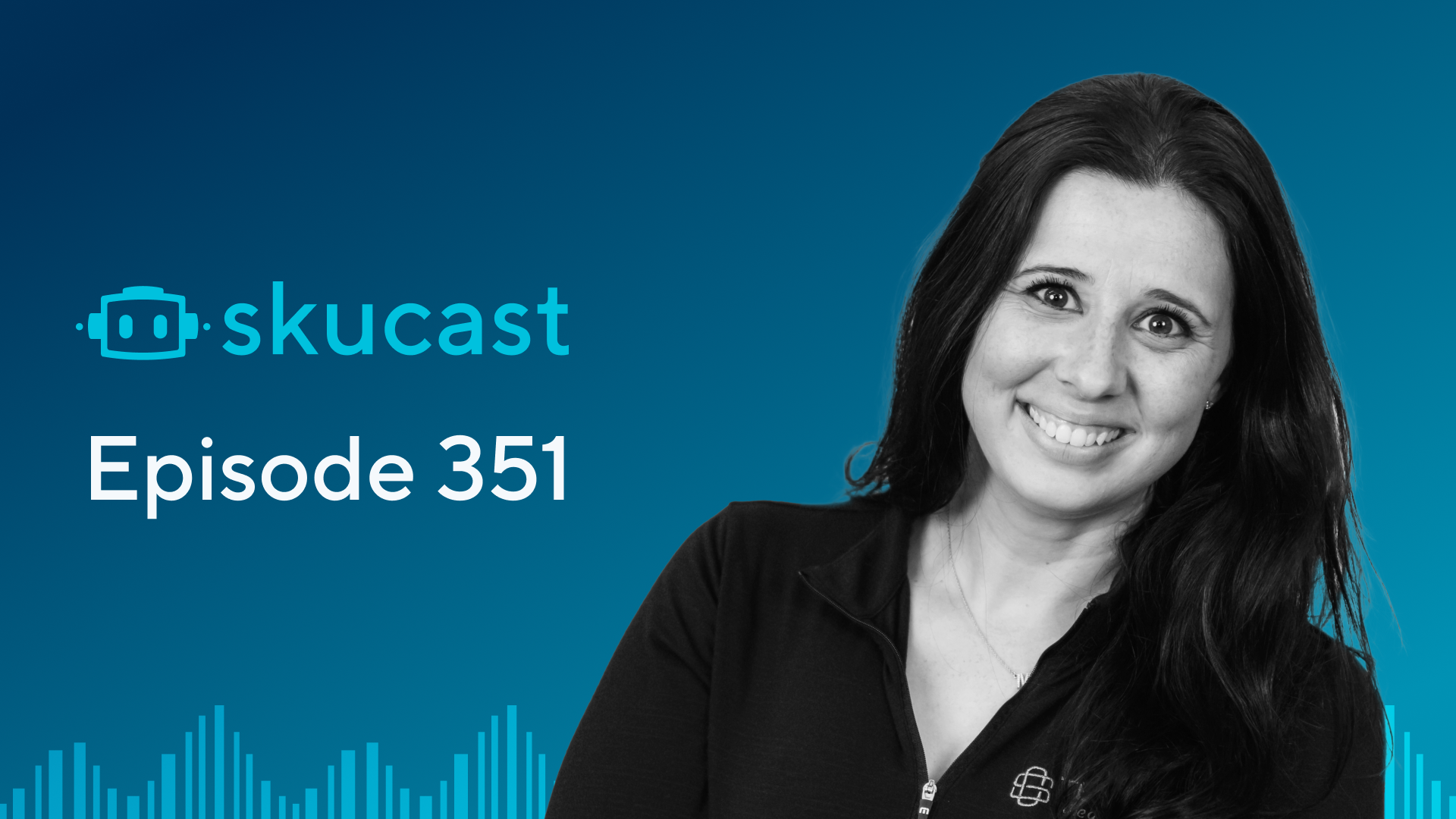
Episode 351: Turning Crisis Into a $30M Transformation (Team SCG's Shayna Cohen)
No video selected
Select a video type in the sidebar.
What do you do when you lose your biggest client, your entire industry vertical vanishes, and a pandemic shuts down the world—all in the same year?
Most leaders cut costs, lay off staff, and pray for survival.
Shayna Cohen rebranded, hired aggressively, and fired 20% of her clients.
Four years later, Team SCG went from $5 million to $30 million in revenue. Not despite the crisis of 2020, but because of how they responded to it. Shayna's counterintuitive leadership transformed a family business into one of the industry's fastest-growing distributorships.
Her secret? Choosing evolution over comfort, vision over fear, and the courage to become the leader her company needed instead of staying in the role she loved.
We dive into:
The Triple Disaster of 2020
2019 was supposed to be the launchpad. Team SCG closed just under $8 million—their best year ever. Shayna and her brother finally hit their rhythm. Momentum felt unstoppable.
Then everything collapsed at once.
First came the RFP loss. A client they'd served for 30 years walked away. Not a small account—one of their largest. The kind of loss that reverberates through a family business, leaving everyone questioning what went wrong. Their first experience losing an RFP, and the ego blow landed hard.
Then COVID-19 shut down the world. Team SCG had built significant business in the travel industry. Overnight, that vertical became irrelevant. No events. No conferences. No travel programs. Gone.
Revenue dropped from nearly $8 million to $5 million. The math was brutal.
But here's what makes Shayna's story remarkable: Team SCG avoided layoffs entirely. While competitors shed staff and hunkered down, they kept their team intact and found opportunities "out of the woodworks." They survived. Barely. But survival created something more valuable than revenue—it created clarity about who they needed to become.
Boredom Breeds Revolution
With phones quieter than they'd ever been and traditional business models shattered, Shayna faced a choice most leaders never get: complete reinvention with nothing to lose.
"We were in a place that we had never been in before," she explains. "It was born from boredom, transparently speaking."
They had time. They had talented people with capacity. What they didn't have was a clear path forward using the old playbook.
So they threw it out.
Team SCG launched their first-ever rebrand in the middle of a crisis. Not cosmetic changes—a fundamental rethinking of how they went to market. The rebrand wasn't about logos or color schemes. It was about identity. Who would Team SCG be when normalcy returned?
That question drove every decision that followed. And those decisions took them from $5 million to $30 million in four years.
The Hardest Decision: Firing 20% of Clients
When business came roaring back, Team SCG faced a problem most companies dream about: too much opportunity, not enough capacity.
The conventional move? Hire frantically, stretch your team thin, and service everyone who wants to work with you.
Shayna made a different choice. She let go of 20% of their client base. It was about creating space for the right relationships. Clients who appreciated Team SCG's approach. Clients who aligned with where the company was headed.
The decision required guts most leaders never find. Shayna admits the sleepless nights, the second-guessing, the fear of consequences if she was wrong. But her intuition screamed one message: press the gas pedal harder, not softer.
She was right. Firing clients to grow isn't just counterintuitive—it's terrifying. But it works when you're clear about who you serve best.
Five Words That Changed Everything
Every company claims to be easy to work with. Team SCG turned it into an operational religion.
The mantra: "We are easy to do business with."
Simple words. Profound impact.
But Shayna didn't just hang it on the wall. She made it the filter for every decision, every process, every client interaction. The team started seeing opportunities to make clients' lives easier, even when it made their own lives harder.
This isn't rocket science. But it requires discipline. It means choosing client convenience over internal ease every single time. It scales across an entire organization because everyone can grasp it. And it creates loyalty that competitors can't break with lower prices alone.
The light bulb turns on when people realize that making the client's life easier is always the right answer—even when it's inconvenient.
The Line That Changed Everything
The epiphany came on an ordinary day. Shayna looked up from her desk and saw five or six people lined up outside her office door. Each waiting their turn. Each holding a problem only she could solve.
"This is not good," she remembers thinking. "It's not good that I'm the only person who can answer this."
The bottleneck was obvious. The solution was painful.
Shayna loved being the sales leader. Following her father's footsteps. Building client relationships. Diving into specific projects. That work brought her genuine joy.
But the CEO role demanded sacrifice. She had to give up something she loved for something the business desperately needed.
Team SCG grew from 20 people when Shayna joined to 55 today. That kind of growth breaks companies that don't evolve their leadership structure. She promoted Brian into the sales leadership chair she vacated. She created team leaders so people could depend on each other instead of forming lines outside her door.
She elevated Savannah and Justin, who already understood the business and drove significant results.
Then came the hire that changed the game: Isabelle.
The Operations Revelation
Operations, logistics, supply chain—these weren't Shayna's strengths. She admits she was "fake it till you make it" for as long as humanly possible. But you can only fake operational excellence for so long before the system collapses under its own weight.
Finding someone competent enough to independently run an entire wing of your business that you're not confident in? That's transformational.
"People tell me that, but I just didn't believe it," Shayna says. "I've never seen it before. I didn't know there could be such a difference maker."
Isabelle now handles roughly 50% of Team SCG's daily operations. The leadership team finally has someone they can depend on for the operational infrastructure that supports everything else.
When you find that person, you realize how much energy you were burning trying to manage complexity you didn't fully understand. The relief isn't just operational—it's psychological.
Evolution Is Not Optional
Ask Shayna what drives her, and the answer might surprise you: fear.
Not crippling fear. Not paralyzing anxiety. But a healthy fear of stagnation, of being left behind while competitors evolve.
"If you don't feel like you're evolving, someone else is gonna evolve and come for your business," she explains. "A lot of it's fear of being left behind."
When something feels stale, it triggers her instinct to focus on how the company needs to change. Where are we vulnerable? What capabilities must we build? Who do we need to become?
It's been quite a ride over the last five years. From $5 million to $30 million. From 20 people to 55. From surviving 2020 to thriving in 2025.
Fear transformed into fuel. Crisis became catalyst.
What Shayna Would Tell Her Younger Self
Looking back at the compressed education of those four years, Shayna offers two pieces of advice that every growing leader should hear.
Slow down on trying to do everything at once.
When she first took leadership, eagerness made her want to fix every problem simultaneously. Every issue needed immediate attention. Every opportunity demanded immediate action.
The result? Burnout. Not just for her, but for everyone around her.
"I would tell myself to slow down a little bit and focus on prioritize what's gonna make the biggest impact," she reflects. "Everything I think was the right move, but it was too quick."
Finish something completely before jumping to the next fire. Sequential execution beats simultaneous chaos.
Double down on trusting your vision.
Shayna spent countless nights questioning whether she'd made the right decisions. Many people would've said the risks weren't worth the potential consequences if they understood the full scope of what Team SCG had to do.
"A lot of brain power and anguish was wasted in questioning what I knew from an intuition perspective, which was to press the gas and press it hard," she says.
Looking at where Team SCG sits now, those instincts were correct. The aggressive investment paid off. The bold moves worked.
Trust your gut. Question tactics, not vision.
What Shayna's Story Reveals
Team SCG's transformation offers a masterclass in counterintuitive leadership during crisis.
Sometimes the right move when everyone says "cut costs" is strategic investment. Sometimes firing 20% of your clients creates space for explosive growth. Sometimes becoming the leader your business needs means leaving behind the role you love.
The promotional products industry splits into two groups: those who embrace evolution and those who resist it. Shayna chose evolution. Aggressively. Relentlessly. Even when it scared her.
Her mantra of "we are easy to do business with" isn't revolutionary language. But making it operational reality across 55 people, embedding it into every decision, using it as the cultural filter—that's where magic happens.
For distributors in that $5-10 million range eyeing the next level, or those at $20-50 million wondering how to break through, Shayna's journey offers clear lessons:
Focus on where you're most constrained. Build leaders others can depend on. Give up something you love for something the business needs. Let fear of stagnation drive evolution, not paralysis.
The branches are always about to break. The question is whether you'll build the infrastructure to support the next phase before they do.
Shayna did. Team SCG is thriving because of it.
Sometimes the fastest path to $30 million starts with losing 40% of your revenue. The difference is what you do next.
Show Notes: Key Timestamps & Topics
[00:02:42] Lost largest client after 30 years—first RFP
[00:03:14] $8M to $5M—travel collapse + pandemic hit
[00:03:42] How they avoided layoffs in 2020
[00:04:28] The boredom-driven rebrand decision
[00:08:30] Firing 20% of clients to create growth space
[00:09:45] $5M to $30M in four years
[00:12:15] "Easy to do business with"—the mantra
[00:27:39] The three-question email principle
[00:28:42] Slow down: stop building Rome in a day
[00:29:33] Double down: trust your vision
[00:31:03] The office line epiphany
[00:31:20] Giving up sales leadership for CEO
[00:32:05] Building the C-suite from scratch
[00:33:08] The operations hire that changed everything
[00:34:01] Fear as fuel for evolution
🎙️ Read Full Episode Transcript
[00:00:00] Bobby: What happens when your biggest client walks away, the core industry you serve collapses, and the world shuts down? But instead of cutting back or sunsetting your business, you decide to hire, rebrand, and rebuild. Well, on today's show, we're diving into how Shayna Cohen, CEO of Team SCG, transformed a family-owned business into a $30 million powerhouse in just four years.
[00:00:23] Welcome to the skucast, the podcast for innovators and maverick thinkers in the promotional product space. My name is Bobby Lehew. I'm glad you're here. Shayna and her team's story is one of bold moves and both fearful and fearless leadership.
[00:00:39] We talk about the 2020 turning point that nearly broke the business and how it became their launchpad, the tough decision to let go of 20% of their clients to make room for the right kind of clients, and then how redefining "easy to do business with" became a company-wide mantra for scaling culture and customer experience. Shayna's hands-on, ego-free approach has helped shape Team SCG into one of the most [00:01:00] dynamic distributor firms in the industry. She's redefining what it means to lead with vision, grit, and purpose.
[00:01:06] Today's episode is brought to you, courtesy of us at commonsku. Over 900 distributors powering 1.8 billion in network volume rely on commonsku's connected workflow. Process more orders, connect your team, and dramatically grow your sales. To learn how, visit commonsku.com.
[00:01:22] Now here's my chat with Shayna.
[00:01:24] Bobby: Shayna, thank you for joining us on the skucast.
[00:01:28] Shayna Cohen: My pleasure. Hi.
[00:01:30] Bobby: I'm so glad you're here. I'm so glad you're here. Your talk at skucamp was amazing. You did one of those things that I always love when speakers, especially who are running really good businesses in our industry, are vulnerable and share their insights. We're gonna actually jump right into the heart of this 'cause I'm gonna ask you a hard question right at the beginning, but I know you can handle this because this is part of your talk. I wanna start with what might be the most pivotal year in your company's story. In 2020, something happened. Before we dive into that moment, help listeners [00:02:00] understand what Team SCG looked like going into 2020.
[00:02:03] Shayna Cohen: Sure. Yeah. So first of all, thank you very much. Very excited to be here and I'm super excited to talk about our story. It's one that I'm very passionate about. 2020 was a crazy year for the world, but for our business in specific, it was just one of the years that regardless of what was happening outside, we took a lot of hits in many different places. Going into 2020, we were having our best year ever. I felt I was just getting my groove with our business and where we were trying to go and what we were trying to do. My brother and I were making a great team and we were coming off of our highest growth year that we had ever had in 2019. So we were really excited to hit the ground running in 2020.
[00:02:41] Bobby: Yeah.
[00:02:42] Shayna Cohen: And then everything really happened at once. Not only just with the pandemic, but we lost one of our largest clients that we'd had for 30 years.
[00:02:51] Bobby: Wow.
[00:02:51] Shayna Cohen: That was something that we had never gone through before. That was our first experience in the RFP world. And it was just a huge shot to the ego, transparently speaking.
[00:02:58] Bobby: Yeah.
[00:02:59] Shayna Cohen: That was [00:03:00] felt tremendously throughout our company and throughout my family specifically. So...
[00:03:03] Bobby: Yeah. At what level of revenue were you at this point?
[00:03:06] Shayna Cohen: We finished 2019 just under $8 million, so...
[00:03:10] Bobby: Okay. Okay. And then this happens, right?
[00:03:14] Shayna Cohen: And 2020 happens. And we also have a huge stake in the travel industry.
[00:03:21] Bobby: Yeah. Gosh.
[00:03:22] Shayna Cohen: 2020, travel was irrelevant is the word I would use. No one was even thinking about it. So that turned off immediately as well. And we somehow figured out a way to scrape by with different opportunities that we were just finding out of the woodworks. And we finished at $5 million in 2020, so we did...
[00:03:41] Bobby: Wow. Yeah.
[00:03:42] Shayna Cohen: When you think about all the things that really happened in that year, we somehow figured out how to avoid layoffs. And we kept our team together and we closed it at just over $5 million.
[00:03:53] Bobby: I am so impressed with that number. And this goes way back, but in 2008 when we were running our distributorship, we were at $10 million. [00:04:00] The economic crisis hits and we drop from 10 to somewhere between two and three, and it was a massive drop. So kudos to you because you did something that also a lot of folks would lick their wounds over something like this, and it might be a slow build. But you started investing again fairly quickly. Walk us through how you started to reinvest in your infrastructure to handle this new opportunity. Like how did you approach this? Okay, now we're gonna rebuild. What did that look like?
[00:04:28] Shayna Cohen: So it was born from boredom, transparently speaking. We were in a place that we had never been in before and I came in thinking that I could build Rome in a day, so I...
[00:04:38] Bobby: Yeah.
[00:04:39] Shayna Cohen: I had a lot of excitement coming out of 2019 and then 2020 just, we got knocked to our knees in a way that I had never experienced in my young career at that time.
[00:04:48] Bobby: Yeah.
[00:04:49] Shayna Cohen: And that my father and my uncle hadn't experienced at this level. We had a lot of time on our hands, and we decided that the best way to spend that time was in a couple of different areas. First and foremost, we wanted to reinvent ourselves. We knew that this was going to [00:05:00] be a point in time, a season that we were experiencing, and things would start to normalize. And what did we want to look like when that normalcy returned? So we decided to do our first rebrand at that point.
[00:05:12] Bobby: Cool.
[00:05:13] Shayna Cohen: That was one of the biggest pivotal steps of "we're going to change essentially how we go to market." And once that was the first piece of that thought process, that really started to turn how we approached our business specifically and who we were gonna be to the rest of the world.
[00:05:27] Bobby: Yeah.
[00:05:28] Shayna Cohen: We decided to do the rebrand and at the same time, during that year before the pandemic happened, we brought on Brian Cohen, who's also my husband. And he's one of our big power players that we'll talk about a little bit more. But that started in January. So he was also part of the momentum of us pushing forward in the sense of what we could be.
[00:05:49] Bobby: Yeah.
[00:05:50] Shayna Cohen: And things started to normalize.
[00:05:51] Bobby: Now for context, when did you become CEO?
[00:05:54] Shayna Cohen: I became CEO in 2023.
[00:05:59] Bobby: [00:06:00] Okay. And...
[00:06:01] Shayna Cohen: I'd been in for two years.
[00:06:02] Bobby: Okay, this is public record, but you became CEO at a relatively young age.
[00:06:08] Shayna Cohen: I did. 29.
[00:06:09] Bobby: Yeah. That's amazing. You also did something pretty controversial in those days where you were shifting and going into fifth gear, rebranding the company, reinvesting in the company. 'Cause a lot of folks can go through something like this and sunset their business and just let it ride. Instead you decide to reinvest, but you did something a little controversial, but almost everybody has to do and it's painful. You referred out the bottom 20% of your client base. What did you learn about working with the right type of client? I know how hard that decision is and who was the right kind of client for you?
[00:06:40] Shayna Cohen: So just to put context behind everything. So 2020 happens. We hired two more huge players in 2020 to help us with the go-to-market strategy. And with those three additions plus the rest of our team and all the momentum that we were developing before all of that happened, we started to experience burnout [00:07:00] in an extremely quick timeline. It was that two-year period of 2020 we're slow. And then in 2021 things happened at a pace that I can't explain and that I can't comprehend now that I'm on the other side of it, but it just was not sustainable. So we have Brian, Justin and Savannah who are taking off at a speed that we didn't anticipate and the rest of our team that was already ready to take off. And all of this created what I call a perfect storm to the point where I had to make a really tough decision.
[00:07:34] And I have been a fan of shaking things up, and I've always been a fan of choosing the path less traveled. But in this case, it was just considered crazy, specifically by my dad and my uncle, who just could not believe that I wanted to essentially wipe out 20% of our top line number.
[00:07:53] Bobby: Yeah.
[00:07:54] Shayna Cohen: It was a number and a lot of these clients we had been working with for a lot of years. So the decision came around [00:08:00] after a lot of reference with our team, some of our longest team members that have been here, I consulted on what their thoughts were, where they felt that our pain points were happening. And essentially it was that there's just not enough time in the day.
[00:08:13] Bobby: Yeah.
[00:08:13] Shayna Cohen: When you take that approach of saying that there's not enough time in the day, you then have to decide, okay, everybody plays with the same eight-hour workday. Obviously we all work more hours than that, but we wanna use something that we can model off of.
[00:08:26] Bobby: Yeah.
[00:08:26] Shayna Cohen: So where do you spend those hours to make the biggest impact and to continuously drive towards your goals? And that's when we started to identify the clients that we felt were helping us drive towards where we wanna go.
[00:08:39] Bobby: Yeah.
[00:08:40] Shayna Cohen: And then the clients that we were aligned with at one point, but we weren't necessarily aligned with any longer.
[00:08:45] Bobby: Yeah.
[00:08:45] Shayna Cohen: And there was a couple of factors that came into it. First and foremost, we took into account what potential spend was gonna be and where we were gonna put our proactive time. So we weren't gonna proactively hunt any clients or take on any new clients that couldn't spend at least six figures. [00:09:00] That was one of the...
[00:09:00] Bobby: Okay. Yeah, I was gonna ask where the threshold was. Yeah.
[00:09:02] Shayna Cohen: So especially as we're hunting new business, six figures, your minimum spend was where we were gonna focus on that front. And then we started to look at dollar value versus job numbers. So for instance, if we had a client that spent $100,000 across 10 jobs versus a client that spent $100,000 across 200 jobs.
[00:09:20] Bobby: Smart.
[00:09:21] Shayna Cohen: One is much more tedious than the other to be able to sustain. And also the number of people that were required to service an account like that.
[00:09:28] Bobby: Yeah.
[00:09:28] Shayna Cohen: Resources are the number one thing that I knew we had to protect, and our people is our best resource. So really listening to them and leaning into what they felt was a good client and why. A lot of it stems from our ability to be true partners with our clients. And there's a push-pull relationship that happens in this industry. And if we don't feel like we have a voice in the relationship, or that they're leaning into us from an expertise perspective, it was a lot less enticing for us from a working relationship perspective.
[00:09:58] Bobby: Yeah.
[00:09:58] Shayna Cohen: That went into [00:10:00] it. And then also we wanted to double down on our operations and logistics capabilities, and we wanted to make sure that all of our clients that we have needed that in some way.
[00:10:11] Bobby: Yeah.
[00:10:11] Shayna Cohen: We are a firm at this point that offers a large, I guess service spread, you can call it. A lot of them are supplemental services, but they require a lot of investments, a lot of time, and a lot of people. So we wanna make sure that the clients that we are working with every single day needed us in our entirety and not just a small piece of us.
[00:10:32] Bobby: So if I understand you, you have certain service lines, whether it's fulfillment, kit packing, international, whatever yours are, if your client fit most of those, if not all of those service lines, that was an ideal fit for you.
[00:10:44] Shayna Cohen: Yep. Program-related clients, contract-based clients, things that needed... and don't get me wrong, like if someone wants to come in and spend six figures that really only needs us to drop ship...
[00:10:54] Bobby: Sure.
[00:10:54] Shayna Cohen: ...we'll take it all day.
[00:10:56] Bobby: Happy to take it. Yeah.
[00:10:56] Shayna Cohen: Take it all day. But what we weren't gonna do is take a referral from [00:11:00] a friend of a friend who needed an order of 50 polos.
[00:11:02] Bobby: Yeah.
[00:11:03] Shayna Cohen: You know, it just wasn't a good fit for us in terms of how we're gonna choose to spend our time. And identifying our strike zone of the types of clients that we wanted to serve and that we were gonna work best with was one of the huge pivotal shifts as a company that we made in truly believing this is who we are, this is our go-to-market strategy, and this is what we do best.
[00:11:22] Bobby: It's massive. It's massive momentum. It creates an incredible opportunity. In your organization on the side of, since you had such a big hit, particularly in the travel industry, did that also change your focus in terms of diversifying that portfolio more?
[00:11:36] Shayna Cohen: We knew that was extremely important.
[00:11:43] Bobby: Yeah.
[00:11:43] Shayna Cohen: But it's a double-edged sword on that front. The main shift of our large growth was the difference between when the pandemic ended and that faucet turned back on.
[00:11:53] Bobby: I get it. Yeah, I get that. Yeah.
[00:11:53] Shayna Cohen: You know, we went from $5 million in 2020 to $15 million in 2021, and [00:12:00] a lot of that was because the travel industry realized our partnership value, and that's when we became a logistics-oriented business. That happened almost overnight. We weren't one, we had no idea what that looked like. And then suddenly between travel industry, financial institutions and different things that we had developed, it very quickly turned into the backbone of our company. And it's essentially one of the most important legs of what we do now.
[00:12:23] Bobby: Wow. So the silver lining there is that when that happened, you were able to invest time and money in broadening your service lines and what you were able to do with customers. So when they came back also needing more of those services, that was a lock for you. Like we had the same thing happen with oil and gas. I'm very familiar with this. Like oil and gas would be great and then the faucet would be off and then oil and gas would come back with a vengeance. And we were at that time stuck in a geographic landscape. And so at that time, the world wasn't near as flat as it is now, but so I totally understand that.
[00:12:53] Shayna Cohen: It was tough. It was one of those that we had so many conversations as a group and as a leadership group of, what do you [00:13:00] wanna do? Do we wanna do this? And there was massive risk involved with laying out capital for inventory investments and...
[00:13:06] Bobby: Yeah.
[00:13:07] Shayna Cohen: I remember very clearly sitting down at a table as a group and deciding do we want... you can't just dip a toe in the water in this sense.
[00:13:13] Bobby: Yeah.
[00:13:14] Shayna Cohen: Do we dive in or do we want to say no thank you? And if we say no thank you, they're gonna remember us for the no thank you.
[00:13:19] Bobby: Yeah.
[00:13:20] Shayna Cohen: So that decision to dive in without any knowledge or understanding of what we were actually agreeing to, while it was terrifying, that was a catalyst moment for us because great risk comes great reward. And I definitely aged tremendously through that process.
[00:13:34] Bobby: Yeah.
[00:13:34] Shayna Cohen: It was something that I can't even begin to portray to you correctly.
[00:13:37] Bobby: Yeah.
[00:13:38] Shayna Cohen: But what it did was it put some hair on our chest and it really taught us how to make or break and breaking wasn't an option, especially in a family business. Not an option.
[00:13:48] Bobby: I wanna get to that. I wanna get to that, and I wanna get to the leadership part a little more of the leadership part here toward the end of our conversation, but one of the things that was very important for you and for most distributors that hit this point in their journey [00:14:00] where they're trying to scale at an exponential size is the technology. Now everyone knows our MO, that's what we're here to do, is to help people scale and grow. But you are scaling essentially from $6 to $30 million. Do I have the numbers right? Okay. And what timeframe was that? Six to 30.
[00:14:16] Shayna Cohen: Four years.
[00:14:16] Bobby: Four years. That's astounding. I know very few... I've had 300 interviews like this. I know very few people that can say they grew in that short amount of time, that rapidly. Yeah, you have the scars to prove it. It's amazing. It's absolutely amazing. How did systems fit into this, all kinds of systems? commonsku obviously... you came on board with commonsku this year. Why was that important for you to do that?
[00:14:43] Shayna Cohen: A couple of things. My focus has always been first and foremost on client experience. And we moved into a teams model over the last three years, specifically where we don't really have individual contributors anymore. Everybody is either part of a team or leading a team. And we felt like the commonsku platform [00:15:00] was a great thing for our clients from the front-end experience perspective, as well as me, specifically from a management perspective of managing teams versus individuals, which is a very hard and complex thing to do.
[00:15:13] Bobby: Yeah.
[00:15:13] Shayna Cohen: So whether it's about the reporting or just the way that the system works with creating teams, we felt that was a really good fit and we always want to be looking onward and upward in terms of how we can continue to enhance how we go to market. And we thought that this was in line with those goals.
[00:15:31] Bobby: I love that the fact that you realize that managing a team requires a different system and a different structure. This would be very helpful to other customers of your size and larger who are considering this. How do you get a whole team to adopt new technology when everybody's so overwhelmed and everything's moving so fast?
[00:15:46] Shayna Cohen: That's a tough... it's a tough thing. And at the end of the day, all I can say is I don't know that I did it right. I can just say that I went into it very vulnerable and very transparent and basically let everyone know that we're gonna get bloody together and it's gonna be painful and I will be right there with you, [00:16:00] leading the charge into this battle that we're all gonna face in terms of what we're comfortable with and what we know versus what we're going to. And it's not perfect. And there are a lot of quirks that we have to work out as a team in terms of changing our behaviors and changing how we understand what we do every day.
[00:16:15] Bobby: Yeah.
[00:16:15] Shayna Cohen: On that front it's messy. And the one thing that I would just say is don't avoid that conversation. Don't pretend like it's gonna be rainbows and sunshine, because that's when the disappointment happens and that's when everybody really starts to feel tricked.
[00:16:30] Bobby: Yeah.
[00:16:31] Shayna Cohen: Really going into it with "this is going to be painful. This is gonna be something that we all wanna bang our head against a wall every now and again." But the main thing here is that the clients don't feel a disruption. And that's what we all were focused on, is not the fact that we were in a lot of pain during the transition, which I think regardless of systems changing, any system, whether you're talking about a warehouse management system, a CRM, an ERP, whatever it's gonna be, you're gonna feel the pain.
[00:16:57] Bobby: Yeah.
[00:16:57] Shayna Cohen: Just focusing on the client experience first and making sure that they don't feel a [00:17:00] disruption and their experience is positive, is where we put a lot of our energy.
[00:17:03] Bobby: Such great advice. The client-focused transition as you move through that. We pride ourselves on being a customer-led platform too. You came in and you said, "Hey, there's some things we want to do." One of those was like the split ship taxes. And I'd love to understand a few things. First, how the client from your perspective has grown more complex. Is that right?
[00:17:24] Shayna Cohen: That's very accurate.
[00:17:25] Bobby: For our team? How can you explain that complexity? What does that look like in a day-to-day? When we talk about complexity, a lot of folks might think you're in the promo business. That seems pretty easy, right? But you and I both know it's incredibly hard, especially when you're offering the breadth of services that you do. Can you explain a little bit the complexity behind today's client?
[00:17:45] Shayna Cohen: Yeah, I think it depends on what your individual strike zone is, you know what I mean? It's not for everybody dealing with the complex clients, not for everybody, but what we realized is a lot of the things that would be loss leaders, like programs and stores and [00:18:00] fulfillment and all of this stuff, that is not our core business model, but in order to get the revenue from the client, you have to take the crap that comes with it.
[00:18:11] Bobby: Yeah.
[00:18:12] Shayna Cohen: We knew that we couldn't say yes to this and no to that. So that understanding drove a lot of our decisions. So much so that I have a laser engraver in my warehouse because of a program that we didn't wanna say no to. I think there's a lot of things that I do that are controversial in that front of is it worth it, are you losing, are you profitable? And what I do is I look at the profitability of the company as a whole and of the individual relationships. So there might be certain things that I do where 100% we lose money. If we miss a shipment and I can save it, I'm sending someone on a plane with a suitcase. We do.
[00:18:47] So do I make money on that order? Absolutely not.
[00:18:50] Bobby: Right.
[00:18:50] Shayna Cohen: But do I lose the client because we made a mistake also? No.
[00:18:53] Bobby: Yeah.
[00:18:54] Shayna Cohen: I think from our standpoint, the complexity and what we're trying to bring to the commonsku team, specifically [00:19:00] in the system build-out as you guys continue to progress and evolve, is understanding at a deep level the intricacies that happen at the enterprise client level. So split ship is a great example where very rarely do we have the opportunity to ship everything to one location. That is a luxury of the past.
[00:19:17] Bobby: Yeah.
[00:19:19] Shayna Cohen: And the majority of what we do now has something to do with gifting, whether it's employee gifting or target audience gifting. A lot of what we do is centered around supporting that. So split ship and making sure that our taxes are per line is something that is not only wanted by us, but that's audited by our clients. Like we can't have any discrepancies in what our sales tax and accuracy should be around that.
[00:19:38] Bobby: Yeah, I wanna stay on the client and the complexity for a minute, because as a distributor, our biggest store had something like, it was insane. It had 2,000 products on it. It was promo, it was digital ads, it was commercial print. It was print-on-demand. It had buyer approval levels, multiple checkout options. We did pick and pack and fulfillment in-house like you [00:20:00] do. International demand was surging. The ideation to completion was getting faster and faster all the time. Our corporate buyers were consolidating spend through fewer partners. If I had to ask you, in addition to those things, how else has the client grown in complexity or if you had to stack rank the challenges that you're looking at in an aggregate to have your best customers, would that be international POD, or just servicing them?
[00:20:25] Shayna Cohen: So international POD is tough because everybody is starting to outsource from a labor perspective. And I don't think that there's anything that we could do from the promo industry to ease that pain for customs and clearance and countries that have greater barriers to entry and things like that.
[00:20:37] Bobby: Yeah.
[00:20:37] Shayna Cohen: So to me, international is in a parking lot of a pain in the butt no matter what you do. Where I'm starting to see a lot more complexities come in is the staleness of our industry. And that's something that impacts all of us.
[00:20:54] Bobby: Wow.
[00:20:55] Shayna Cohen: Clients don't want the same products, they don't want the same type of decoration.
[00:20:58] Bobby: Yeah.
[00:20:59] Shayna Cohen: They want [00:21:00] different, they want to be able to show something that hasn't been seen before. So you're seeing the product complexity start to increase and making something as simple as a t-shirt turn into not that simple anymore. Like now they want to see what a laser engraved t-shirt looks like, or different types of these different transfers or ways to make something standard, not standard.
[00:21:23] Bobby: Yep.
[00:21:23] Shayna Cohen: You're seeing experiential merch bars happening now. They want you to be able to support it. They want... we have clients who want us to send staff to pop-up events. That's where companies...
[00:21:32] Bobby: Yeah.
[00:21:32] Shayna Cohen: ...finding a delicate way to say "here's what we can support in this capacity and we'll help you figure out the rest of it."
[00:21:40] Bobby: Yep.
[00:21:40] Shayna Cohen: But being really specific about making sure that you understand their vision and the why behind their ask is what's led to a lot of our success. And I think a lot of people would just say, "No, this isn't what we do." We've found a way to say, "Hey, this is a great idea. I think this is awesome. Here's the parts that we can support you with, and I can give you contacts in other areas that we don't [00:22:00] necessarily do."
[00:22:00] Bobby: Yeah. I'm so glad you talked about this, the complexity of the product itself and what are the expectations from the buyer. Because we've seen this happen in culture. We no longer have the battle that merch isn't important anymore. Now merch is very important. That comes with that tension around building everything that needs to be unique and special, and even the product selection itself has gotten to where they can't accept limitations. I think maybe that's what you're trying to say is that there are now higher demands on the product and the experiences we're creating for clients.
[00:22:30] Shayna Cohen: I agree.
[00:22:31] Bobby: Let's talk about leadership and vision for a second. You said this was really fantastic: make decisions based on your goals, not your circumstances. Can you share a concrete example of that, like where you've done this?
[00:22:42] Shayna Cohen: Yeah, so the biggest and scariest one I would say was with our move. In 2020 and 2021, we're sitting in a 6,000 square foot warehouse where our rent is maybe $7,000 a month. And then we move into a 30,000 square foot warehouse where our rent is $28,000 a month. And now we're in a [00:23:00] 45,000 square foot warehouse where our rent is tremendously higher than that. It's one of those things where I don't know that we needed to go from 6,000 square feet to 30,000 square feet, but I truly buy into what I'm saying and believe in what I know we can do. We didn't need it today, but we would need it soon, and taking that leap of faith and saying "let's just do it. If you put my back up against a wall, I know we can make this happen." And it was a really scary jump for us to go that drastically different in space. But within two years we were busting at the seams in a 30,000 square foot warehouse. And it was one of those things that I am a true believer of, manifestation is a very loose word, but the idea behind manifestation is that you're focused on a goal and you make decisions based on achieving that goal.
[00:23:49] Bobby: Yeah. Yeah.
[00:23:50] Shayna Cohen: So my goal was that we were gonna grow tremendously and that we were gonna continue to need logistical and operational space. So we made that decision based on that goal and that goes in [00:24:00] line with how we were going to market and making sure that people knew we had the ability. We were ready to do this and we can execute it, and the opportunities came to us.
[00:24:09] Bobby: Yeah. Yeah.
[00:24:11] Bobby: That was one of my favorite takeaways from your talk at skucamp where you talked about investing in the company you are going to be, not the company that you are now, and that's huge for us. It's a very hard thing. You mentioned it's scary for leaders because growth-oriented leaders have to deal with that frightening aspect many times over.
[00:24:28] Shayna Cohen: Yep. And I would say that fear is something that I spent a lot of time at home at the end of the day questioning myself and, did I make the right decision? Especially tough months, right? Like you have a bad month in sales and you're like, "What am I gonna do? I have so much space. Who's gonna fill it up?"
[00:24:44] Bobby: Yeah.
[00:24:44] Shayna Cohen: And you map out worst-case scenarios. You have contingency plans. I'll never jump out of a plane without making sure I have at least one parachute.
[00:24:50] Bobby: Right.
[00:24:51] Shayna Cohen: So I always do recommend that, but at the end of the day, I think it's all based on belief in what you're doing and feeling very [00:25:00] secure in the fact that you have something that people need. And I knew that from a resource perspective, we had something that people needed and maybe we weren't presenting ourselves well, or maybe our message wasn't getting across, but those are very easily fixable things. And when you take that approach, it's a no-brainer to sign the lease for the 30,000 square foot warehouse.
[00:25:17] Bobby: Yeah. Yep. Your dad came to you with an interesting phrase, if you will, E-T-D-B-W, which has become your entire company ethos. I thought this was so cool. Can you unpack that?
[00:25:30] Shayna Cohen: Yeah, I can. One of our largest clients, my dad was a sales guy. He breathes and eats sales. One of our largest clients, he went down there one day and he saw it everywhere. E-T-D-B-W on the wall, E-T-D-B-W on the elevator, E-T-D-B-W in the hallways. And he got annoyed at one point and he's like, "What does this mean? Why is this everywhere?" And they said, "It means that we wanna be easy to do business with." And my dad is huge on taking things that work and running with them. So he came back with an epiphany, and it [00:26:00] was, and I was so intrigued. He said, "I figured it out. I know what we have to do." And I'm like, "Tell me what we have to do." And he said, "We have to be E-T-D-B-W." And it just, it stuck in the sense of simplifying that truly changes who you are.
[00:26:15] Bobby: Yeah.
[00:26:15] Shayna Cohen: I've seen it, I've been around it and I've been guilty of it, of saying that "this isn't how we operate" or "this isn't how we do things. You have to do it this way." And as soon as I really grasped onto what is E-T-D-B-W, it's about figuring out what the client needs. If this client is in your strike zone, if they are who you wanna work with, mold yourself to who they need you to be, rather than trying to put all of your clients into a standard template. So becoming easy to do business with essentially just means that you are changing a standard practice to best fit your client. Is it easy? No. Is it sustainable? No. Is it something that works for everybody? Absolutely not. But in its most simple example [00:27:00] that I think a lot of people can resonate with is a client sends you a low-resolution logo. A lot of times you would say, "I can't use this. Can you please send me back an AI file or an EPS file?" And maybe they send you something that's a PNG saved as an EPS and it's still not high-resolution enough. And it's very easy to say "this still doesn't work," but from the get-go, if a good client sends me something that might not be usable, but I know I have the resources to make it usable, they're not going to hear about that.
[00:27:25] Bobby: Right.
[00:27:25] Shayna Cohen: It's gonna be taken care of. I'm going to figure out how to make this work and to achieve what you guys are looking to achieve as simple as humanly possible for you.
[00:27:32] Bobby: That is gold. What I love about that is it's something you can bake across the organization. Everyone can grasp that.
[00:27:39] Shayna Cohen: It can, and you see the light bulb turn on and it's something as simple as, a client sends you an email with three questions and you only have the answer to one of 'em right now. If you can get the answer to the other two very quickly, let's hold on a minute. Let's send the client one email so they have everything answered as quickly as humanly possible and just making it easy for them to reference.
[00:27:59] It's, [00:28:00] you see the light bulb turn on for people in understanding "makes my life harder, but their life easier, and that means I'm on the right page."
[00:28:07] Bobby: Yeah. I always love that. It keeps the revolving door in your office from happening all the time where people don't have to come to you for everything to get permission. It's "what was gonna be easy for this client? What can we do to make this easy for the client?" I love that. You accepted the reins of the company at a young age, moved fast, went through a lot of client heartbreak and hard decisions. If you were to encourage Shayna back then, because my gosh, that kind of education in $5 to $30 million in such a short amount of time, if you had to advise Shayna back then, what would you tell her to double down on and what would you tell her to slow down on?
[00:28:42] Shayna Cohen: Slow down is easier than the double down.
[00:28:44] Bobby: Okay.
[00:28:45] Shayna Cohen: I would say that when I first came in, I was so eager that I was the standard "you can't build Rome in a day," and I wanted to do it all. I wanted everything to be right [00:29:00] and perfect, and we need to fix this and we need to fix that, and we need to fix that. And I would tell myself to slow down a little bit and focus on "prioritize what's gonna make the biggest impact." Because since I wanted to do everything at once, I think that led to a lot of burnout, not just for me, but for my people. Everything I think was the right move, but it was too quick. And part of that has its glory and has its consequences. So I would definitely tell myself that you need to just prioritize and make sure that you are finishing something in completion before trying to jump off the ledge to the next thing.
[00:29:32] Bobby: Okay. That's good advice.
[00:29:33] Shayna Cohen: I'm extremely guilty of that and sometimes I still have to remind myself. From a double-down perspective, I think I would just say to double down on the vision because, like I mentioned, there were a lot of times where I'm sitting at home at night questioning myself and wondering if I made the right decision and, is the risk worth the consequence? Because a lot of people would've said no if you really understood what we had to do and the risks that we had to take to [00:30:00] support the business that came in that short period of time. I think a lot of people would've said no, because the risk might not be worth the consequence of what it meant if we failed. But where I'm sitting now, I think a lot of brain power and anguish was wasted in questioning what I knew from an intuition perspective, which was to press the gas and press it hard.
[00:30:23] Bobby: Yeah. Yeah. One of the things that you did was you built an entire C-suite from scratch. You invested in your upper management team, which was a big part of getting you outta burnout. A lot of leaders who are in this space that I would say are in the $5 to $10 million range at least, and then in the probably $20 to $50 million range, deal with getting out of, getting their own position right in the organization. Being able to lift above, which is this really hard client management or whatever it might be, biz dev, whatever that role may be. What advice would you have for folks that are leaders like you, that are maybe juggling too many [00:31:00] things? And now that you've done that by investing in leadership...
[00:31:03] Shayna Cohen: Yeah, it's a great question, and I think the first time I realized that it was a problem was when there was a line out of my office, and if somebody's waiting in line, it means it's important enough that they'll wait however long it takes. But there was a line of five to six people that were just waiting. And I remember looking up and saying "this is not good."
[00:31:20] Bobby: Right.
[00:31:20] Shayna Cohen: It's not good that I'm the only person who can answer this. And I think that realization and that epiphany of trying to figure out what to do from here is one of the biggest things that led me to some of the decision making that I made after that point. So what I would say is to focus on where you feel the most constrained. I also mentioned in my talk about giving up something that you love for something that you need. And this is where I felt that the most. I loved being the sales leader of our company. I wanted to follow in my dad's footsteps. I loved creating the relationships with the clients, and I loved being able to give my input on the specific projects. When I needed to step into the CEO chair, I had to create leaders that people could depend on if we were gonna continue to [00:32:00] grow. When I joined the company, we were 20 people. Now we're sitting at 55.
[00:32:04] Bobby: Yeah.
[00:32:05] Shayna Cohen: It's not... it's again it's all about focusing on sustainability. And even though something's working right now, most of the leaders or owners of the company know branches are soon to break. When I realized that I had to ascend in my role, then the first thing that I needed to do was cover the plate that I was leaving, which Brian stepped into my chair from the sales leadership perspective. We created leaders to start heading up teams, which is when we went from all these individual contributors to small groups of people that were able to depend on each other.
[00:32:34] Bobby: Yeah.
[00:32:35] Shayna Cohen: Rather than just depending on me. And then of course I was able to elevate some of our team that was already, really knew the ropes and were very heavily responsible for a lot of our growth. Savannah stepped up, we had Justin step up, and then we had to hire some to really run our backend operations. And that's where we were lucky enough to find Isabelle, who this community has not had a chance to meet yet. But when you find [00:33:00] somebody that's competent enough to run a wing of your business that you are not as confident in, it's a game changer for your company.
[00:33:08] Bobby: Yeah.
[00:33:08] Shayna Cohen: People tell me that, but I just didn't believe it. I've never seen it before. I didn't know that there could be such a difference maker, especially when it's something that you're not as confident in. And operational logistics and supply chain and things on that front is not, was not my strong suit. I was a "fake it till you make it" kind of girl. And we faked it for as long as we could, but having her come in and understand it in a way that was all about to scale.
[00:33:37] Bobby: Yeah.
[00:33:38] Shayna Cohen: It changed the game entirely, not just for our company, but for our leadership team. We now had someone that we could depend on for what has now become 50%, maybe more of what we do on the day-to-day.
[00:33:49] Bobby: Yeah. Wow. I love how your entire mantra is be the, become the leader you need to be, become the organization you need to be. There's a very forward, fast forward momentum with the [00:34:00] energy with Team SCG.
[00:34:01] Shayna Cohen: You have to evolve. And if you don't feel like you're evolving, someone else is gonna evolve and come for your business, and you don't want that. A lot of it's fear of being left behind.
[00:34:10] Bobby: All right.
[00:34:10] Shayna Cohen: And I'm not saying to ever let fear drive you, but at the same time I think I always had a fear of the lack of evolution and if something feels stagnant or like it's just stale in a way, it drove me to focus on how the company needs to evolve and...
[00:34:27] Bobby: Yeah.
[00:34:28] Shayna Cohen: ...it's been quite a ride over the last five years.
[00:34:31] Bobby: Obviously fear transforms into fuel that becomes energy and you have really done it. Shayna, your story's amazing. Your team is amazing. Everyone we encounter with your team is amazing. Thank you for sharing your story here today. 'Cause a lot of folks need to hear a lot of the things that you had to say because of where they're at in their business. But thanks for joining us on the skucast. Thanks for speaking at skucamp. You guys run an amazing company.
[00:34:52] Shayna Cohen: It was my absolute pleasure. Thank you so much for thinking of me, and I'm happy to help in any way that I can.
