
 For Owners
 For Sales
 For Production
 For Finance
 Presentations
 Shops
Shops
 Product Mockups
 Client Portals
 Product Search
 CRM
CRM
 Decorator Matrix
 Suppliers
 Navigation & Dashboards
 Production Management
 Reports & Analytics
 Essentials
 Advanced
 Enterprise
 Customer Stories
 Events
 Blog
Blog
 eBooks
 Podcast
 On-Demand Webinars
 ROI Calculator
 FAQ
FAQ

Episode 345: Why Experiences Beat Deliveries Every Time with Dean Caravelis (Blezoo)
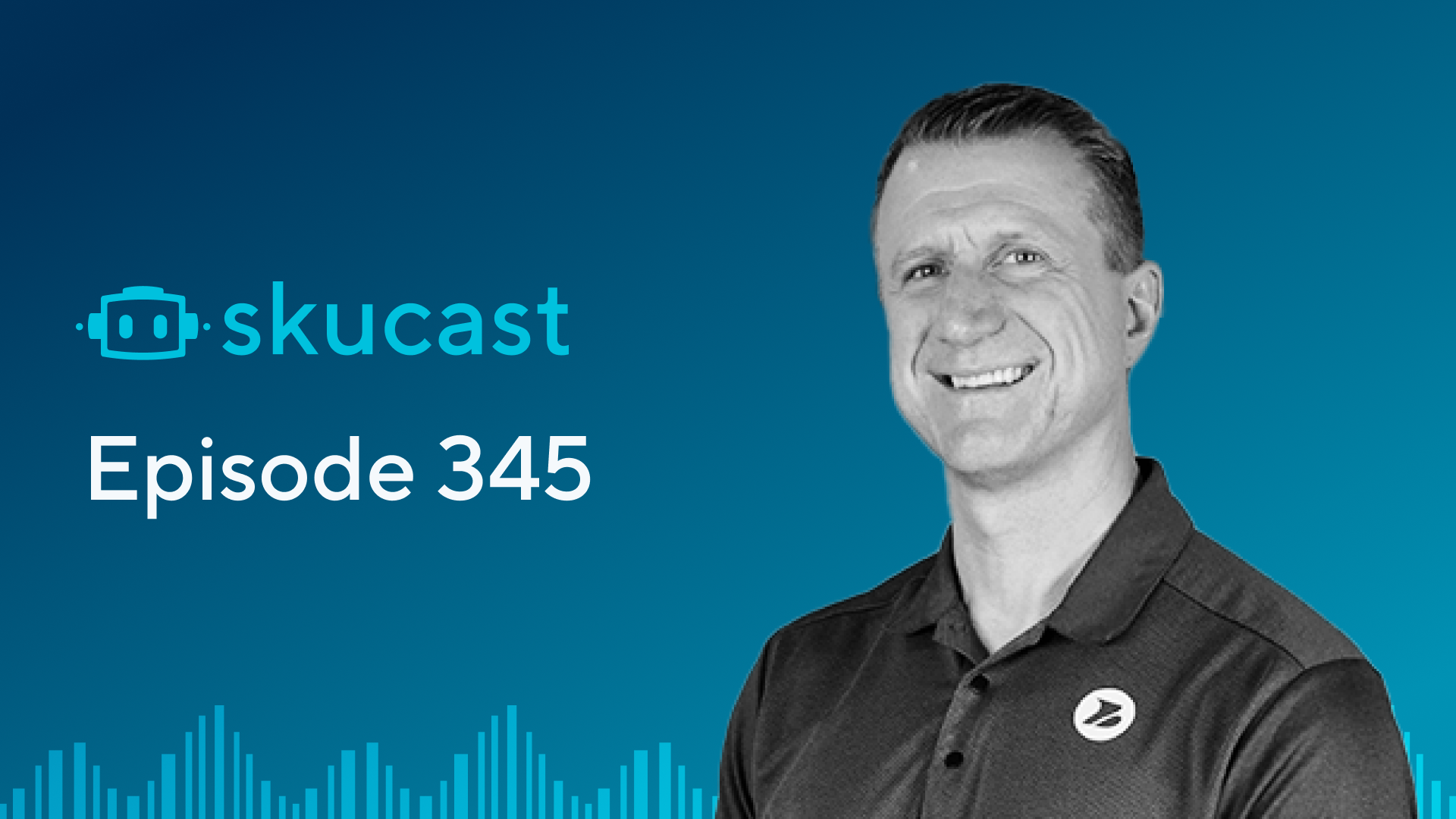
What if I told you that the secret to growth isn't sending more emails, but sending fewer?
That the path to memorable marketing isn't doing everything, but doing one thing incredibly well?
Dean Caravelis discovered this truth through years of observation and experience.
As a marketing director, he watched distributors drag the bottom of the sea with their nets, sending catalog after catalog, making call after call. No intention. No personalization. Just hoping something would stick.
Today, Dean runs Blezoo differently. He's a spear fisher in a sea of shrimp boat captains.
His new book, "The Experience in a Box Playbook," isn't just another marketing manual. It's 17 years of insights condensed into one burning question: What emotion do you want someone to have when they receive this?
We dive into:
-
Two Ways to Fish
Dean's favorite analogy explains everything wrong with most promotional product outreach.
Shrimp boat captains drag massive nets across the ocean floor, destroying everything in their path while hoping to catch something valuable. It's brutal, wasteful, and remarkably similar to mass email campaigns.
Spear fishers study their target, understand the environment, and strike with deadly precision. They know exactly what they're after and how to get it.
Most distributors operate like shrimp boats. Dean built Blezoo to be spear fishers. The difference shows in every client interaction, every campaign, and every result.
-
Simplicity Wins Every Time
Campaign complexity kills memorability. Dean's discovered this through years of watching clients try to squeeze everything into a single promotion.
Start with emotion. How should someone feel when they open your package? That drives everything else.
Pick one message. Not three key points. Not five benefits. One clear, memorable message that sticks.
Define the action. What exactly should they do next?
Everything beyond that creates noise. Dean calls these "me too moments" where recipients immediately forget what they received. Your budget should create opportunities, not check boxes.
-
The Physical Renaissance
Here's something interesting: Dean owns 2,000 vinyl records.
Vinyl should be dead. Streaming services offer unlimited music instantly. But vinyl sales keep climbing because physical experiences satisfy something digital can't touch.
The same principle applies to promotional products. As AI makes us question what's real online, tangible items become more valuable, not less. Face-to-face interactions feel genuine in ways digital never will.
Promotional products aren't fighting technology—they're benefiting from it. The more digital we become, the more we crave authentic physical experiences.
-
Uncertainty Demands Basics
Economic turbulence makes everyone want to try new tactics. Dean takes the opposite approach: go back to fundamentals.
Review your processes. Reconnect with existing clients. Focus on what you can control instead of worrying about external factors.
Even Tiger Woods worked with swing coaches. When performance suffers, the solution usually involves returning to core principles, not adding complexity.
We're halfway through the year. Holiday season approaches faster than anyone expects. Begin with the end in mind.
-
The commonsku Connection
Dean's partnership with commonsku proves his philosophy in action. Before commonsku, his team ran on a system he created himself. It worked, but scaling meant chaos.
commonsku changed everything. Not because it replaced relationships—because it eliminated friction.
When you input information correctly, the next order becomes easier. And the order after that. Kitting becomes organized. Pricing gets bundled. Shops create seamless experiences.
The technology doesn't replace the personal touch. It amplifies it.
Dean's observation reveals something crucial: when remarkable people build tools, those tools enable remarkable experiences. The culture becomes the product.
What our chat with Dean Reveals
Dean's transformation from marketing director to agency founder to published author illustrates something bigger happening in promotional products.
The promotional products industry is splitting. One group embraces change, uses technology strategically, and creates memorable experiences. The other group clings to old methods and hopes volume compensates for lack of strategy.
The companies that understand this paradox will dominate an increasingly AI-driven marketplace. Physical experiences become premium when digital authenticity becomes questionable.
Spear fishers target with purpose. Shrimp boats drag nets and hope. The choice determines everything that follows.
Dean chose precision. The nets are still available if you prefer them.
But the spear is sharper.
Show Notes: Key Timestamps & Topics
[01:48] Pat Williams' advice: don't write unless it's burning inside you
[05:52] Shrimp boat captain vs. spear fisher analogy
[07:49] The one message rule for memorable campaigns
[10:05] How commonsku amplifies personal touch
[12:10] Writing the book changed Dean's decision-making
[14:14] The vinyl record theory: why physical matters
[19:26] Silicon Valley launch advice: ship before you're embarrassed
[20:54] Seth Godin's influence and the 2016 workshop
[22:06] Back to basics during uncertain times
🎙️ Read Full Episode Transcript
[00:00:01] Bobby: What if your marketing didn't just deliver a message, but created an experience that people actually remember? And what if the secret to growth wasn't in doing more, but in doing less with precision? Well, on today's show, we're talking about designing experiences that are meant to be remembered, not just delivered.
[00:00:17] Bobby: And we're diving into why personal touch, not just automation, especially in the age of AI, might be the most powerful currency for our industry's future. Welcome to the skucast, the podcast for innovators and maverick thinkers in the promotional product space. My name is Bobby Lehew. I'm glad you're here.
[00:00:35] Bobby: Dean Caravelis is the founder of Blezoo, a marketing agency with a knack for creating branded merch that connects. Dean's a marketer at heart, having come from the buyer side before building his own distributorship, and he's now the author of a new book, "The Experience in a Box Playbook: Touch Points That Changed the Game."
[00:00:50] Bobby: It's a smart and actionable guide for turning swag into strategy. Join us as we talk with Dean about how to shift from mass marketing to precise, intentional outreach and why that shift is more critical today. And also why experiences need to be designed to be remembered, not just checked off a delivery list.
[00:01:09] Bobby: Today's episode is brought to you, courtesy of us at commonsku. Over 900 distributors powering 1.8 billion in network volume rely on commonsku's connected workflow to process more orders, connect your team and dramatically grow your sales. To learn more, visit commonsku.com. Now here's my chat with Dean.
[00:01:28] Bobby: Welcome to the skucast. Good to have you back again.
[00:01:31] Dean: It is good to be back. I appreciate the invite to come and chat.
[00:01:36] Bobby: Last time we visited, you were obviously at SKU camp talking about your experience in your business, and you just, as I mentioned in the intro, you just dropped a brand new book. What made you write, what inspired you to write "The Experience in a Box Playbook"?
[00:01:48] Dean: Well, you know, I don't know if it was one of those bucket list things where you want to write a book at some point in your life. I talked to Pat Williams, one of the founders of the Orlando Magic, several years ago, who had written over a hundred books and he told me, "Don't write a book unless it's burning inside you to get out."
[00:02:08] Dean: And I sat on that for a while. At one point I said, "I think I have things that I need to get out." So I started writing, realized after a little while that I was writing three books and, you know, that's not going to be good reading, right? So I decided to focus on one thing, like what's the most burning thing that's looking to come out and it's related to my business. That's when I wrote "The Experience in a Box Playbook."
[00:02:32] Dean: It became more natural once I decided to just focus on one thing. At that point got it done in really probably about eight months. But, you know, it's kind of up in the air how long it takes to do things.
[00:02:47] Bobby: Yeah, yeah. Someone said it can take eight months to write it, it took 10 years to live it, and eight months to write it. Give us a premise for those that are new to the book. Give us a premise synopsis of what the book's about.
[00:03:01] Dean: "The Experience in a Box Playbook" is really about swag. I mean, it's throughout the entire book, but think if you zoom out a little bit, the book is more about how you think about your brand, how you can differentiate yourself by kind of changing the game on how you approach things, to think about marketing and how to think about business development as well.
[00:03:25] Dean: And so it's kind of a, you know, like you said, it can take years to write a book. Yeah, it took me 17 years to write this book since I decided to start Blezoo. So it's about all those things, but it's really talking to marketing managers about how they can reinvent their brand, how they can create a new world for their brand to live within.
[00:03:45] Bobby: I read your bio at the beginning, at the top of the show, and so you have this experience as a marketer, like you come from leading companies in marketing. So it's interesting perspective. I've always loved your perspective because you came from the buyer perspective, and so in the past, correct me if I'm wrong, but in the past, merch has, swag has always been an "oh by the way" category, you know, we need to do this too.
[00:04:10] Bobby: Whereas now it seems culturally to have taken a more front center approach, so your book couldn't come at a better time. Do you feel that too in the energy in terms of culture and merch and swag and how it's arose to prominence in that way?
[00:04:21] Dean: Oh, absolutely. In the book, I talk about my experiences as the marketing director and being prospected by all these companies that would just send me catalogs over and over and call me like incessantly. And back then it was, merch was just like cheap stuff you give out at a trade show because everybody else is giving out cheap stuff.
[00:04:43] Dean: And so I think it's definitely evolved over time. I think the visibility through social media and other factors online have increased that. And also I think a lot of the retail brands that have entered the space have elevated it as well, sort of blurring that world, right, between promo and retail.
[00:05:03] Dean: And so I think all of that combined, I mean, just look at drinkware alone. It's sort of encapsulated every part of pop culture.
[00:05:13] Bobby: That's a good point. But you also sort of had your own evolution then as a distributor because you learned how to use it from the inside out. You learned how to use it to capture clients, to build a loyal fan base, and you've got this really great visual in the book, the shrimp boat captain versus the spear fisher when it comes to reaching customers.
[00:05:34] Bobby: Since you're talking to other distributors, this came out of your own experience. Like it wasn't just, "swag is awesome, you should buy it." It was, "we've done some cool things with merch and we want to share that experience." When it comes to reaching customers, how can distributors make that shift with precision and intention, and can you explain that analogy?
[00:05:52] Dean: Yes, sir. The shrimp boat captain is the person that drags the bottom of the sea with the net and sees what they can pull up. There's not a lot of intention in being a shrimp boat captain. I don't know if you've ever seen it, but it's pretty horrific the way it happens. And so I equate that to the 10 spam emails that I received today that have no personalization at all.
[00:06:13] Dean: They're just trying to get me to click on something or reply in some way. The spear fisher, on the other hand, acts with intention, with personalization, understands who they're trying to connect with. And they use it as a tool to be able to build their brand and their reputation rather than just employing this army of one size fits all.
[00:06:33] Dean: And so the other thing you're alluding to is, right, we've heard it a million times, "drink your own Kool-Aid," "eat your own dog food." You want to use what you want to use. So for us, we want to lead our customers and what better way to lead than to go, "Hey, look at this. Look at this way I connected with you, and you can do this too." Right?
[00:06:52] Dean: And so I think if we're not doing that as distributors, then we are kind of reverting back to the shrimp boat captain mentality, which also aligns with, "well, here's a link. Just, you know, we can get you anything. Here's a link. Just look through that and tell me what you want." So I think it's a posture.
[00:07:12] Bobby: Yeah, a posture. I love that word you said, "experiences should be designed to be remembered, not just delivered." And I think as distributors, we sort of get caught up in the delivery part, like just executing on the tactical things as opposed to executing on the inspirational things. And so that's my takeaway from your book.
[00:07:28] Bobby: Having been in the business for a long time, I was like, that's super cool. Are there patterns or approaches that you've developed? These merch campaigns, I've received one of your campaigns, it was memorable. Have you seen these sort of patterns in campaigns that you're building either in your own self promo with clients or campaigns you're building for clients that sort of break through the noise?
[00:07:49] Dean: I think that the big pattern is what's the emotion that I want someone to have when they receive this? And so in the book, I break down a few of those things, which is having one message, right? Like think about how many times we've talked to clients who want to include everything, you know? And so what is the message you're trying to make and what's the call to action, I think is important.
[00:08:14] Dean: I think the emotion as well, right? You don't want to be whatever. If you're mailing something or if you're handing someone something or if there's something at an event, don't want it to feel like a "me too" moment. Like what I mean by that is like, "oh, okay, I got one too."
[00:08:29] Dean: There's nothing memorable about it. "Oh, they were checking the box." And so I look at it like your dollars should be used creating opportunities with those dollars rather than checking the box. That's just very forgettable.
[00:08:44] Bobby: Yeah. I love some of the campaigns like we've both received these campaigns that people send to us that are highly memorable. The thing I love about what you said was the simplicity, like, because we do try at salespeople, we do this, right. We try to share everything. And that story and that message, the more it can get simplified, the better.
[00:09:04] Dean: For sure, and I've said this before, you know, commonsku and Blezoo both share a robot in their logo and I don't know if that's a common thread, but you all seem to get it with your merch kits, with the way you position your brand, with the way you communicate with the intentionality.
[00:09:22] Dean: So yeah, I'm speaking to the choir.
[00:09:25] Bobby: That was some really good connection between commonsku and you guys. And how does commonsku help your team stay? I love the phrase "outrageously remarkable." So are there examples of how commonsku has helped contribute to this sort of standout experience with your brand?
[00:09:40] Dean: I think the first thing that we found in commonsku, honestly when we started using it was, well, first the user experience of it for the team, but also presentation wise on the backend to customers. So presentation is super important to me, and so that was one thing that really stood out, and I think that has helped us stand out in a big way.
[00:10:05] Dean: At the same time you all have a lot of outrageously remarkable people working at commonsku. I mean, you're packed with personalities there. I think that honestly, that shows through onto the CRM, right? And the roadmap and everything. So it's like, you know, the culture becomes the product, right?
[00:10:24] Bobby: That's a thank you for that. That's awesome. As you've scaled, how has commonsku helped you grow without losing that personal touch? I mean, you're really good at personal touch. The first time I met you, I got one of your cards in the mail. It was just so, it just came right away and I loved that little moment.
[00:10:40] Bobby: But then you work hard to build this personal touch experience. Then how does something like a complex platform that does so much on the backend help you deliver the personal touch?
[00:10:51] Dean: I mean, the first thing is just keeping us organized, right? It's a more scalable system. You know, before we used commonsku, we were using a system that I created.
[00:11:01] Dean: It was a lot of work. And commonsku when you take the time to input things the right way and complete information and documentation, makes the next order easier and the order after that easier and the order after that easier.
[00:11:17] Dean: So that's one of the fundamental things about the platform is just making it easier to be able to replicate things down the line. We've also used it for kitting. We've used it in unique ways for kitting to be able to organize our kits and bundle the pricing. We also have used shops effectively, been able to use that to be able to create a more seamless experience for the customer and also for our team as well.
[00:11:42] Bobby: I want to go back to the book for a second. It's interesting how when you write a book on any topic, how forcing you to codify and sort of elucidate your thoughts does change your own perspective, even though you've been working in the business for quite a while, but how did writing and releasing this book sort of change you and your mindset?
[00:12:02] Bobby: Yeah, like did you grow in conviction? Did it change in any way, the way you approached the business, as you worked through the fundamentals in the book?
[00:12:10] Dean: A hundred percent. I'll tell you a funny thing about it is, so I'm writing the book over time. I'm trying to do it on, you know, time block here, Saturday morning there. And what ended up happening was, you know, when you're writing a book, it's kind of like making a song, right? You hear it so many times, it's like playing in your head.
[00:12:30] Dean: I caught myself right throughout the week doing things and or making decisions and then going, "That doesn't align with what I'm writing in the book." And so it has forced me to kind of think back and go, "okay, no wait. Like I do have to eat my own dog food, especially if I'm printing it on paper and distributing it."
[00:12:48] Dean: Right? So it really helps me sort of understand when I'm getting out of alignment as well. And I found that I caught myself doing that over and over again, right? I would tell myself like, "wait, you're not doing, you know, well this could be more personalized. Why is this not thoughtful? Why is this more transactional?"
[00:13:10] Dean: And it got me a little bit, you know, if I started to get out of my spear fisher ways, it kind of got me back into that. So yes, that was probably the biggest epiphany I had was the writing of it helped me create mantras that I then started to create way more conviction around.
[00:13:29] Bobby: Yeah. Speaking of something you just sort of unlocked there about how you were talking about being more personalized. Do you feel like with AI becoming such obviously such a transitional period we're in, I've heard this said before, but it's from us on the inside, so I would love your mind that thinks both still like a marketer on the outside and a distributor on the inside.
[00:13:51] Bobby: Will the personal touches become more and more important? Do you think this represents an interesting new season of opportunity for us? On one hand, we're all embracing AI, commonsku's developing some amazing things with AI that we'll be rolling out soon. On the other hand, the industry and what we sell has this emotional connection and it could be that we're seeing even greater days ahead because of it.
[00:14:14] Bobby: Do you feel that way?
[00:14:14] Dean: Yeah. You know, I think the analogy I use is, you know, I have a pretty big vinyl collection, right? Two thousand pieces of vinyl. Vinyl came in, and then it just started declining and now it's back. And they're selling more than ever for a multitude of reasons, right?
[00:14:29] Dean: You can touch it. It exists in the real world. It feels more, it's an experience. Rather than going, "oh, my phone's not loading. Okay, it's loading now there's a song." Right. So I kind of equate that to a lot of other things as well. And so one of them I think is merch because we are approaching a point in AI where I think we're not that far from questioning the authenticity of virtually everything that we encounter, whether it's "did this person actually write this email?" Right?
[00:15:00] Dean: Like there's, and so to me, is there anything more real than getting something in person? Right? Is there anything more real than face-to-face? So I could see that becoming more and more valuable and also, a breath of fresh air from what we are on the precipice of.
[00:15:21] Bobby: Yeah. Yeah. I think so too. I think it's such a huge thing. Your platform's growing between the book, the brand speaking, mentoring what's sort of lighting you up right now beyond just book and promo?
[00:15:33] Bobby: Do you have time for anything else other than really?
[00:15:37] Dean: No. I spoke recently at University of Central Florida, UCF and that was one of my topics that I spoke about was how to get things done in different parts of your life, how to be a dad that's present that shows up and has dinner with family every day, but still does these other things.
[00:15:58] Dean: I think what lights me up is I've realized last year I'm a maker. And so I like making. And so whether it's a book or a piece of content or working on a new product offering in my company, like I just like making. And so to me any opportunity where I can get a blank sheet of paper and think of an idea and bring it to life, that to me is what lights me up.
[00:16:20] Dean: So I know I'm going to write another book about human connection that kind of goes well with "The Experience in a Box Playbook." And I'm also very excited about the different things that we're doing at my company because I think in this industry there's just this wide open canvas. Distributors are doing so many different things and there's so many different niches.
[00:16:40] Dean: So I'm super jazzed about just creating new products and finding new ways to connect with customers.
[00:17:06] Bobby: Yeah, yeah. No, that's good. That's great. Are you, I would assume then with the book written now. It's a phenomenal tool to like kick open the door with business and prospects. Like whether it's you're sending it to folks, whether you are using it to open speaking opportunities, I think we sort of minimize what kind of a lever that can pull for you on behalf of a brand, both personally and for your business.
[00:17:29] Bobby: Have you already seen it sort of kick open those doors for you? And this is new, so like it's fresh.
[00:17:33] Dean: Yeah, I mean, yeah, the book came out about three weeks ago, so it's been pretty fascinating. The thing about the book that interests me is it's not a social post. Like it doesn't just happen. You know, it lives, it's out there. And so I think the thing that excites me is like, I don't actually know what's going to happen.
[00:17:51] Dean: Right? And sometimes that's exciting when you don't know what's going to happen. But I can tell you that if a customer has two people in front of them and one of them wrote the book on the topic, they might have a little bit of an advantage.
[00:18:04] Dean: So at the same time, I think people can forget social posts and LinkedIn posts. And so for me it was cathartic to get it out. And I do think I don't know what it's going to do, but I do know that even just the element of getting that out and being able to use that sort of as proof of concept for what we're doing at Bleezo.
[00:18:22] Dean: And also some of the thoughts that I've been talking about with my company for years I think is going to have positive benefits, but I'm not really sure. We'll find out in a year or two, I have no idea.
[00:18:38] Bobby: Well, as for those listening, not all of us are going to write a book, but we all sort of have, we all live with these conceptual ideas in our minds, right? The kids call them side projects. We always have these things in our head that we're like, "I really should do this." Whether it's launch a podcast, create a newsletter, write a book, and since you're a maker.
[00:18:57] Bobby: What advice would you give to those thinking about it now, having said, because I remember talking with you in the early days of the book writing and you were trying to get, you were in that stage where you were, "I've got to get this thing done across the finish line." You did. And it was not an easy lift.
[00:19:13] Bobby: So how would you encourage others who are looking at this big creative project they need to launch that was going to be beneficial to themselves, to their brand? How would you encourage them now on the other side of that book?
[00:19:26] Dean: Couple pieces of advice, which are things that I've heard in the past, and so I'll share them. Back in Silicon Valley, there's a saying that if you're not embarrassed by your first iteration of your product, then you didn't launch fast enough. You waited too long. And so before you write a book, right?
[00:19:45] Dean: I think maybe posting something online like a blog or a LinkedIn post regularly and being able to get a cadence. I documented my LinkedIn posts for eight years. I have a Google Doc. Every time I do a LinkedIn post, I copy and paste them. So I have like eight years of content to draw on.
[00:20:06] Dean: So I think sometimes getting into that writing habit, which, you know, nobody's going to tell you that more than Seth Godin, right? Like, write every day, write a little bit, get into that habit. I think that's one way to get at it. The second thing is, with a creative project, there's going to be iterations. So just launch. Don't be stuck on the launch pad indefinitely because it's not perfect. Launch and then get better. And that's really kind of like anything else we do right in life.
[00:20:35] Bobby: We have a mutual influence. I say we the collective we at commonsku. Mark others with between, and you and Seth too. You, he has been a big influence in your life. He wrote a blurb for your book that's pretty special. How has he, I would call you a mentee of Seth's. And how would you say that he has impacted your work?
[00:20:54] Dean: The funny thing is, you could probably trace that book back to a 2016 workshop I went to with Seth because he encouraged me to focus on, not on the product, but the solution, which seems very basic, but when Seth tells you that, you go, "wait, I need to think about this a little bit further."
[00:21:11] Dean: Right? And so my altMBA project was some of the kitting stuff that I'm doing now. And he's been a big influence because he talks through a lot of the elements that are kind of universal within marketing. We can sometimes dismiss things saying, "well, those are just words that promo's different," but there's common threads in all marketing.
[00:21:30] Dean: So he has been just a great advocate. And yes, getting the blurb I was, I joke with someone, I said, "no, nowhere to go but down from here, I got my, it's like having, you know, Michael Jordan sign your first book." Like, what do you do next?
[00:21:48] Dean: But yeah, and there's a section in the book about that workshop with Seth Godin towards the back called the Ruckus Makers Workshop. And so, yeah, I would probably say that Seth was probably a big influence on this book, in just even writing this book. It started with him in many ways.
[00:22:06] Bobby: Yeah, you heading into the year we are sitting in the middle of a year that. There's always a level of uncertainty, but there's probably a higher degree of uncertainty now than there has been in quite a while in the economy and just in business in general. I hear so many fluctuating reports from distributors and suppliers about how business is doing.
[00:22:27] Bobby: As you, as we close here, as you head into the rest of the year, how would you encourage other distributors like you who are running progressive businesses? Your high-touch, amazing brand. You've built this really cool experience, this great company with great people. As you head into the next six months to nine months of the year, how are you, what's your mindset like and how can you encourage others to embrace sort of a mindset that is able to handle that uncertainty?
[00:22:52] Dean: For me personally, whenever there's an environment that's uncertain, I just kind of go back to basics, right? And just focusing back on the basics. And I think that's really important, right? Like how do we engage people? Looking at our processes, seeing if there's anything that we can do to improve, looking at your client list and seeing if there's ways that you can reengage with people.
[00:23:18] Dean: So I just think it's, I mean, you should always be going back to basics, right? Tiger Woods had a swing coach, right? And I think when we stray from that, we focus on a little bit too much hot sauce. I think that's, for me personally, that's when I kind of stray a little too far out. Because you can control that certainty, right? You can't control all the external stuff you can't control. I go, "okay, what can we control?"
[00:23:38] Dean: Right now we're at halftime. Begin with the end in mind. Especially now, you know, before we know it, holiday will be here.
[00:23:48] Bobby: So true, so true, Dean. That's such great advice. And the reason why I say that is because I think when uncertainty hits us, we grasp and we panic. So we grasp for alternative solutions and then just zeroing in on our clients, what we do well and all that can center us, can bring us back to, like you said, the basics that can help us plow through.
[00:24:05] Bobby: Thank you for doing this my friend. Congratulations on an amazing book launch. Experience brand. We follow you with admiration, so thanks for joining us.
[00:24:14] Dean: Appreciate you, Bobby. Thanks for having me.
[00:24:15] Bobby: All right, buddy. Take care.
[00:00:01] Bobby: What if your marketing didn't just deliver a message, but created an experience that people actually remember? And what if the secret to growth wasn't in doing more, but in doing less with precision? Well, on today's show, we're talking about designing experiences that are meant to be remembered, not just delivered.
[00:00:17] Bobby: And we're diving into why personal touch, not just automation, especially in the age of AI, might be the most powerful currency for our industry's future. Welcome to the skucast, the podcast for innovators and maverick thinkers in the promotional product space. My name is Bobby Lehew. I'm glad you're here.
[00:00:35] Bobby: Dean Caravelis is the founder of Blezoo, a marketing agency with a knack for creating branded merch that connects. Dean's a marketer at heart, having come from the buyer side before building his own distributorship, and he's now the author of a new book, "The Experience in a Box Playbook: Touch Points That Changed the Game."
[00:00:50] Bobby: It's a smart and actionable guide for turning swag into strategy. Join us as we talk with Dean about how to shift from mass marketing to precise, intentional outreach and why that shift is more critical today. And also why experiences need to be designed to be remembered, not just checked off a delivery list.
[00:01:09] Bobby: Today's episode is brought to you, courtesy of us at commonsku. Over 900 distributors powering 1.8 billion in network volume rely on commonsku's connected workflow to process more orders, connect your team and dramatically grow your sales. To learn more, visit commonsku.com. Now here's my chat with Dean.
[00:01:28] Bobby: Welcome to the skucast. Good to have you back again.
[00:01:31] Dean: It is good to be back. I appreciate the invite to come and chat.
[00:01:36] Bobby: Last time we visited, you were obviously at SKU camp talking about your experience in your business, and you just, as I mentioned in the intro, you just dropped a brand new book. What made you write, what inspired you to write "The Experience in a Box Playbook"?
[00:01:48] Dean: Well, you know, I don't know if it was one of those bucket list things where you want to write a book at some point in your life. I talked to Pat Williams, one of the founders of the Orlando Magic, several years ago, who had written over a hundred books and he told me, "Don't write a book unless it's burning inside you to get out."
[00:02:08] Dean: And I sat on that for a while. At one point I said, "I think I have things that I need to get out." So I started writing, realized after a little while that I was writing three books and, you know, that's not going to be good reading, right? So I decided to focus on one thing, like what's the most burning thing that's looking to come out and it's related to my business. That's when I wrote "The Experience in a Box Playbook."
[00:02:32] Dean: It became more natural once I decided to just focus on one thing. At that point got it done in really probably about eight months. But, you know, it's kind of up in the air how long it takes to do things.
[00:02:47] Bobby: Yeah, yeah. Someone said it can take eight months to write it, it took 10 years to live it, and eight months to write it. Give us a premise for those that are new to the book. Give us a premise synopsis of what the book's about.
[00:03:01] Dean: "The Experience in a Box Playbook" is really about swag. I mean, it's throughout the entire book, but think if you zoom out a little bit, the book is more about how you think about your brand, how you can differentiate yourself by kind of changing the game on how you approach things, to think about marketing and how to think about business development as well.
[00:03:25] Dean: And so it's kind of a, you know, like you said, it can take years to write a book. Yeah, it took me 17 years to write this book since I decided to start Blezoo. So it's about all those things, but it's really talking to marketing managers about how they can reinvent their brand, how they can create a new world for their brand to live within.
[00:03:45] Bobby: I read your bio at the beginning, at the top of the show, and so you have this experience as a marketer, like you come from leading companies in marketing. So it's interesting perspective. I've always loved your perspective because you came from the buyer perspective, and so in the past, correct me if I'm wrong, but in the past, merch has, swag has always been an "oh by the way" category, you know, we need to do this too.
[00:04:10] Bobby: Whereas now it seems culturally to have taken a more front center approach, so your book couldn't come at a better time. Do you feel that too in the energy in terms of culture and merch and swag and how it's arose to prominence in that way?
[00:04:21] Dean: Oh, absolutely. In the book, I talk about my experiences as the marketing director and being prospected by all these companies that would just send me catalogs over and over and call me like incessantly. And back then it was, merch was just like cheap stuff you give out at a trade show because everybody else is giving out cheap stuff.
[00:04:43] Dean: And so I think it's definitely evolved over time. I think the visibility through social media and other factors online have increased that. And also I think a lot of the retail brands that have entered the space have elevated it as well, sort of blurring that world, right, between promo and retail.
[00:05:03] Dean: And so I think all of that combined, I mean, just look at drinkware alone. It's sort of encapsulated every part of pop culture.
[00:05:13] Bobby: That's a good point. But you also sort of had your own evolution then as a distributor because you learned how to use it from the inside out. You learned how to use it to capture clients, to build a loyal fan base, and you've got this really great visual in the book, the shrimp boat captain versus the spear fisher when it comes to reaching customers.
[00:05:34] Bobby: Since you're talking to other distributors, this came out of your own experience. Like it wasn't just, "swag is awesome, you should buy it." It was, "we've done some cool things with merch and we want to share that experience." When it comes to reaching customers, how can distributors make that shift with precision and intention, and can you explain that analogy?
[00:05:52] Dean: Yes, sir. The shrimp boat captain is the person that drags the bottom of the sea with the net and sees what they can pull up. There's not a lot of intention in being a shrimp boat captain. I don't know if you've ever seen it, but it's pretty horrific the way it happens. And so I equate that to the 10 spam emails that I received today that have no personalization at all.
[00:06:13] Dean: They're just trying to get me to click on something or reply in some way. The spear fisher, on the other hand, acts with intention, with personalization, understands who they're trying to connect with. And they use it as a tool to be able to build their brand and their reputation rather than just employing this army of one size fits all.
[00:06:33] Dean: And so the other thing you're alluding to is, right, we've heard it a million times, "drink your own Kool-Aid," "eat your own dog food." You want to use what you want to use. So for us, we want to lead our customers and what better way to lead than to go, "Hey, look at this. Look at this way I connected with you, and you can do this too." Right?
[00:06:52] Dean: And so I think if we're not doing that as distributors, then we are kind of reverting back to the shrimp boat captain mentality, which also aligns with, "well, here's a link. Just, you know, we can get you anything. Here's a link. Just look through that and tell me what you want." So I think it's a posture.
[00:07:12] Bobby: Yeah, a posture. I love that word you said, "experiences should be designed to be remembered, not just delivered." And I think as distributors, we sort of get caught up in the delivery part, like just executing on the tactical things as opposed to executing on the inspirational things. And so that's my takeaway from your book.
[00:07:28] Bobby: Having been in the business for a long time, I was like, that's super cool. Are there patterns or approaches that you've developed? These merch campaigns, I've received one of your campaigns, it was memorable. Have you seen these sort of patterns in campaigns that you're building either in your own self promo with clients or campaigns you're building for clients that sort of break through the noise?
[00:07:49] Dean: I think that the big pattern is what's the emotion that I want someone to have when they receive this? And so in the book, I break down a few of those things, which is having one message, right? Like think about how many times we've talked to clients who want to include everything, you know? And so what is the message you're trying to make and what's the call to action, I think is important.
[00:08:14] Dean: I think the emotion as well, right? You don't want to be whatever. If you're mailing something or if you're handing someone something or if there's something at an event, don't want it to feel like a "me too" moment. Like what I mean by that is like, "oh, okay, I got one too."
[00:08:29] Dean: There's nothing memorable about it. "Oh, they were checking the box." And so I look at it like your dollars should be used creating opportunities with those dollars rather than checking the box. That's just very forgettable.
[00:08:44] Bobby: Yeah. I love some of the campaigns like we've both received these campaigns that people send to us that are highly memorable. The thing I love about what you said was the simplicity, like, because we do try at salespeople, we do this, right. We try to share everything. And that story and that message, the more it can get simplified, the better.
[00:09:04] Dean: For sure, and I've said this before, you know, commonsku and Blezoo both share a robot in their logo and I don't know if that's a common thread, but you all seem to get it with your merch kits, with the way you position your brand, with the way you communicate with the intentionality.
[00:09:22] Dean: So yeah, I'm speaking to the choir.
[00:09:25] Bobby: That was some really good connection between commonsku and you guys. And how does commonsku help your team stay? I love the phrase "outrageously remarkable." So are there examples of how commonsku has helped contribute to this sort of standout experience with your brand?
[00:09:40] Dean: I think the first thing that we found in commonsku, honestly when we started using it was, well, first the user experience of it for the team, but also presentation wise on the backend to customers. So presentation is super important to me, and so that was one thing that really stood out, and I think that has helped us stand out in a big way.
[00:10:05] Dean: At the same time you all have a lot of outrageously remarkable people working at commonsku. I mean, you're packed with personalities there. I think that honestly, that shows through onto the CRM, right? And the roadmap and everything. So it's like, you know, the culture becomes the product, right?
[00:10:24] Bobby: That's a thank you for that. That's awesome. As you've scaled, how has commonsku helped you grow without losing that personal touch? I mean, you're really good at personal touch. The first time I met you, I got one of your cards in the mail. It was just so, it just came right away and I loved that little moment.
[00:10:40] Bobby: But then you work hard to build this personal touch experience. Then how does something like a complex platform that does so much on the backend help you deliver the personal touch?
[00:10:51] Dean: I mean, the first thing is just keeping us organized, right? It's a more scalable system. You know, before we used commonsku, we were using a system that I created.
[00:11:01] Dean: It was a lot of work. And commonsku when you take the time to input things the right way and complete information and documentation, makes the next order easier and the order after that easier and the order after that easier.
[00:11:17] Dean: So that's one of the fundamental things about the platform is just making it easier to be able to replicate things down the line. We've also used it for kitting. We've used it in unique ways for kitting to be able to organize our kits and bundle the pricing. We also have used shops effectively, been able to use that to be able to create a more seamless experience for the customer and also for our team as well.
[00:11:42] Bobby: I want to go back to the book for a second. It's interesting how when you write a book on any topic, how forcing you to codify and sort of elucidate your thoughts does change your own perspective, even though you've been working in the business for quite a while, but how did writing and releasing this book sort of change you and your mindset?
[00:12:02] Bobby: Yeah, like did you grow in conviction? Did it change in any way, the way you approached the business, as you worked through the fundamentals in the book?
[00:12:10] Dean: A hundred percent. I'll tell you a funny thing about it is, so I'm writing the book over time. I'm trying to do it on, you know, time block here, Saturday morning there. And what ended up happening was, you know, when you're writing a book, it's kind of like making a song, right? You hear it so many times, it's like playing in your head.
[00:12:30] Dean: I caught myself right throughout the week doing things and or making decisions and then going, "That doesn't align with what I'm writing in the book." And so it has forced me to kind of think back and go, "okay, no wait. Like I do have to eat my own dog food, especially if I'm printing it on paper and distributing it."
[00:12:48] Dean: Right? So it really helps me sort of understand when I'm getting out of alignment as well. And I found that I caught myself doing that over and over again, right? I would tell myself like, "wait, you're not doing, you know, well this could be more personalized. Why is this not thoughtful? Why is this more transactional?"
[00:13:10] Dean: And it got me a little bit, you know, if I started to get out of my spear fisher ways, it kind of got me back into that. So yes, that was probably the biggest epiphany I had was the writing of it helped me create mantras that I then started to create way more conviction around.
[00:13:29] Bobby: Yeah. Speaking of something you just sort of unlocked there about how you were talking about being more personalized. Do you feel like with AI becoming such obviously such a transitional period we're in, I've heard this said before, but it's from us on the inside, so I would love your mind that thinks both still like a marketer on the outside and a distributor on the inside.
[00:13:51] Bobby: Will the personal touches become more and more important? Do you think this represents an interesting new season of opportunity for us? On one hand, we're all embracing AI, commonsku's developing some amazing things with AI that we'll be rolling out soon. On the other hand, the industry and what we sell has this emotional connection and it could be that we're seeing even greater days ahead because of it.
[00:14:14] Bobby: Do you feel that way?
[00:14:14] Dean: Yeah. You know, I think the analogy I use is, you know, I have a pretty big vinyl collection, right? Two thousand pieces of vinyl. Vinyl came in, and then it just started declining and now it's back. And they're selling more than ever for a multitude of reasons, right?
[00:14:29] Dean: You can touch it. It exists in the real world. It feels more, it's an experience. Rather than going, "oh, my phone's not loading. Okay, it's loading now there's a song." Right. So I kind of equate that to a lot of other things as well. And so one of them I think is merch because we are approaching a point in AI where I think we're not that far from questioning the authenticity of virtually everything that we encounter, whether it's "did this person actually write this email?" Right?
[00:15:00] Dean: Like there's, and so to me, is there anything more real than getting something in person? Right? Is there anything more real than face-to-face? So I could see that becoming more and more valuable and also, a breath of fresh air from what we are on the precipice of.
[00:15:21] Bobby: Yeah. Yeah. I think so too. I think it's such a huge thing. Your platform's growing between the book, the brand speaking, mentoring what's sort of lighting you up right now beyond just book and promo?
[00:15:33] Bobby: Do you have time for anything else other than really?
[00:15:37] Dean: No. I spoke recently at University of Central Florida, UCF and that was one of my topics that I spoke about was how to get things done in different parts of your life, how to be a dad that's present that shows up and has dinner with family every day, but still does these other things.
[00:15:58] Dean: I think what lights me up is I've realized last year I'm a maker. And so I like making. And so whether it's a book or a piece of content or working on a new product offering in my company, like I just like making. And so to me any opportunity where I can get a blank sheet of paper and think of an idea and bring it to life, that to me is what lights me up.
[00:16:20] Dean: So I know I'm going to write another book about human connection that kind of goes well with "The Experience in a Box Playbook." And I'm also very excited about the different things that we're doing at my company because I think in this industry there's just this wide open canvas. Distributors are doing so many different things and there's so many different niches.
[00:16:40] Dean: So I'm super jazzed about just creating new products and finding new ways to connect with customers.
[00:17:06] Bobby: Yeah, yeah. No, that's good. That's great. Are you, I would assume then with the book written now. It's a phenomenal tool to like kick open the door with business and prospects. Like whether it's you're sending it to folks, whether you are using it to open speaking opportunities, I think we sort of minimize what kind of a lever that can pull for you on behalf of a brand, both personally and for your business.
[00:17:29] Bobby: Have you already seen it sort of kick open those doors for you? And this is new, so like it's fresh.
[00:17:33] Dean: Yeah, I mean, yeah, the book came out about three weeks ago, so it's been pretty fascinating. The thing about the book that interests me is it's not a social post. Like it doesn't just happen. You know, it lives, it's out there. And so I think the thing that excites me is like, I don't actually know what's going to happen.
[00:17:51] Dean: Right? And sometimes that's exciting when you don't know what's going to happen. But I can tell you that if a customer has two people in front of them and one of them wrote the book on the topic, they might have a little bit of an advantage.
[00:18:04] Dean: So at the same time, I think people can forget social posts and LinkedIn posts. And so for me it was cathartic to get it out. And I do think I don't know what it's going to do, but I do know that even just the element of getting that out and being able to use that sort of as proof of concept for what we're doing at Bleezo.
[00:18:22] Dean: And also some of the thoughts that I've been talking about with my company for years I think is going to have positive benefits, but I'm not really sure. We'll find out in a year or two, I have no idea.
[00:18:38] Bobby: Well, as for those listening, not all of us are going to write a book, but we all sort of have, we all live with these conceptual ideas in our minds, right? The kids call them side projects. We always have these things in our head that we're like, "I really should do this." Whether it's launch a podcast, create a newsletter, write a book, and since you're a maker.
[00:18:57] Bobby: What advice would you give to those thinking about it now, having said, because I remember talking with you in the early days of the book writing and you were trying to get, you were in that stage where you were, "I've got to get this thing done across the finish line." You did. And it was not an easy lift.
[00:19:13] Bobby: So how would you encourage others who are looking at this big creative project they need to launch that was going to be beneficial to themselves, to their brand? How would you encourage them now on the other side of that book?
[00:19:26] Dean: Couple pieces of advice, which are things that I've heard in the past, and so I'll share them. Back in Silicon Valley, there's a saying that if you're not embarrassed by your first iteration of your product, then you didn't launch fast enough. You waited too long. And so before you write a book, right?
[00:19:45] Dean: I think maybe posting something online like a blog or a LinkedIn post regularly and being able to get a cadence. I documented my LinkedIn posts for eight years. I have a Google Doc. Every time I do a LinkedIn post, I copy and paste them. So I have like eight years of content to draw on.
[00:20:06] Dean: So I think sometimes getting into that writing habit, which, you know, nobody's going to tell you that more than Seth Godin, right? Like, write every day, write a little bit, get into that habit. I think that's one way to get at it. The second thing is, with a creative project, there's going to be iterations. So just launch. Don't be stuck on the launch pad indefinitely because it's not perfect. Launch and then get better. And that's really kind of like anything else we do right in life.
[00:20:35] Bobby: We have a mutual influence. I say we the collective we at commonsku. Mark others with between, and you and Seth too. You, he has been a big influence in your life. He wrote a blurb for your book that's pretty special. How has he, I would call you a mentee of Seth's. And how would you say that he has impacted your work?
[00:20:54] Dean: The funny thing is, you could probably trace that book back to a 2016 workshop I went to with Seth because he encouraged me to focus on, not on the product, but the solution, which seems very basic, but when Seth tells you that, you go, "wait, I need to think about this a little bit further."
[00:21:11] Dean: Right? And so my altMBA project was some of the kitting stuff that I'm doing now. And he's been a big influence because he talks through a lot of the elements that are kind of universal within marketing. We can sometimes dismiss things saying, "well, those are just words that promo's different," but there's common threads in all marketing.
[00:21:30] Dean: So he has been just a great advocate. And yes, getting the blurb I was, I joke with someone, I said, "no, nowhere to go but down from here, I got my, it's like having, you know, Michael Jordan sign your first book." Like, what do you do next?
[00:21:48] Dean: But yeah, and there's a section in the book about that workshop with Seth Godin towards the back called the Ruckus Makers Workshop. And so, yeah, I would probably say that Seth was probably a big influence on this book, in just even writing this book. It started with him in many ways.
[00:22:06] Bobby: Yeah, you heading into the year we are sitting in the middle of a year that. There's always a level of uncertainty, but there's probably a higher degree of uncertainty now than there has been in quite a while in the economy and just in business in general. I hear so many fluctuating reports from distributors and suppliers about how business is doing.
[00:22:27] Bobby: As you, as we close here, as you head into the rest of the year, how would you encourage other distributors like you who are running progressive businesses? Your high-touch, amazing brand. You've built this really cool experience, this great company with great people. As you head into the next six months to nine months of the year, how are you, what's your mindset like and how can you encourage others to embrace sort of a mindset that is able to handle that uncertainty?
[00:22:52] Dean: For me personally, whenever there's an environment that's uncertain, I just kind of go back to basics, right? And just focusing back on the basics. And I think that's really important, right? Like how do we engage people? Looking at our processes, seeing if there's anything that we can do to improve, looking at your client list and seeing if there's ways that you can reengage with people.
[00:23:18] Dean: So I just think it's, I mean, you should always be going back to basics, right? Tiger Woods had a swing coach, right? And I think when we stray from that, we focus on a little bit too much hot sauce. I think that's, for me personally, that's when I kind of stray a little too far out. Because you can control that certainty, right? You can't control all the external stuff you can't control. I go, "okay, what can we control?"
[00:23:38] Dean: Right now we're at halftime. Begin with the end in mind. Especially now, you know, before we know it, holiday will be here.
[00:23:48] Bobby: So true, so true, Dean. That's such great advice. And the reason why I say that is because I think when uncertainty hits us, we grasp and we panic. So we grasp for alternative solutions and then just zeroing in on our clients, what we do well and all that can center us, can bring us back to, like you said, the basics that can help us plow through.
[00:24:05] Bobby: Thank you for doing this my friend. Congratulations on an amazing book launch. Experience brand. We follow you with admiration, so thanks for joining us.
[00:24:14] Dean: Appreciate you, Bobby. Thanks for having me.
[00:24:15] Bobby: All right, buddy. Take care.
