
 For Owners
 For Sales
 For Production
 For Finance
 Presentations
 Shops
Shops
 Product Mockups
 Client Portals
 Product Search
 CRM
CRM
 Decorator Matrix
 Suppliers
 Navigation & Dashboards
 Production Management
 Reports & Analytics
 commonsku Payments
 Essentials
 Advanced
 Enterprise
 Customer Stories
 Events
 Blog
Blog
 eBooks
 skucast (Podcast)
 Ask skucast
 Webinars
 ROI Calculator
 FAQ
FAQ
SECTIONS
RELATED RESOURCES

The Growth Strategies Behind 3 PPAI Top 100 Distributors
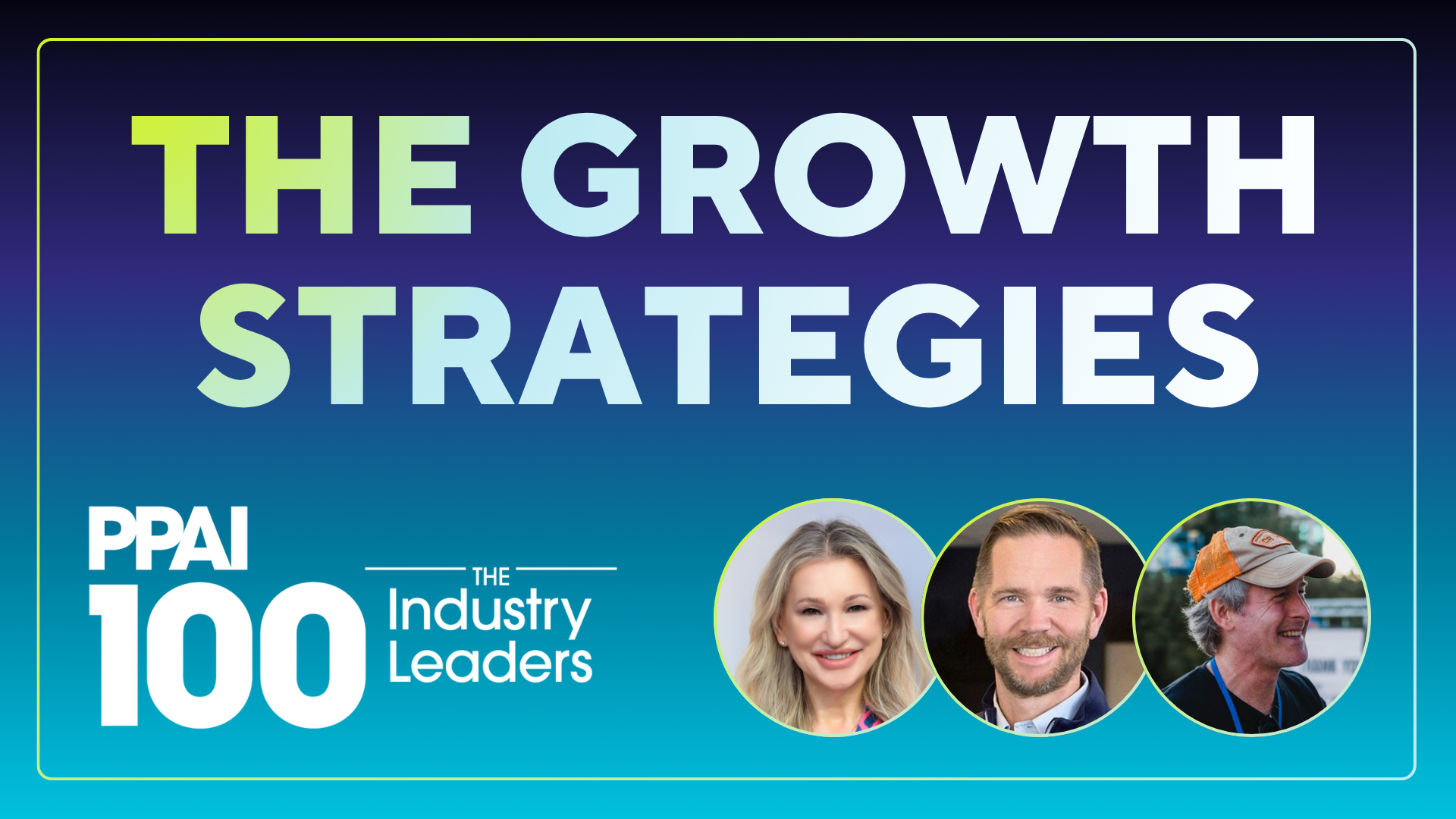
This year, 23% of the PPAI Top 100 runs on commonsku. So when we got the chance to put three of those distributors in one (virtual) room, we didn't want a victory lap. We wanted the messy, useful stuff: what they got wrong before they got it right, and the bets they almost talked themselves out of.
Mark Graham hosted. The panel was three operators running very different playbooks. Sandy Gonzalez runs MadeToOrder, one of promo's largest women- and employee-owned shops, and has been at this for nearly four decades. Michael Wolaver founded Magellan Promotions, niched hard into higher ed, and now serves 500-plus colleges on a four-day week (he dialed in from a hotel room between booth shifts at a conference, which is its own kind of commitment). And Robert Fiveash? He co-founded Brand Fuel, a certified B Corp, and happens to be commonsku's very first customer, going all the way back to 2011.



Want the whole thing? Watch the full conversation on demand.
Watch On Demand →Here's what we took away.
What They'd Do Sooner
Ask a room of operators what changed their trajectory and you'll usually get the greatest-hits answer: great team, strong culture, good service. True, but useless. So Mark pushed for specifics.
For Michael, it was niching. He talked his way onto one University of Wisconsin-Milwaukee campus, found success, then did it again at the next school, and the next, until Magellan was the go-to merch partner for 500+ colleges. He committed to that lane first. The 71% growth and the four-day workweek came after.
"There's no playbook we open up every day. We figure it out, go with our gut, and cash-flow the business forward."
Michael Wolaver, Founder, Magellan Promotions
For Sandy, the question is who you let in the door. MadeToOrder grows both organically and by acquisition, and her filter for both is identical: culture fit over book of business. "We're okay adding somebody onto the team who doesn't necessarily have a huge book of business," she said. As long as the DNA matches, the numbers tend to follow.
And Robert? His proudest transformation took ten years and a failed first attempt: becoming a certified B Corp. Documenting policies, improving benefits, tracking resource usage. Slow, unglamorous work that now tells clients exactly who Brand Fuel is in an industry with 30,000 competitors.
The common thread? They subtracted. A narrower focus, a tighter hiring bar, a workflow they stopped fiddling with. Saying "stay focused" is easy. Living it, while the industry waves shiny objects at you, is the actual work.
Fire Your Best Client
This was the spiciest fifteen minutes of the hour.
Robert told the story of sending a "Dear John" letter to Brand Fuel's biggest account by revenue over the past decade, a Fortune 20 company. Margins were thin. The team was drowning. The client wanted cheap plastic, not strategy. So they cut them loose.
Scary? Absolutely. But here's the part that mattered internally: the sales team watched leadership walk the walk on margin. Now reps are taking a second and third look at their own books and getting pickier about what they say yes to.
"It's really easy to take an order, and it's much harder to tell a client they can actually do better."
Robert Fiveash, President and Co-Founder, Brand Fuel
Sandy and Michael landed in the same place from different angles. Sandy's advice to anyone who's plateaued: "Stop chasing the shiny ball." Pick your lane and get good at it. Michael came at it sideways. Figure out what you can hand off, then question everything else that isn't earning its place in your day. Robert was the bluntest of the three: lop off the bottom 25% of your book and spend that reclaimed time prospecting for clients who fit your ICP.
Three different operators, one uncomfortable truth: growth often starts with subtraction.
Engagement Over Impressions
When Mark asked whether impressions still matter, the panel didn't trash the metric. Procurement teams genuinely care about it, and Robert pointed out that measurement isn't going anywhere. None of them lead with it, though.
"I never lead with impressions. I talk about the end-user experience, and how the product is going to make someone feel."
Sandy Gonzalez, CEO, MadeToOrder
Michael's been chasing the data-driven version of the same instinct ever since reading Measure What Matters, tying merch to campaign outcomes so he can prove what worked.
Then Mark dropped a sobering PPAI stat: only 4% of buyers perceive merch as sustainable and responsible.
Robert's fix is two words: choice and challenge. Challenge clients who are mindlessly reordering landfill. And give the end recipient an actual choice, a store or portal where they pick the thing they'll genuinely use, instead of guessing and producing a pile of sweaters nobody asked for. Choice, he argued, is the single biggest driver of merch that doesn't end up as brandfill.
Sandy's take on the whole "swag vs. trinkets vs. merch" naming debate? She doesn't care what you call it. "I just want it to work for them." Meet the client where they are, give them what works, earn the next (bigger) budget. Hard to argue with that.
One Platform, Less Rekeying
Brand Fuel was our very first customer, back in 2011. Robert remembers the before-times vividly: just under ten salespeople, about the same number of coordinators, and zero consistent process. They could add people but couldn't train or scale them. commonsku gave every role a rinse-and-repeat workflow, and he's blunt that the company's operational growth wouldn't have happened without it.
Sandy's favorite part is starting a merch project and carrying it all the way to invoice in one place. She still winces remembering the evenings spent rekeying the same order across three different systems. The line that sold her came from another commonsku customer she called during her evaluation: "We're not an accounting firm."
For Michael, centralized data is what makes the four-day workweek possible. Someone's on call every Friday, and because every client project lives in one system, anyone can jump in, see exactly where things stand, and push it forward. No four-day week without it.
"The centralizing of data made such a huge difference for us. It professionalized our organization."
Michael Wolaver, Founder, Magellan Promotions
Nobody's Unleashed The Beast
Refreshingly, all three were honest: they're taking baby steps with AI.
Sandy's team uses it for fast virtual mock-ups and tightening up presentations and emails, though only about half the sales team is consistent with it so far. Over at Magellan, Michael's crew has Claude Pro and meets biweekly to swap what's working. Robert started pointing it at RFPs. Dump five years of past responses into a bucket, let AI draft the next one. It won't collapse a week into five minutes. It does take a real bite out of a genuinely painful process.
The funniest moment came when Robert flipped the question back on us: has anyone here handed AI agents free rein, passwords and all, to go do things? "I'm curious if others have unleashed the beast. We haven't yet." Michael and Sandy, in unison: nope.
Where they all drew the line was the human part. Robert described an order he was sweating in real time: hats for people who'd donated $1,000 to a nonprofit he helped start, up against a hard deadline.
"I don't think AI is ever going to pick up the phone, call the owner of a company in our industry, and explain why it's really important."
Robert Fiveash, President and Co-Founder, Brand Fuel
Sandy's version was blunter: AI buys you hours back, but if you're not curating what it gives you, you're not really using it right.
How To Make The List
Mark closed by asking each of them for one piece of advice. Michael: niche hard, get known for it, learn your clients' challenges cold, and fake it till you make it (his words). Robert: focus and consistency, full stop. "Consistency truly is king."
Then Sandy reframed the whole question.
"I don't think it's about getting on the list. I think it's about being a good partner to your clients, and more importantly, it's about being a good employer. Our team is trusting us with their careers and the livelihood of their families."
Sandy Gonzalez, CEO, MadeToOrder
Do that, she said, and a list like this finds you. Seems like the right note to end on.
Thanks to Sandy, Michael, and Robert for the time and the honesty, and to everyone in the skummunity who showed up with questions. (We also celebrated the full skummunity list here.)
Watch the full conversation
We only scratched the surface. The recording has the full stories behind every move, the live Q&A, and the bits we couldn't fit here.
Watch On DemandRELATED RESOURCES