
 For Owners
 For Sales
 For Production
 For Finance
 Presentations
 Shops
Shops
 Product Mockups
 Client Portals
 Product Search
 CRM
CRM
 Decorator Matrix
 Suppliers
 Navigation & Dashboards
 Production Management
 Reports & Analytics
 commonsku Payments
 Essentials
 Advanced
 Enterprise
 Customer Stories
 Events
 Blog
Blog
 eBooks
 skucast (Podcast)
 Ask skucast
 Webinars
 ROI Calculator
 FAQ
FAQ
SECTIONS
RELATED RESOURCES

15 Years of Building the Impossible
In 2005, Mark and Catherine Graham were running Rightsleeve, their Toronto promotional products distributorship, when they asked software vendors for one thing: a single cloud platform that could run an order all the way from presentation to invoice.
The first vendor laughed. The second explained, patiently, that business systems would "never go to the cloud." The third was happy to build it, for a million dollars, minimum. (Mark's response: "I don't even know how to count to a million.")
The thing they were told was impossible now moves nearly $2 billion a year.
Hold onto that number, because this industry is having the same conversation again. The nouns change (AI one year, automation the next, whatever arrives after that), but the sentences never do: It's too early. Our orders are too complicated. Our clients are different. Let's wait and see. Maybe you've heard them this month. Maybe you've said them.
commonsku turns 15 this year. We could spend this post celebrating the milestone. Instead, we want to look at something more interesting. Every era of this industry has had its own version of "that's impossible." The companies that move the industry forward are the ones that build anyway. This is that story.
The First Impossible
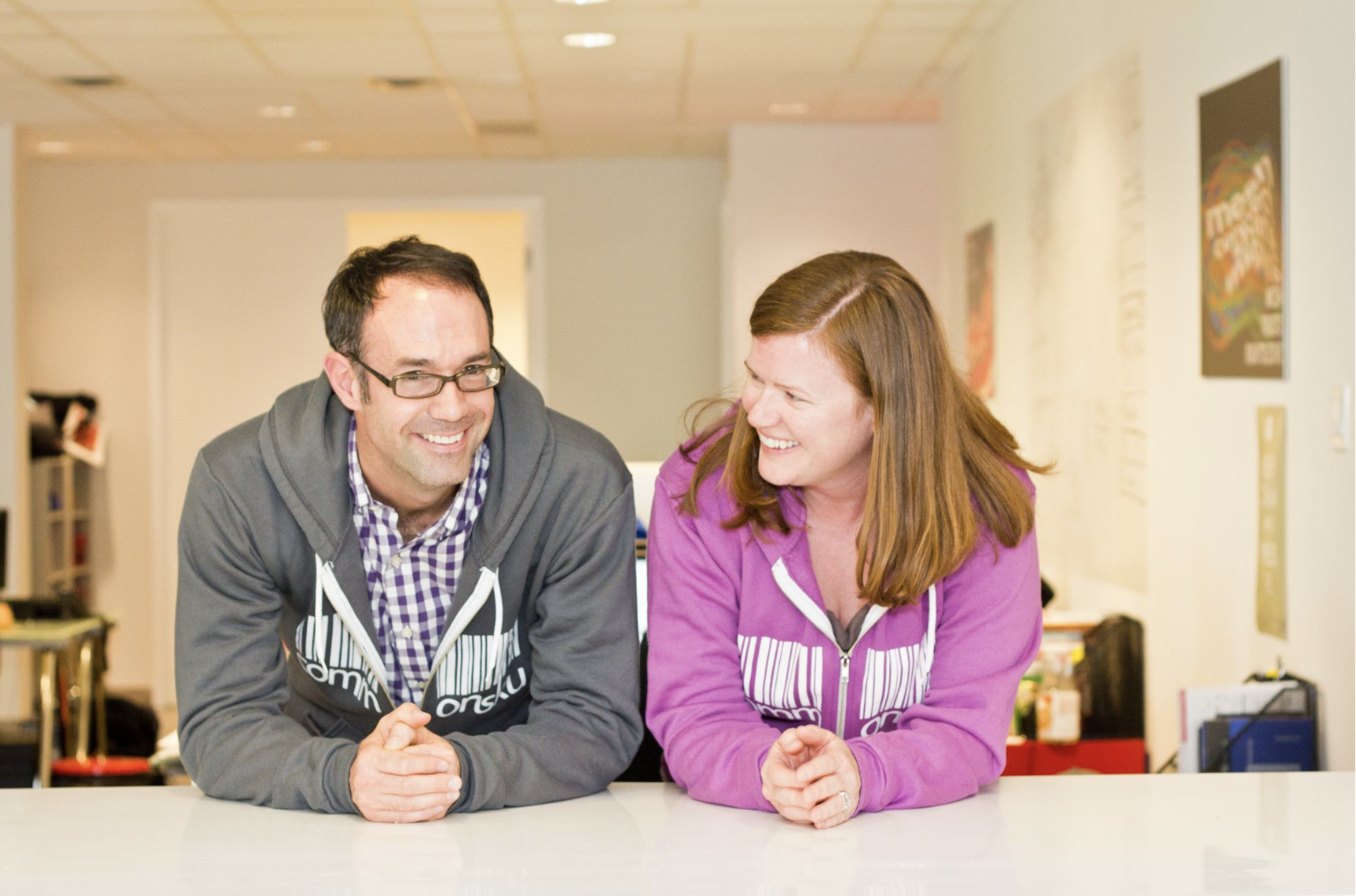
The Grahams weren't chasing a software fortune. They were running Rightsleeve, a Toronto distributorship growing fast but drowning in busy work: purchase orders re-keyed across multiple systems, paper everywhere, sticky notes doing the work of a production dashboard, a supplier calling about a back order with nowhere to put the information. (Mark's technical term for the era: "an absolute gong show.") The founding ambition was almost embarrassingly small: they wanted to take a vacation without the business seizing up.
When no one else stepped up to solve the problem, two self-described non-technologists took it on themselves. What they lacked in technical expertise, they made up for with what Mark calls "a lot of ignorance and a lot of curiosity."
They named it ROMAN (Rightsleeve Order MANagement) with zero plans to sell it to anyone. Then a Toronto distributor, McLoughlin Promotions, asked if they could try a copy, and the verdict from their team arrived fast: this is amazing, don't ever take this away.
That moment is why commonsku exists. It also marked the beginning of a pattern we've seen ever since. What people called "impossible" usually wasn't. It was simply waiting for someone to build it.
Arthur C. Clarke famously observed that when an expert says something is possible, they're probably right. When they say something is impossible, they're probably wrong. He was talking about scientists. He might just as well have been talking about software vendors in 2005.
What "Building Anyway" Costs
Success stories have a habit of editing out the hard parts. This one won't. We're going to tell you about the setbacks, the wrong turns, the moments of doubt, and the decisions that almost never happened.
In 2011, the software Mark and Catherine had originally built just for themselves became a company (common for community, sku for product) and five people set about figuring it out together. In 2012, the first beta customers signed on, including Brand Fuel's Robert Fiveash and Danny Rosin, patient souls who trained their teams in person on software that was, in Catherine's generous phrasing, "less than perfect."
The math of those years was ugly. Rightsleeve's average order ran $5,000 to $10,000; a commonsku license sold for roughly $100 a user per month (a whole $1,200 a year). Skimpy little licenses, Mark calls them, while money poured out of the bank account. Their house moonlighted as an ATM, and they were running commonsku out of their home while their three kids under five ran the household. At one point Catherine asked what happens if both businesses go bankrupt. Her plan: get jobs. Mark's reply: "I'm not employable."
No montage. No overnight success. Just a wheel that turned a little every day.
But that's the thing about building the "impossible." Small bets compound. They look insignificant for a long time. Then one day they look inevitable. Lift your head after two years and you're near break-even. Lift it after fifteen and 950+ distributors run their businesses on the platform, with annual volume closing in on $2 billion. For scale: the entire first decade of commonsku processed 2.7 million purchase orders; in 2025, distributors pushed more than a million through in a single year, alongside 12,000 shops and 320,000 presentations. That's the payout curve of "The First Impossible": flat for ages, then suddenly not.
Checking The Tape
Anyone can claim they saw it coming after the fact. The harder test is making your predictions before everyone else does. Fortunately, ours are on the record.
Back on Episode 23 of skucast, commonsku's podcast, Mark and Bobby Lehew went on the record about the industry's next five years. They cited Forrester Research's forecast that a million B2B salespeople would be out of work by 2020, hitting hardest the reps who are "considered order takers." They warned that Amazon would eventually come for our industry. They argued that transactional sellers would bleed margin to e-commerce while distributors who sold ideas (the agencies, the specialists, the curators) would out-earn everyone.
The scorecard is humbling in both directions. Forrester's timing was off but its target was dead-on: the order-taker model kept shrinking while the consultative model kept growing, exactly along the fault line they described. The Amazon invasion never fully arrived (Mr. Bezos found other industries to terrify), yet disintermediation nibbled away at the simple categories, precisely as predicted. Call it a B+ (self-graded, sure, but the tape is public).
Then, at the ten-year mark on Episode 197, the predictions grew bolder. Catherine's advice was pure hockey: skate to where the puck is going. Mark went further and argued the industry could double in size. As it turns out, he undershot.
The New Impossible
For years, everyone described promo as a $26 billion industry. PPAI recently widened the frame to branded merchandise, and Mark and Catherine now peg the opportunity at $171 billion-plus for the distributors and suppliers ready to chase it. Not double. Roughly six times the field this community thought it was playing on.
And standing between this industry and that field is a fresh set of "impossibles," most of them wearing the same clothes the old ones wore. AI can't handle decoration methods. Automation is for the big guys. Our workflow is too custom. We've written before about self-limiting beliefs and how they harden into pre-excuses; these are the 2026 models, fresh off the line.
Be honest: at least one of those sentences has been said in your company this year. It's been said in ours too. Skepticism is this industry's native tongue, and mostly it has served us well. But there's a difference between skepticism and waiting, and the last fifteen years just showed you the exchange rate. The traditional software vendors who laughed in 2005 were skeptics. The Grahams were skeptics who built anyway.
Here's an opinion sharp enough to be wrong: within ten years, the biggest winners of that wider market won't be today's Top 40. They'll be operators most of the industry hasn't heard of yet. Lean teams automating right now while nobody's watching (least of all their competitors), treating connected workflow and AI the way two non-technologists treated the cloud in 2005. Not as a threat to wait out. As the thing you build on before anyone tells you it's possible.
The Next Fifteen
Today, the commonsku team is nearly 100 skuties strong. The two ideas that were built into the company from the beginning, connected workflow and community, are still at the heart of everything we do. They continue to shape everything we're building today, from deeper automation to AI-powered tools across the platform.
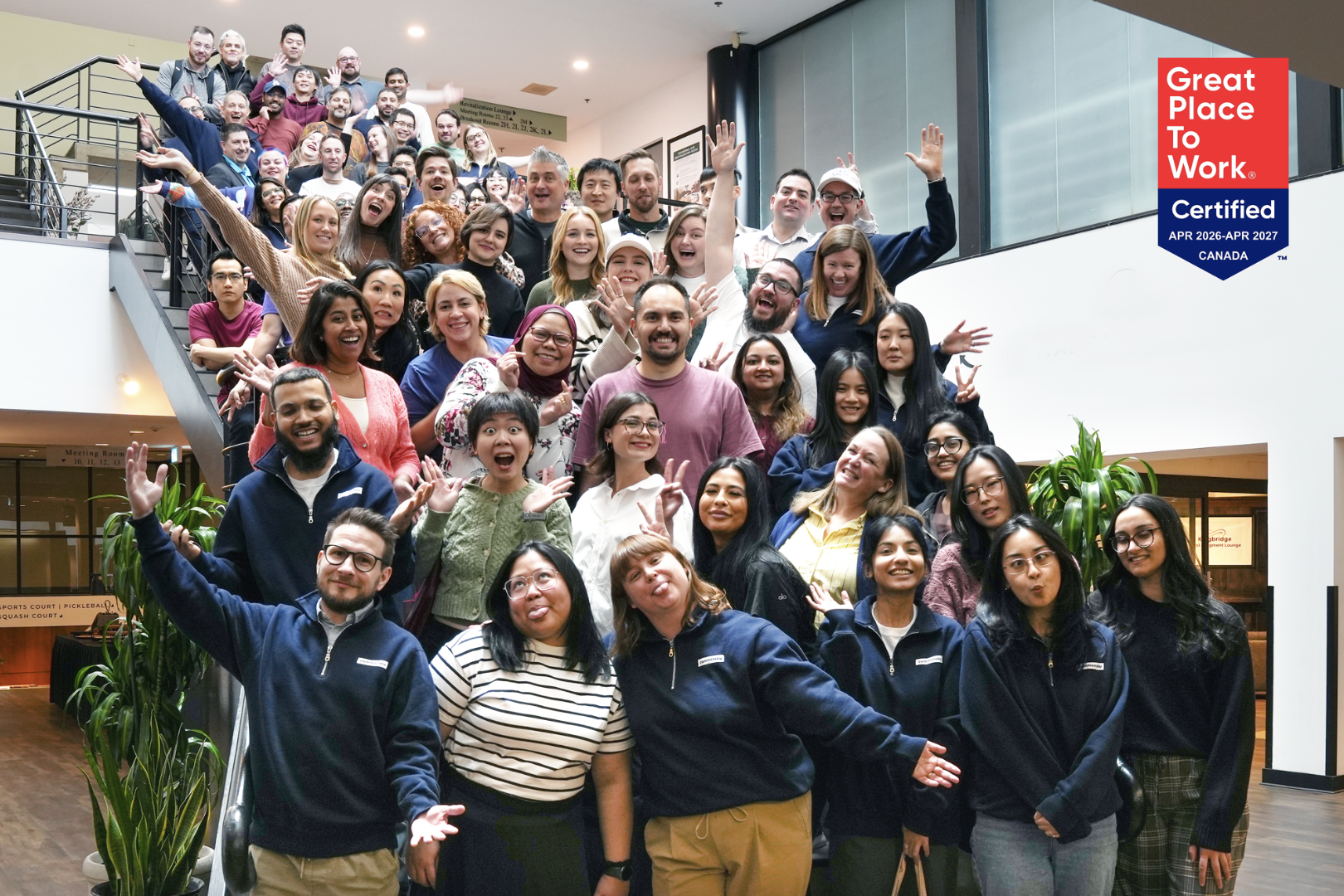
Fifteen years later, the vision hasn't changed. Only the scale has.
People occasionally call commonsku an overnight success. Mark has a standing reply.
"
If an overnight success is 15 years, then sure.
Mark Graham, Co-Founder · commonsku
Fifteen years ago, two people built software so they could finally take a vacation without the business falling apart. The software outgrew the job. Rightsleeve found a new home at Genumark in 2019 (fittingly, a commonsku customer), and what started as a way to create freedom for one business became the platform that 950+ distributorships now run from anywhere.
And somewhere in this industry this week, in a meeting or an inbox or a hallway at a trade show, somebody is explaining why the next thing will never work. Clarke's law says what happens next. So do commonsku's last fifteen years.
Build anyway.
Take the Platform Tour
15 minutes. No demo call required. See what fifteen years of building looks like in practice.
Take the Tour →
RELATED RESOURCES