
 For Owners
 For Sales
 For Production
 For Finance
 Presentations
 Shops
Shops
 Product Mockups
 Client Portals
 Product Search
 CRM
CRM
 Decorator Matrix
 Suppliers
 Navigation & Dashboards
 Production Management
 Reports & Analytics
 Essentials
 Advanced
 Enterprise
 Customer Stories
 Events
 Blog
Blog
 eBooks
 Podcast
 On-Demand Webinars
 ROI Calculator
 FAQ
FAQ


Episode 346: Storm Creek's Blueprint for Sustainability Success
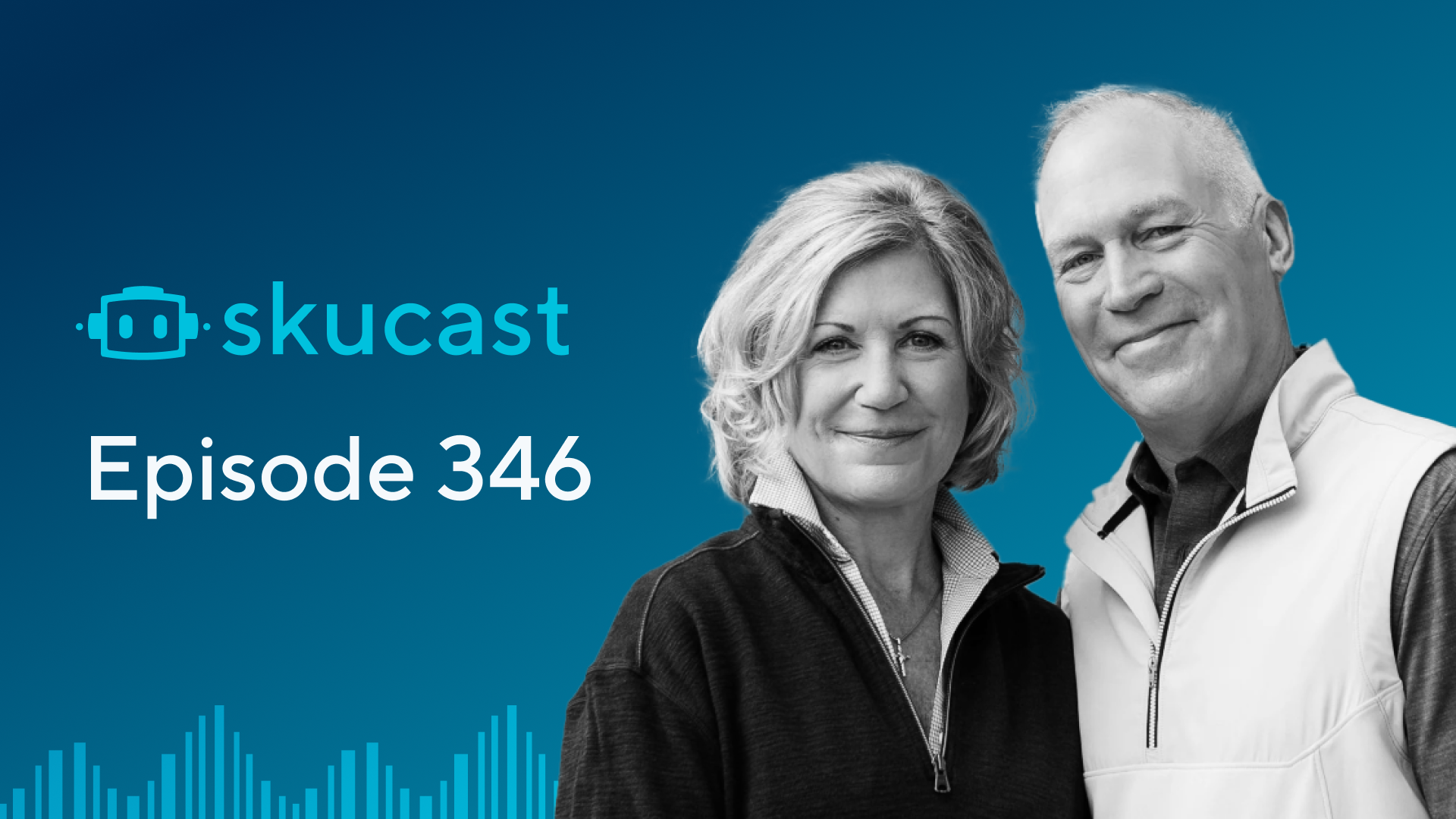
Can you tell a client the exact carbon emissions of the zipper on their jacket? Storm Creek can—and they're betting your next big deal depends on it.
Storm Creek just revealed how they're transforming from a quality apparel supplier into a sustainability powerhouse that's helping distributors win deals they never thought possible. With fresh B Corp certification, UN Global Compact membership, and carbon tracking down to individual product components, they're not just talking sustainability—they're proving it with data.
We dive into:
The Certification Triple Crown
Storm Creek didn't just get B Corp certified (which took 10 months and 400 questions). They also secured EcoVadis designation and joined the UN Global Compact—creating a sustainability arsenal that covers every possible client requirement.
But here's the kicker: they had to change their entire corporate structure from an S Corp to a benefit corporation to make it happen. That's commitment that goes beyond marketing.
Carbon Tracking That Actually Closes Deals
Forget vague sustainability claims. Storm Creek now tracks carbon emissions by individual product components. That recycled polyester vest? They can tell you it saved 75-80% in carbon emissions versus virgin materials. The zipper? They've got data on that too.
They've been building this capability for three years through their Higg partnership, and it's finally live. Distributors are using this granular data to differentiate themselves in RFPs and help clients meet ESG reporting requirements. As they put it: "The first person to provide this documentation moves faster through that procurement process."
The $2.8 Million Give-Back (And Counting)
Their goal was $5 million to charity over 10 years. Halfway through the timeline, they're already at $2.8 million and accelerating. The strategy? Partner with distributors and their clients on causes that matter to them. It transforms a transaction into a shared mission—and creates loyalty that goes beyond price.
Connected+ Changes the Game
Storm Creek just became a Connected+ supplier on commonsku, and their entire team celebrated at their quarterly town hall. Why the excitement? It's all about ePOs.
With PromoStandards integration, distributors can now submit Electronic Purchase Orders (ePOs) for all Storm Creek orders. This means:
- Confirm real-time inventory before you order (the second you send your ePO, that inventory is yours)
- See exact pricing and production status instantly
- Track order status without a single follow-up email
- Get automatic shipping notifications right in commonsku
The efficiency gains are immediate and measurable. ePOs drop straight to the top of their queue with automatic order processing. Their new scorecard tracks "untouched" ePOs—orders that flow from entry to warehouse without human intervention. Real-time inventory updates mean no more calling to check stock.
"Those are going right to the top," they explained. "Those POs get the top priority, the fastest turnaround times. But I also love what you all offer in terms of the AI layer and the ability to add extra support to those of us who are Connected+."
For the nearly 1,000 distributors using commonsku, this integration means Storm Creek's data is instantly accessible when building presentations or shops. No manual data entry. No outdated spec sheets. Just accurate, compelling information that helps close deals.
Sustainability School: Your Secret Weapon
Here's what most distributors don't know: Storm Creek offers a trademarked Sustainability School that turns intimidating acronyms and regulations into actionable selling strategies.
They'll train your entire team (even if it's just six people) and then help you present to end users. One California distributor went from "scared as hell" about sustainability to confidently closing deals with it. The best part? They'll even join your client meetings to help tell the story.
What our chat with Theresa & Doug Reveals
Storm Creek is seeing something remarkable: documentation requests from end users jumped 2-3x from Q1 to Q2 alone. Last year brought more sustainability RFPs than they'd seen since 2017.
Their advice? Start simple. "Every time you offer, offer a sustainable option to just dispel the myth that it's going to cost more." With Connected+ integration on commonsku, adding that sustainable option takes seconds with real-time inventory and accurate product data at your fingertips.
Their parting wisdom: "If we have knowledge in our brains about this and we can help someone, it makes them more comfortable, which helps move the process along and helps the whole industry become bigger."
Ready or not, your next big client will ask about sustainability. The only question is whether you'll have answers.
Show Notes: Key Timestamps & Topics
[00:01:47] B Corp certification journey: 400 questions, 10 months
[00:04:00] The difference between B Corp and EcoVadis
[00:09:00] $2.8 million raised for charity (halfway to $5M goal)
[00:12:16] Carbon emissions tracking by product and component
[00:15:00] Connected+ supplier integration celebration [00:16:44] Measuring "untouched" ePOs and efficiency gains
[00:24:40] Sustainability School and distributor training [00:27:26] California regulations driving urgency
[00:29:55] EOS and the 90-day world driving progress [00:32:48] Looking ahead: optimism for the industry's future
🎙️ Read Full Episode Transcript
Ep 346: Doug and Theresa Jackson, Storm Creek
[00:00:00] Bobby: Sustainability, as we all know, isn't optional anymore. In fact, it's your strongest sales story. Certifications like B Corp and EcoVadis are strategic designations that help distributors win bigger and better business. And when your supply chain gets as transparent as the carbon emissions of a zipper on a jacket, well then now you're not just selling apparel anymore, you are selling impact.
[00:00:20] On today's show, we're exploring how Storm Creek is raising the bar for the industry and for what it means to be a purpose-driven brand in promo and how that helps you. Welcome to the skucast, the podcast for innovators and maverick thinkers in the promotional product space. My name is Bobby Lehew. I'm glad you're here.
[00:00:36] Storm Creek is led by Doug and Theresa Jackson. They are known for their relentless innovation and their mission to do better. In this episode, they share a behind-the-scenes look at becoming a B Corp, how you can unlock faster orders and accuracy with their new Connected Plus supplier status on commonsku.
[00:00:52] And how Storm Creek's Sustainability School is helping distributors turn complexity into opportunity. [00:01:00] Today's episode is brought to you, courtesy of us at commonsku. Over 900 distributors powering 1.8 billion in network volume rely on commonsku's connected workflow. Process more orders, connect your team and dramatically grow your sales. To learn how, visit commonsku.com.
[00:01:15] Now here's my chat with Doug and Theresa.
[00:01:17] Doug and Theresa, welcome to the skucast. Welcome back again. I'm so glad we get to talk again. You guys have been innovating so much that we now had to have another podcast, just 12 months about it. Roughly after we had the last one.
[00:01:28] Doug and Theresa: Oh, it's been a year. It's been a year, yes.
[00:01:30] Bobby: Let's talk a little bit about B Corp certification right away. You have to be so proud. Sustainability's been baked into your DNA from day one. And so this is such an interesting time for you. Congrats on this. Why was it important for you to pursue this?
[00:01:47] Doug and Theresa: We kept being told that we should and for years, and I'll be guilty as charged. I've had it on my to-do list for a long time, and it seemed daunting. It wasn't until we officially added a full-time sustainability and [00:02:00] compliance manager, Laura. She's like, "Yeah, I got this." And so we knew it was so important because it is the most highest standard, the most rigorous review and assessment. I mean, not just the number of questions, but the depth and the documentation that you have to have for each of those, and then the back and forth if they don't think you've supplied enough. But just from an international perspective, I think we have all felt for a long time, let's go for what we think is the highest standard.
[00:02:27] Bobby: Yeah.
[00:02:27] Doug and Theresa: Even though it seemed like the hardest one. And I'm asking, "Are you done yet? Are you done yet? Are you done yet?" She goes, "Doug, this is hard. It's like 400 questions."
[00:02:38] And it took a long 10 months. Yeah, and it really, I mean, so many meetings internally too. She was the spearhead, but it takes finance and accounting and product and purchasing and HR and all of us, and you know, certainly from an ownership standpoint.
[00:02:53] Bobby: Doug, how does this feel? This feels like a ratification of your values after all these years, like something that you've [00:03:00] always believed in at your core. So to have this certification, how does that feel to you now?
[00:03:04] Doug and Theresa: Laura's doing these questions and she's about halfway done with the questions. I said, "What question are you on today?" So there's like 400 of them. And she goes, "Well, I'm at like 140." And she goes, "Doug, guess what? We already got 80 points." And I'm like, "Okay, let's move it."
[00:03:19] And so like, we had our points like right away and you know, they have to be verified and stuff, but oh my gosh, we were, we kind of knew we were gonna get it right.
[00:03:28] Bobby: Yeah.
[00:03:29] Doug and Theresa: We certainly knew what was gonna happen. It's just a process.
[00:03:33] Bobby: Yeah.
[00:03:33] Doug and Theresa: It felt good. It's exciting. That validation of the work that you started a long time ago, but that it, there was something more tangible and recognizable to hold it all together, you know.
[00:03:46] Bobby: Yeah, it's great to have that sort of designated seal, so to speak, even though it's been a part of your DNA.
[00:03:51] Doug and Theresa: Yeah.
[00:03:52] Bobby: Tell me a little bit about how you also have EcoVadis designation. How does this complement your B Corp status?
[00:03:59] Doug and Theresa: [00:04:00] You know, I'm realizing just now how different they actually are. We actually sailed through the B Corp. We got fast tracked because of our initial high number of points and our give-back programs.
[00:04:12] Bobby: Yeah.
[00:04:13] Doug and Theresa: I think in talking to distributors, we had a different understanding of what the questions would be on EcoVadis, and they are different. They're different for distributors than they are for suppliers. And what's really interesting is in B Corp they're not, and we were kind of disappointed that we just didn't come in right away at the highest level of EcoVadis because it's not as stringent. It's different. So what we get asked is, it's much more internally focused and we've been externally focused like 90%. Isn't it 90% of the carbon, the environmental issues and the carbon emission issues and everything in apparel? It's in the supply chain. It's in supply chain. [00:05:00] And so we're the ones that everyone should be looking at, you know, how do the suppliers do better?
[00:05:02] Bobby: Yeah.
[00:05:02] Doug and Theresa: And that's we've been focused, and that was not as much a part of our EcoVadis assessment. So a little bit disappointing that they didn't look under that hood, the hood that we think is the most important, but we understand their understanding of what they're looking for. And so it does complement. I would say I have a higher regard probably for the B Corp because of how rigorous and in depth and consistent amongst the types of companies. I mean, Ben and Jerry's is answering the same questions as Storm Creek.
[00:05:31] Bobby: That's amazing.
[00:05:33] Doug and Theresa: It seems having both seems important. Yeah. Right. And the EcoVadis seems like, "Okay, do you have all your documentation for this? Do you have..." and it's really like with your staffing and things like that, but we believe that we'll get, we'll move our way up on that very fast 'cause now we know what it is.
[00:05:51] Right. And we can just fill in some more things and do some more questions. So it's important for the industry, so it's important to us.
[00:05:59] Bobby: [00:06:00] How do these two designations then help distributors tell a better story to their clients? It sounds like they, like, I didn't realize how much of a difference there was between these two until you're explaining to me now. So I would assume those are different certifications for different selling opportunities for a distributor to position Storm Creek and the distributor as the partner. You might choose a story to tell through the EcoVadis line or through B Corp. Right.
[00:06:27] Doug and Theresa: I think it's always about, you know, for some, there is something in all of this that resonates with everyone and their end user. For us, just like when we teach Sustainability School, we're like, it all starts with the question, what's most important? People and purpose or community and purpose?
[00:06:43] Okay, we're going down that avenue and that's a big part of B Corp. Supply chain and all that, and certifications, we go down that avenue.
[00:06:52] Bobby: Right.
[00:06:52] Doug and Theresa: And how what you're doing right within the confines of your own operation. And, you know, a distributor might have solar powered [00:07:00] energy and have a great DEI program or whatever, so it might focus on that, you know what I mean?
[00:07:05] If there's, there's an, it's really dependent on what is most important to that end user customer. And what for, in our case, what is it that they're measuring? And then that's, we ask questions and then we've kind of got something to check every box. It might be women and minority owned and we start talking about that and minority spend.
[00:07:23] So, you know, when you say all those certifications, it's important to us that we had the whole realm covered so that we could have each type of organization and what's important to them covered.
[00:07:35] Bobby: Yeah. What I love about Storm Creek is you live it. Like this isn't just something that you threw a seal on. You guys were already the real deal. Doug, anything else before I move on?
[00:07:44] Doug and Theresa: I just think the B Corp is just a really in depth look at the whole thing. Right. It's the whole, it's the whole package. 'Cause it's, you know, it's just so valuable 'cause it covers [00:08:00] the whole company and the depth of which we do it.
[00:08:00] Bobby: Yeah.
[00:08:00] Doug and Theresa: And people might not know, you know, be familiar with B Corp, but it's five separate areas, you know, it's workers, it's community, environment, customers and governance.
[00:08:14] So, you know, we had to change the structure of our organization to legally commit our company. Storm Creek was an S Corp, but it's now a general benefit corporation. It's not an S Corp anymore.
[00:08:26] Bobby: Wow.
[00:08:26] Doug and Theresa: We had to commit to changing the structure of your organization so that you put people and planet right up there with profits.
[00:08:32] So like we are committed to that and not everybody probably wants to change their corporate structure to do it, but that's one of the things you're referring to about the kind of the depth and breadth of it.
[00:08:42] Bobby: That's incredible. Speaking of how much money have we raised so far on our initiative?
[00:08:47] Doug and Theresa: Oh, I thought you were gonna say, speaking of how much money have you had to spend.
[00:08:50] Bobby: Yeah. No, I wasn't gonna get that deep. I was curious, speaking of impact and community, tell us a little bit [00:09:00] about that initiative.
[00:09:00] Doug and Theresa: You know, I think when we talked before, we talked about our goal of five million to charity over 10 years. That was our BHAG through EOS in 2020. And so we're halfway there in time and we're about $2.8 million in the giving. But we'll be way past that by end of the year. So way past 3 million by the end of the year.
[00:09:24] We'll make that for sure.
[00:09:27] Bobby: That's amazing.
[00:09:27] Doug and Theresa: You know what, it's fun. You know, we're, you're with a customer and this customer has a charity that they love. It's fun for us to say, let's do something together. So, you know, we always just say, "Hey, if you have something that you're really passionate about, we would love to work together to try to do something with you."
[00:09:47] Bobby: That's amazing. That's fantastic. 'Cause then the distributor can turn to their clients and say, well, it's important to you. Let's figure that out together. Love that. Tell me a little about the UN Global Compact. [00:10:00] What does that, what is that, what does that mean and how does that fit with Storm Creek?
[00:10:01] Doug and Theresa: I said, it's so funny, I had to ask a few more questions about that one. 'Cause that's a relatively new one for us, but it's these 10 principles and it's a lot more centered around fair labor. And it's a lot about human rights and environmental, but it's these 10 principles that it, it's interesting because we're already doing all these things, right? So it's not like going out and agreeing to do something more, but at this level, we're agreeing and committing and stating what we're doing internationally. And by doing that, that's really helpful because, I mean, Doug, you've been working on projects where we've been asked by multinational organizations.
[00:10:40] Can you check these boxes because we're shipping over here, we're shipping over there, multiple different countries and that, and so just more aligned, I would say, with international practices. You know, it's those 17 tiles. You've seen the image right.
[00:10:53] Bobby: Yeah.
[00:10:54] Doug and Theresa: They have like 17 different tiles and there's 10 that they really focus on.
[00:10:58] But it's all those key [00:11:00] things that are super important. Not much new, just very much a different lens or someone else's different filter of that.
[00:11:07] Bobby: Yeah.
[00:11:08] Doug and Theresa: We came up for the first time with an end user that came into the showroom though and really wanted to talk more specifically about that. And you know what, these end users are educated.
[00:11:17] Bobby: Yeah.
[00:11:18] Doug and Theresa: So that's the other thing. I mean, it's okay to say, hang on, let me grab some documentation or let me grab someone else to talk about it. So we don't wanna be intimidated by these questions, but we don't wanna not at all have them on our radar.
[00:11:31] But we got asked about that the other day and we were glad to be able to, you know, respond accordingly.
[00:11:36] Bobby: Thank you for that transparency. And also that's great coaching for distributors to know too, right? You don't have to know all of these things. You can always just have an open mind and open heart toward them. And when that end user and that end client is approaching that, that's exactly how we handle it. It's a great way to handle the situation.
[00:11:50] Doug and Theresa: We constantly tell our salespeople, I said, just let people know that we're here to help. [00:12:00] Because we, at the end of the day, the more that we can, if we have some knowledge in our brains about this, and we can help someone, it makes them more comfortable, which helps move the process along and helps the whole industry become bigger.
[00:12:11] Bobby: You are now featuring carbon emissions data by product and apparel by style. Tell me a little bit more about that. That's fascinating.
[00:12:16] Doug and Theresa: Oh my gosh. It's been like one of my hot topics for a long time. It's like, "Are you done yet? Are you done yet? Are you done yet?" Doug should know. So that's why we started with Higg like three years ago. Because I'm like, "Okay, we're gonna start doing this." 'Cause, you know, when we do something with recycled bottles versus virgin, you know, virgin polyester to recycled, right? There's a 75 to 80% difference right? In carbon emissions. Okay? So now when you think about that, so now we're, we can start measuring that. So I wanna be able to show, if someone has ESG reporting, I wanna be able to show them that, okay, you bought this item from us. Theresa: So that's the other thing. I mean, it's okay to say, hang on, let me grab some documentation or let me grab someone else to talk about it. So we don't wanna be intimidated by these questions, but we don't wanna not at all have them on our radar.
[00:11:31] But we got asked about that the other day and we were glad to be able to, you know, respond accordingly.
[00:11:36] Bobby: Thank you for that transparency. And also that's great coaching for distributors to know too, right? You don't have to know all of these things. You can always just have an open mind and open heart toward them. And when that end user and that end client is approaching that, that's exactly how we handle it. It's a great way to handle the situation.
[00:11:50] Theresa: We constantly tell our salespeople, I said, just let people know that we're here to help. [00:12:00] Because we, at the end of the day, the more that we can, if we have some knowledge in our brains about this, and we can help someone, it makes them more comfortable, which helps move the process along and helps the whole industry become bigger.
[00:12:11] Bobby: You are now featuring carbon emissions data by product and apparel by style. Tell me a little bit more about that. That's fascinating.
[00:12:16] Theresa: Oh my gosh. It's been like one of my hot topics for a long time. It's like, "Are you done yet? Are you done yet? Are you done yet?" Doug should know. So that's why we started with Higg like three years ago. Because I'm like, "Okay, we're gonna start doing this." 'Cause, you know, when we do something with recycled bottles versus virgin, you know, virgin polyester to recycled, right? There's a 75 to 80% difference right? In carbon emissions. Okay? So now when you think about that, so now we're, we can start measuring that. So I wanna be able to show, if someone has ESG reporting, I wanna be able to show them that, okay, you bought this item from us.
[00:12:57] Let's say you bought a thousand vests from us [00:13:00] and 10,000 bottles or something, right. By doing that versus virgin, we can tell them exactly what they saved, but then we also know that that zipper had this much carbon emissions. We're now gonna be able to study all that and it's pretty in depth because we make some complicated items and some are easier than others. But yes. So that's a goal that we're gonna get all of our items done where we can keep track of that. But then we can also look at how much we've saved. Right? How much by using recycled or more sustainable materials than virgin, how much it helps it.
[00:13:31] It's a lot of it is about finding a tool to do it. So you feel like you're doing it accurately and not just in this kind of getting average type of thing. And so that's been on our roadmap probably for two years and we've vetted a few different tools and we've decided that some kind of don't meet the rigor that we want it [00:14:00] to, but we've already gotten our RFPs from people where we've had to provide this documentation. And so we've, I mean, it's been successful. It just takes a lot of work. And so we do bestsellers first and we do what's going into RFPs and being requested first. But the early feedback has just been really positive on how people can differentiate themselves through this.
And the thing is that like anything, you know, the first person who provides a quote online, the first person to provide this documentation, it gets the next conversation or moves faster through that procurement process, right?
[00:14:35] Bobby: Yes, and you know, at my core, I'm still a distributor in my mind, so I think of how I would use that on my customer shops and how I would help educate the end user about what they're buying and what their brand is going to be like that. Just really exciting tool to know that that is possible.
[00:14:50] Doug and Theresa: Yeah, it'll be good.
[00:14:52] Bobby: Let's talk a little bit about what we are so excited about is the Connected Plus integration with commonsku. You've upgraded to become a Connected Plus supplier. What [00:15:00] capabilities does this unlock for distributors working with you?
[00:15:03] Doug and Theresa: Well, it's the, obviously the real time information. I mean, the thing is, and I always empathize with the distributors who want, they need to know that that product data is a hundred percent accurate. And as things change or inventory changes or our composition of our fabrics changes, our recycled bottle count changes. I mean, it's a lot to keep up with. So obviously that data integration, but the e-POs are coming directly to us. You guys were actually the topic of our quarterly meeting today. When we did our quarterly town hall, celebrated different wins and all of that. And the customer service team, the IT team and the sales team all kind of celebrated that as such a big win because of the efficiency and the prioritization.
[00:15:48] I mean, those are going right to the top, right? Those drop immediately to the top and those POs get, you know, the top priority, the fastest turnaround times. But I also love what you all offer in terms of the [00:16:00] AI layer and the ability to add extra support to those of us who are Connected Plus, right.
[00:16:05] Bobby: Well, I was gonna ask, for you to speak to even more to the efficiency gains that you plan on seeing. I mean, obviously this is something you've said is very important. Your team to celebrate it today is phenomenal. What do you see this, how do you see this impacting your business as you move through the year and this gets going?
[00:16:22] Doug and Theresa: You don't have to enter an order, right? So think about that. So we have a scorecard measurement and it's the number of e-POs that go, that come in and don't require touching.
[00:16:32] Bobby: Right.
[00:16:32] Doug and Theresa: That is a stat worth measuring. That is something that we'll know if, in terms of how we can move the needle, that's obviously can be a cost savings and you know, we can direct those energies internally into other things.
[00:16:44] But just the efficiency in turning around, it's a complete PO right? And then the efficiency in turning around that order. So we're measuring anything associated with that win in of itself. And with, you guys have almost a thousand [00:17:00] distributors. Think about that. We're measuring the aggregate volume of those e-POs.
[00:17:03] And so what do we wanna do? We wanna grow more with those distributors because we have something to offer them. And then it's just something that really is an efficiency gain for us. It'll be, it'll be out in the warehouse in seconds. And accurate. Always. Right. So it's a dream. It's just a dream.
[00:17:21] So, you know, we're super excited to get more involved with you guys.
[00:17:24] Bobby: That's so cool. Distributors love it for all the same reasons we just talked about. Let's talk a little bit about Storm Creek's competitive advantage, these sustainability certifications you have on the op side, you have commonsku Connected Plus, like you said, there's nearly a thousand distributors who are using this now. I mean, this is really amplified and sped up the Storm Creek brand. I mean, you're already highly respected brand in the industry, but wow, what a year the certifications. Things like Connected Plus and all that, how does that feel? How do you feel like Storm Creek is positioned for the rest of the year and heading into the future?
[00:17:57] Doug and Theresa: We were just with some customers [00:18:00] recently and one thing that we love hearing so much is people talk about our quality. It's like the first thing they ever talk about is quality. And that's what I always tell our team. I said, you guys, at the end of the day. We're sustainable. We do all these things, but at the end of the day, we give them really good quality product. We always are gonna make sure we give them good quality product. And then the fact that we can give them what they need. And if it's true, if it's really true that 78% of the people want to buy sustainable and 88% of CEOs want it.
Why won't you try, right? And so now our job, we can give them the quality. We can now, if we can just help bring comfort to them.
[00:18:44] Bobby: Yeah.
[00:18:44] Doug and Theresa: We can do so many things and as far as the certifications we have, we have everything that you could ever ask for. And I believe our competitors do too.
[00:18:55] When they're doing something sustainable, they gotta, they gotta keep track of that stuff. So it's [00:19:00] super important to ask. It's starting to come. It's what's exciting is people are asking more and more now, so our customers are starting to ask. So it's awesome. It is, it is exciting. I mean, we obviously track how customers come to us and it's also a stat on one of our scorecards, but so often it's the end user asking the distributor for a sustainable product or asking for Storm Creek by name. Because obviously we like to get this word out even beyond the industry because we just want to be celebrated and known as someone who's really interested in helping you meet your goals through your apparel spend.
[00:19:37] Right? And so it's just exciting for us to know that we were feeling a little defeated, say five years ago when we'd be like, "Look at it. This is so important." They're like, "Yeah, but that's not my customer. But yeah, not to my customer." And so to be able to say, let's just back up and say, "All right, did you go on the website before you met with the end user?
[00:19:56] Did they have any ESG goals? Did they have anything at all that [00:20:00] highlighted purpose or any of their other values?" And that values alignment is really coming to bear. So it's been so different in the last year even. We also track the number of requests that the end users have of the distributor for some sort of documentation, whether it's we've had to fill out where we give our money to. We've had to obviously show our WBE certification. We have to show documentation by style. Could be obviously the B Corp request. The first one came in for that the week after we were able to share that piece of paper. But those things are just, I mean, in quarter two alone probably a two to three time factor in those requests since quarter one.
[00:20:46] So that's telling you that's where the marketplace is. And so, you know, that's what the world wants. So let us help you be competitive with those answers. I would say in the last 12 months, we got more than we've [00:21:00] received since 2017. And probably the last, you know, six months. It's crazy. The, it's definitely picking up. It's definitely picking up.
[00:21:11] Bobby: I wanna ask a question that I'm thinking again of myself as that distributor. Let's say I'm running a 5, 10, 15, $20 million distributorship. 20 employees, half a dozen to a dozen, which may be salespeople.
[00:21:25] Theresa: Sure.
[00:21:26] Bobby: I hear this story and I go, oh my gosh, we need to really invest in partnering with Storm Creek more, and I know my team, I know my team has this reflex where they turn to a lot of their same partners and things. I'm trying to figure out how would you encourage distributors to integrate Storm Creek into their selling process instead of waiting for that client to come in and push them.
[00:21:46] They know that when that client pushes them, they're gonna go to the market and do that, but how do they do it on a proactive basis? Like what are just some simple steps I can do and I'm trying to just, I know this is a softball, I'm throwing straight down the middle to you guys, but I still think it's important because I was that [00:22:00] CEO who would talk with a supplier like you and go, oh my gosh, this is so important for our customers, for me to invest in.
[00:22:06] How do we do that? What's some just real simple, logical next steps.
[00:22:10] Theresa: You know, it is funny 'cause I bet you we hear this from company CEOs. Like constantly, constantly. They're saying, "We're telling our team they gotta go after Storm Creek, they gotta use this more," you know? And at the end of the day, you know, we just have to constantly make it easier and easier and easier.
[00:22:29] Right. You know, the CommonSku integration is a key thing. How much simpler does that get, right?
[00:22:36] Bobby: Yeah.
[00:22:37] Theresa: We're part of the FAST platform for decoration now, so we can start doing one piece orders. So there's a lot of things that makes it easier for people with the one piece orders and things like that.
[00:22:49] And we have a great team of people inside that. You know, we're here to help. Like they're doing virtuals for the team, they're doing all these different things, or [00:23:00] you know, and if we find out, like with any, like if you were the CEO and you said, "This is what's important to my team," we would figure out how to do that.
[00:23:08] You know, I, I know you're alluding to habit buying, right? And that habit buying is obvious. There's something easy about it, so we have to be just as easy in the background. But one of the just quick tips, besides scaring them and saying, if you don't do this, you're gonna be... let's. I would be one scare tactic we could do. But instead we just say, what if you, every time you offer, offer a sustainable option to just dispel the myth that it's going to cost more, be scratchy if it's made out of plastic, maybe not as nice a quality or what have you. And just say, the simplest thing.
[00:23:44] Give them something. You need a thousand jackets. What if you upcycled, you know, 40,000 bottles in that purchase and just tossing some things out like that. Or again, just being aware of how could I make you look good? You could look really great as the head of procurement who brought some stats [00:24:00] and some metrics into the company goals, right?
[00:24:03] We talk a lot about that in Sustainability School in terms of if you're not looking at this, you don't wanna be caught flatfooted, right? I mean, it's just the extended producer responsibility alone. We taught Sustainability School last week and several were in those states.
[00:24:18] Several attendees were in those states that need to report on the packaging and all of that. And we knew we were supposed to do this, but we kind of didn't know about it. We've been putting it off, so, "Oh my God, we absolutely have to switch everything over to Storm Creek, or we have to do this 'cause we know you'll do the work for us."
[00:24:36] Bobby: Tell me a little bit more about Sustainability School. You mentioned that a few times.
[00:24:40] Doug and Theresa: It's a trademarked service that we offer not only to this industry, but just to other businesses and individuals so that we can educate on what the importance is of sustainable apparel buying. So we do it with our [00:25:00] customers and we do it through obviously education, both online and in person so that they all have an opportunity to make a difference.
[00:25:05] It's something that is the second largest polluter in the world. And so we break it down into, there's a quiz combined with learning, and it changes every quarter because that's how fast everything is changing. So like we've taught commonsku, you know, Sustainability School. So, but we, but we have to keep teaching it because it keeps changing.
[00:25:23] It's basically our commitment to stay on top of it so you don't have to.
[00:25:28] Bobby: Mm.
[00:25:28] Doug and Theresa: It's, that's where people get tripped up, right? Alphabet soup. Constant changing regulations. We don't even know what this means. What is PFAS? You know, it's scary to some, but we'll do it with all the commonsku members, separately, we would say, you know what, Bobby, let's do, let's do Sustainability School. Get your team together. We will go through it with you, and then we're there to answer questions.
[00:25:51] And a lot of people follow up with us afterwards and say, "Hey, can you help me with my customer? I want to, I want to go to [00:26:00] my end user and talk to them about it because it's important to them." So then we get on a meeting with the end user also.
[00:26:06] Bobby: Yeah,
[00:26:06] Doug and Theresa: We're doing a lot of, we're doing a lot of teaching right now.
[00:26:10] And it's been awesome. And it's just exploding. We just hired a new national accounts guy and he got three meetings set up just yesterday, you know, so with people wanting to do Sustainability School. Right.
[00:26:22] Bobby: We will link to that in the show notes. I mean that you just gave me something very actionable as the leader of my distributorship to go, "Hey team, we're doing this and we are going to get educated on this" because you're right, it's so confusing. I mean, distributors have hundreds of clients, thousands of projects a year, and this is gonna be a huge part of the future moving forward.
[00:26:38] So we'll definitely link to that.
[00:26:40] Doug and Theresa: And what's funny is we were with a guy like three months ago, he had six people on his team. Six total people on his team. We did Sustainability School. He was like, "Oh my gosh, this is amazing." And everyone was so excited about it. And so pretty soon we're doing a meeting with [00:27:00] this sales rep, pretty soon we're doing another meeting with this sales rep, and then we're getting their end users involved, and so it can really blossom. And he said that it's, it's fun to see his team has kind of changed and they were scared as hell. It's like, "Oh gosh, I don't know about this."
[00:27:12] Bobby: Right.
[00:27:13] Doug and Theresa: And now they're like getting more comfortable and they're talking about it and so, and they're in California, so it's good for them, right?
[00:27:20] Bobby: Yep.
[00:27:20] Doug and Theresa: 'Cause California's a tough state.'s funny is we were with a guy like three months ago, he had six people on his team. Six total people on his team. We did Sustainability School. He was like, "Oh my gosh, this is amazing." And everyone was so excited about it. And so pretty soon we're doing a meeting with [00:27:00] this sales rep, pretty soon we're doing another meeting with this sales rep, and then we're getting their end users involved, and so it can really blossom. And he said that it's, it's fun to see his team has kind of changed and they were scared as hell. It's like, "Oh gosh, I don't know about this."
[00:27:12] Bobby: Right.
[00:27:13] Theresa: And now they're like getting more comfortable and they're talking about it and so, and they're in California, so it's good for them, right?
[00:27:20] Bobby: Yep.
[00:27:20] Theresa: 'Cause California's a tough state.
[00:27:21] Bobby: Any other thoughts before I go to my final questions here? Doug and Theresa, do you wanna add anything else about the school or anything?
[00:27:26] Doug and Theresa: I do feel like people kind of avoid it or say it's not important to my customer because it's something else they just have to take on. Right? What else do I have to learn?
[00:27:35] Bobby: Yeah.
[00:27:35] Doug and Theresa: Again, empathy with understanding hard goods, soft goods, everything in between and not just how each supplier works, but understanding my customer and the deadlines and the art. And now you gotta layer on all these acronyms. That's really the whole purpose in all of it is, and then just so it's, it's taking a little bit of the mystery and definitely a lot of the fear out of it.
[00:27:58] And you know, a lot of what [00:28:00] happens is what's the easiest way? I'm gonna get an order from a customer. What's my easiest way to take care of this so I can move on? Right. That's the distributor mindset. And so this might not be as easy, so we just have to help bring the comfort there to make it easy, and bring them comfort that we can do this simple. You know.
[00:28:20] Bobby: I like what you just said. So in other words, I may be the distributor saying, I don't have time for Sustainability School. I got these projects to knock out. Just call Storm Creek and just let them help educate you on each project by project, I mean, if necessary.
[00:28:31] Doug and Theresa: I had a lady last week says, you know, "I got 20 programs that I do and I just throw the same company in every one of them. And she's like, you know what, I gotta be done. It's my fault. I need to start doing some of this because I know they want this. 'Cause every time they get your stuff, they love it and I know they want sustainability, but I keep going down this thing because it's easy for me, but I gotta change.
[00:28:56] So she said, "Can you hold me accountable to change?" [00:29:00] Here's my card. It was, it was really funny because she goes, "It's really me. I'm the one that's causing the problem because I just like, oh gosh, it's this easier, I'm just gonna do this again."
[00:29:10] Bobby: Yeah,
[00:29:11] Doug and Theresa: She said, "I wanna change, I want to get them into some of this kind of stuff."
[00:29:15] So, and I get it, we all get busy. Right.
[00:29:18] Bobby: Yep. But you're hitting on that habitual selling. I love the fact that here you are, you're gonna sell more to this customer because she asked to get you to keep her accountable. I've never heard that before. That's an interesting selling angle I've never heard before. That's great.
[00:29:29] Speaking of EOS, that has had to really impact a lot of these things. As you've, you know, we talked about this last time, but that's been such a part of you. You're humble folks, you've been recognized as one of the leaders in your business. Not only in our industry but just in just entrepreneurship in general.
[00:29:47] EOS has had a big impact on that. Can you speak to that a little bit? 'Cause I have a lot of distributors that ask about that, or they're midsize or larger distributors who are thinking of embracing that.
[00:29:55] Doug and Theresa: Yes. I have a lot to say about that. I think that could be a whole other podcast, but no.
[00:29:58] Bobby: I know. I know. [00:30:00]
[00:30:00] Doug and Theresa: Right. Again, commonsku being this collection of independent distributors, businesses who are growing and all sizes, but probably most fall into that could well be a fit for EOS, you know, over 10 people, over 5 million, whatever.
[00:30:16] But we wouldn't be, let's talk just the sustainability part. There's no way we would be here without EOS because remember, we have a one and a three and a 10 year goal set, right? We have a three and a five year sustainability roadmap. The only reason we're getting all this done is 'cause we're living in that EOS 90 day world where every quarter we're knocking off probably eight to 10 projects or rocks as they call them, related to sustainability alone.
[00:30:44] But literally the last quarter alone was eight. There's another 10 on the docket this quarter. And so every week somebody's making progress toward those. And so if that's such a commitment, whatever it is, you know, we have our seven primary goals [00:31:00] for the year, and that's one of them.
[00:31:00] All those things have to break down to a 90 day world. And then before you know it, like everybody raised their hand today, "Well, who completed rocks and what, how many," you know. Think about the power of doing eight, doing, you know, if you have 40 people and at least 40 rocks, that's 40 more things that you did to advance your business in the last quarter that were not just part of the day-to-day.
[00:31:19] And so focusing that and harnessing that energy to the thing that's most important to drive your competitive advantage. And in this case, again, sustainability being one of them. That's where that progress got made. And so that type of focus requires some sort of an operating system.
[00:31:36] Whatever you choose. It can't rely on Doug and Theresa and Bobby's to-do list. Because it's just not gonna work. Right? So that's an example of kinda how that came to bear specifically in that area. But overall, EOS, you know, we've been doing that since 2017 and like everybody, we have our ups and downs with it, like a diet or an exercise routine, and you just always go back to the basics.
[00:31:57] Bobby: Right.
[00:31:57] Doug and Theresa: Those basics, you know, just [00:32:00] keep that traction going.
[00:32:01] Bobby: Yep. I bring it up because I think I've seen this with some of the most successful distributors I have seen, them adopt commonsku, adopt EOS. And with those two pieces, that has really been a catalyst for their business. And I've heard this from so many anyways, that's why I bring it up.
[00:32:18] Thanks for talking to that. Let me ask you one final question, both of you. There seems to be so much momentum behind what you're doing now, and yet you've built this brand for years. And it feels like you're at this new sort of phase of your business life. How do you feel heading into the rest of the year?
[00:32:37] Like how optimistic do you feel just about your business and the industry in general now compared to, say, 12 months ago or two years ago? Doug, we'll go with you first and then we'll end with Doug and Theresa. How's that?
[00:32:48] Doug and Theresa: I'm actually probably as excited as I've ever been, just for a few things because we've ticked off a lot of things that we've been working on, right? We've been working on getting our [00:33:00] sustainability just where we're at with all that, to the best level we can. We got the bluesign now. We got B Corp, and so we're in a great, we're in a great place there. Our factories are doing great. There's the headache with tariffs and all that, but that's business, right? We've hired some great salespeople, they know this industry inside and out better than, like I think I know what's going on, but these guys are so talented and so that's super exciting. And our customers, we just constantly hear how much they love us. Right. We just have to do a better job in my mind, and making it easier all the time.
[00:33:36] Like, how do we just constantly make it easier for them, so I think we're in a, I do think we're in a really good place and we have a great team. We still hear that we service people really well and at the end of the day, if we can really take care of the customer, there should be nothing but good things ahead.
[00:33:55] Bobby: Yeah,
[00:33:55] Doug and Theresa: And we still love working together.
[00:33:58] Bobby: That's important. [00:34:00]
[00:34:00] Doug and Theresa: Yeah, we do love working together. And it's funny because a lot of people say they could never do this. We're together. And I like, I don't even think about it, I think we have this nice mesh, you know, Doug's so heavy on the product, so heavy on just building everything that we have to offer and never compromising on that quality.
[00:34:18] And I've been so much about pulling an easier, and tighter and more intentional brand story together, and then the people on the team to deliver upon that. So very complimenting strengths there. But I guess I feel, I feel super inspired about the future. I feel like Storm Creek, all the hard work has paid off and has gotten recognized.
[00:34:40] But yet that doesn't mean you can be complacent, right? And just assume that, you know, that recognition will sell it. So that storytelling just has to continue and continue and continue. But it feels like we know who we are, we know where we're going, and we feel very confident in how we do it. And that just in and of [00:35:00] itself brings so much optimism to me, to our, and to our team.
[00:35:04] Watching new people with a tremendous amount of industry experience join us and say they're having a, they're having so much fun and it also feels really good. Makes me feel like some of this leading that we do with our, with kind of our heart, maybe over what's logical sometimes is working.
[00:35:21] But I also just read something about leadership that just when you think that you've got it figured out is when when you start not doing good. So I'm like, really tentative in my answer.
[00:35:30] Bobby: Yeah.
[00:35:31] Doug and Theresa: Nope, not complacent. Nope. Nope, we're still working. We're still hungry. So my fear is we'll never make noise.
[00:35:39] Bobby: Yeah, I, you know, it's funny, Howard Schultz, I remember reading his biography of Starbucks and he was saying that, you know, he, that he was on top, like top of the world and that's when he felt the most vulnerable.
[00:35:48] Doug and Theresa: Yeah. Yeah. We're just starting, you know, at the, we're just starting, we just, yeah.
[00:35:52] Bobby: I have to say the amount of joy you bring the industry because of the purpose-driven mission that you have behind you and everything you do, it's very [00:36:00] inspiring to those of us in the business.
[00:36:02] So thank you for being who you are. Thank you for coming back on the skucast to join us again. It's been an honor to talk with you yet again, and we will check back in probably in another year.
[00:36:12] Doug and Theresa: Yeah, well hopefully we'll have just as much to talk about, but thank you, Bobby. We really appreciate it.
[00:36:17] Bobby: You're welcome.
