
 For Owners
 For Sales
 For Production
 For Finance
 Presentations
 Shops
Shops
 Product Mockups
 Client Portals
 Product Search
 CRM
CRM
 Decorator Matrix
 Suppliers
 Navigation & Dashboards
 Production Management
 Reports & Analytics
 commonsku Payments
 Essentials
 Advanced
 Enterprise
 Customer Stories
 Events
 Blog
Blog
 eBooks
 skucast (Podcast)
 Ask skucast
 Webinars
 ROI Calculator
 FAQ
FAQ

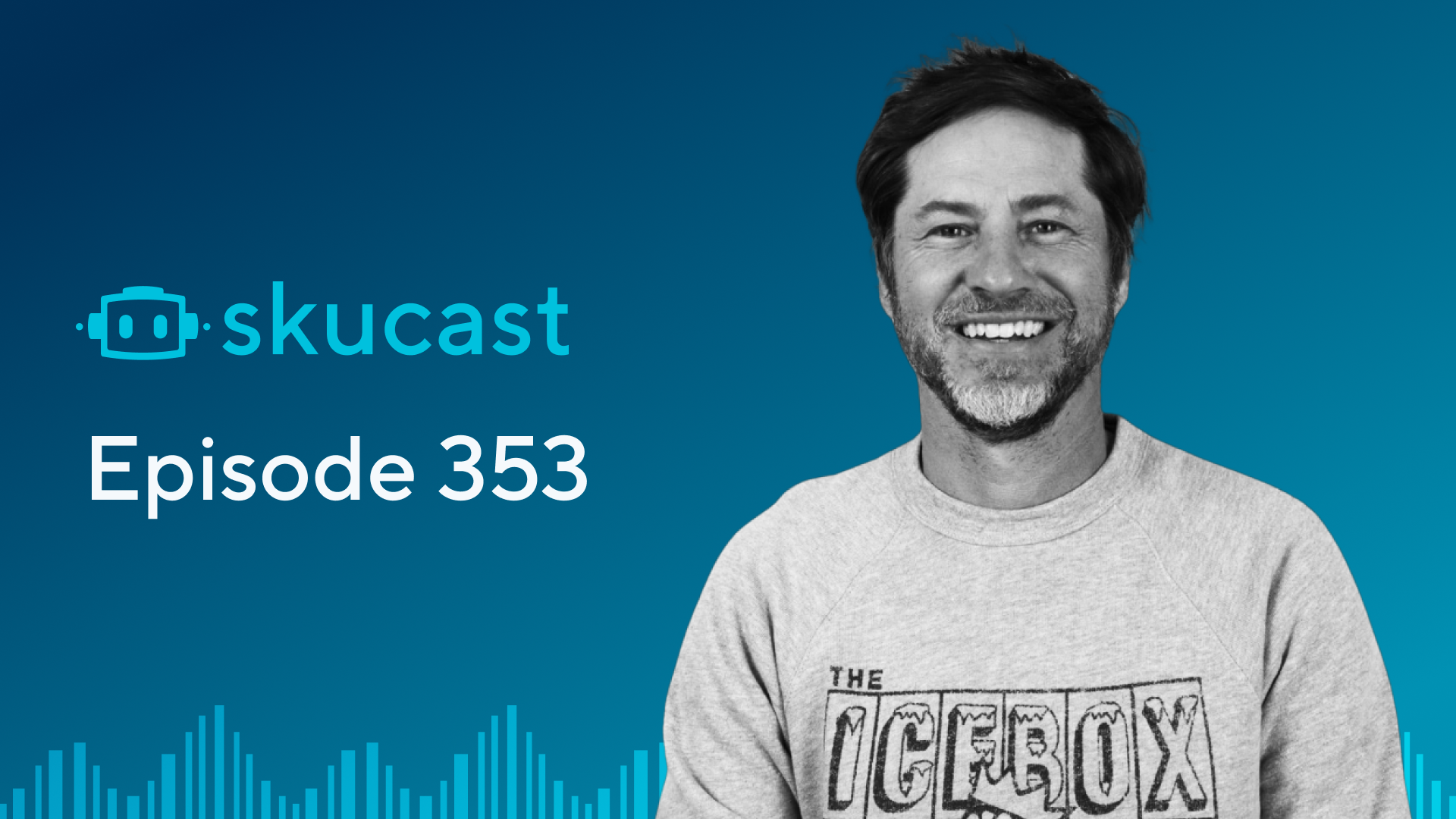
Episode 353: Growth Through Chaos with Scott Alterman (The Icebox)
No video selected
Select a video type in the sidebar.
Everyone talks about perseverance, but Scott Alterman and the team at The Icebox have the battle scars to prove what it really means.
What happens when a Top 50 promotional products distributor gets hit with a ransomware attack harder than COVID? When clients fragment their RFPs across multiple vendors? When the very definition of speed shifts from two-week quotes to same-day responses?
Scott Alterman, Chief SWAG Officer and co-founder of The Icebox, knows exactly what happens. You reinvent yourself. Again.
For nearly 25 years, The Icebox has been one of the most vibrant brands in promotional products. Based in Atlanta with 140 employees and 150,000 square feet of warehouse space, they've built a reputation for creative excellence and program business that serves powerhouse brands like Delta Air Lines, Microsoft, Google, and Buffalo Wild Wings. But the journey to becoming a leading branded merchandise agency wasn't just about growth—it was about surviving setbacks that would sink most companies and emerging stronger each time.
In this conversation with commonsku's Bobby Lehew, Scott pulls back the curtain on navigating unprecedented challenges, shifting from custom at-once business to program-heavy inventory models, and why speed has become the only metric that matters.
The Customer Fragmentation Nobody Talks About
Here's what's changing fast: major brands are intentionally splitting their programs across multiple distributors. Where The Icebox once competed to be the exclusive partner, they're now winning RFPs and capturing only a portion of available business.
It's strategic diversification driven by tariff volatility and supply chain uncertainty. Clients want comparison pricing and backup options when costs suddenly shift 20-30%. Scott gets it from the client's perspective—it's smart risk management. But it fundamentally changes the game for distributors who built businesses assuming that winning meant owning the category.
The Icebox is adapting by becoming more targeted in business development. They know which clients they serve best and go after those accounts with precision.
Inventory vs. POD: Picking a Side
The Icebox isn't ignoring print on demand. They're plugging into POD supply chains where necessary and building better Shopify integrations. But they're doubling down on their original model: real inventory on shelves, ready to ship.
Why? Because speed still wins. Nothing beats inventory when a client with thousands of locations needs product everywhere, yesterday. POD has its place for eliminating dead stock risk, but when you're managing a uniform program for a national restaurant chain, inventory delivers what POD cannot: true speed at scale.
This is the Amazon effect Scott references repeatedly. Business buyers are consumers now, trained to expect same-day fulfillment. The Icebox can't compete with Amazon's freight leverage, but they can stock the right products for their clients and ship with remarkable speed.
When Ransomware Hits Harder Than COVID
The Icebox experienced something worse than the pandemic: a ransomware attack on their third-party provider. COVID was universal—everyone understood delays. A cyber attack isolated to your business? Customers were sympathetic at first, then increasingly less so.
Scott describes it as the hardest period in their 25-year history. The team went manual on everything just to keep servicing customers, with people going above and beyond in ways he won't forget. What could have destroyed the company instead forced an accelerated software transition they'd been considering.
Today, they're back in growth mode with lessons earned through adversity. After a few tough years of surviving, growth feels exciting again.
The commonsku Connection
The Icebox needed software that could handle enterprise complexity without breaking their workflow. For Scott, the value goes beyond features. Mark and Catherine come from the industry and understand the nuances—the weirdness—of promotional products. Newer software providers jumping into promo don't get why this industry is complex. They think it's just t-shirts and hats.
The results are tangible. The Icebox sales team now delivers consistent customer experiences regardless of rep. Quotes look professional and uniform. Reorders happen faster. Reminders keep teams on top of annual events.
Most importantly, commonsku helps organize sales leadership and individual reps to manage their days more efficiently. For a company built on incredible people and culture, giving those people better tools amplifies what already makes The Icebox great.
What 25 Years Teaches You
Scott gets genuinely excited talking about AI strategy, new decoration technologies, and emerging product trends. NFC chips. Wellness apparel with anxiety-relief technology. The gap between retail trends and promo used to be years—now it's closing rapidly.
Why? Major retail brands have entered promotional products. Brands The Icebox couldn't offer five years ago are now available, and clients want them. Access to these brands combined with faster trend cycles means distributors need to stay current with retail in ways they never did before.
After 24+ years, Scott still finds it exciting to come to work. That's the mark of someone who's found the intersection of passion and business viability.
What Our Chat with Scott Reveals
The Icebox's story isn't about avoiding challenges—it's about using challenges as catalysts. Scott's most proud of building a team that grinds through obstacles, takes lessons from setbacks, and grows stronger.
Modern promotional products distribution requires mastering contradictions: speed and precision, inventory and flexibility, technology and relationships, enterprise scale and personal touch. The companies thriving today don't choose between these things—they excel at all of them.
The Icebox chose to lean into program business when staying in custom work would have been easier. They invested in software transitions during crisis when conserving cash would have been simpler. They're embracing AI while staying true to the culture that's always defined their brand.
After nearly 25 years, The Icebox remains one of the most vibrant brands in promotional products. Not because they avoided tough times, but because they used those times to become something better.
Show Notes: Key Timestamps & Topics
[00:02:14] How customers have transformed over years
[00:03:15] Shifting from at-once to programmatic business
[00:06:07] Client fragmentation: splitting RFPs across vendors
[00:07:52] Surviving ransomware (harder than COVID)
[00:10:27] The Icebox today: 140 employees, 25th anniversary approaching
[00:11:53] POD vs. inventory: why stock still wins
[00:15:10] commonsku partnership and customer experience
[00:20:22] Scott's evolving role as founder
[00:24:33] AI strategy and emerging technologies
[00:25:38] Retail trends closing the gap with promo
🎙️ Read Full Episode Transcript
[00:00:00] Music Intro
[00:00:06] Bobby: Everyone says they've got a growth mindset, but Scott and Jordy and the team at The Icebox, they've got the scars to prove it. Today on the skucast, we're talking with Scott Alterman, one of the co-founders at The Icebox, about what it takes to lead, reinvent yourself, and continue to rise as one of the most respected creative companies in promo.
[00:00:26] Welcome to the skucast, the podcast for innovators and maverick thinkers in the promo space. I'm Bobby Lehew. I'm glad you're here. Scott Alterman has been building The Icebox for over two decades. He's a screen printing guy who went all in on program business, a product expert who's watching retail trends catapult the merch space faster than ever, and maybe most importantly, a leader who actually knows how to build culture through chaos.
[00:00:50] We talk with Scott about how the customer landscape has shifted into a new form of fragmentation, what speed really means when your customer wants everything now, POD and why maybe inventory still wins over print on demand, especially if you know what your customers actually need, and how to adopt new tech while staying nimble and moving fast.
[00:01:00] Today's episode is brought to you, courtesy of us at commonsku. Over 900 distributors powering 1.8 billion in network volume rely on commonsku's connected workflow. Process more orders, connect your team, and dramatically grow your sales. To learn how, visit commonsku.com. Now here's my chat with Scotty.
[00:01:28] Scott Alterman, I cannot believe I get to talk to you on the skucast today.
[00:01:33] Scott: Yeah, I'm excited.
[00:01:35] Bobby: I am too. You spoke at one of our very first skucons, man. Do you remember that?
[00:01:40] Scott: I think it was like the second one or something like that.
[00:01:43] Bobby: It was the second one, yeah. It was sort of the first big one that we did.
[00:01:48] Scott: Yeah, that's true.
[00:01:50] Bobby: And my gosh, we're talking about several years now of that. I remember us talking at the speaker dinner that night and we were talking about kitting and fulfillment projects. So we're gonna get into all kinds of things like that. We've got all kinds of places we're gonna talk with Scotty about, so hang on, strap in. He's one of my favorite people in the industry for all kinds of reasons, but you're about to discover why.
[00:02:14] First thing, I'm just gonna get right out with it. What's changed about The Icebox? And so that folks will know, you and I haven't talked in a while. One refrain I'm picking up from a lot of distributors is how customers have changed. So what's changed with you and your work with customers over the past, say, five years or so that's really been dramatic?
[00:02:35] Scott: You know, it is the customers that are driving our change. Obviously we're constantly trying to reinvent when we need to and differentiate all the time. But I would say the business landscape is just so different. People want everything faster. There's a lot of new offerings.
[00:02:53] For us specifically, the last time you and I talked, we were doing heavier on the at-once side, the custom side of the business, with a lot less on the programmatic side. And we've flip-flopped that. COVID kind of—I don't wanna say forced us, but post-COVID, we look a lot different really just because of how that all played out.
[00:03:15] Our company now is much heavier into inventory and storefronts and contractual business. We actually miss a lot of the at-once business, and we're trying to reinvigorate it. But we went all in during the mask craze and those wild days, and we've kind of stayed in that realm, even by our own choice. It's just kind of how the business shifted.
[00:03:47] Bobby: You already have such a creative bent toward your business at The Icebox, and so you moved to program business. Did you find that shift sort of created that functional aspect of it? It was important and that led to probably some big program business. But you're trying to make sure you still keep your creative edge with that, because some of that drop ship is done in that creative capacity.
[00:04:14] Scott: Yeah, we always lead with creativity. But I will say that it was just more circumstance than anything. We were scared of program business, I should say. Inventory can kill, as we all know. And I've learned some tough lessons over the years. But it's kind of true what they say—it's tougher business, it's stickier business. So from that standpoint, it's nice.
[00:04:36] It has led us to some really big accounts. And then obviously there's that at-once business that can go along with that. So it's not like we're not doing at-once business, but the type of customers we were running into 10 years ago is different. Some of that by choice, some of it not. I think in our own business development, we are a lot more targeted on who we wanna go after now. That's changed a lot for us.
[00:04:57] Bobby: Speak more about this client change, because I'm hearing a lot from distributors about how far more complex the client is now. Even from two or three years ago, speed has amplified, customization, transparency, data. Which of those seem to matter most? If you had to stack rank them yourself in terms of what's changed about the client's needs the most?
[00:05:16] Scott: I think data is a big one for us. They all want better reporting, they want to have their own dashboards, those sorts of things. It's all changed. The products are changing. The trends are changing.
[00:05:30] A big change that you didn't bring up, but I'll add it, is it used to be when we were in an RFP, we were vying for pretty much all the business and to be their kind of exclusive guy, certainly on the uniform side of business. What I'm finding now is a lot of companies, the bigger ones particularly—and this we're experiencing on existing clients where we're playing some defense, and we're getting some opportunities to get some market share in other situations—but they're kind of dividing it up now. You've got these power brands that might want two or three providers. So they're going out to RFP and they may split the program.
[00:06:07] I'm assuming that's based on all the tariff stuff and the volatility in pricing. It's kind of caused a flurry of RFP business. All of a sudden we got very busy trying to win new business, but possibly sharing it. It's a little weird, but I totally get it from the customer standpoint.
[00:06:27] Bobby: I see. So instead of—you and I have been at this a while, and in the day there was a big trend for a while where corporations were consolidating departments, consolidating their spend and going through fewer and fewer providers. What you're saying now is they've actually fragmented that RFP process. Do you find them actually choosing multiple partners in the same category, or are they still splitting these categories differently?
[00:06:51] Scott: In some cases they're picking a couple people doing the exact same thing, kind of as a diversification play and a hedge.
[00:06:57] Bobby: Wow.
[00:07:01] Scott: And a comparison, you know. I get it. Like I said, it kind of makes sense, but it's hard.
[00:07:08] Bobby: Yeah, that's so hard. Do you see—there's a couple of other major trends happening here with the supply chain complexity, the cost pressures, but POD—as someone who's had screen printing in your roots for a long time... But let's pause for a minute. Give us a feel for where The Icebox is at today in terms of employees, or if you're comfortable, revenue—whatever you're comfortable sharing for us to get an idea of the scope.
[00:07:38] Scott: So it's interesting. The last few years, or even really since COVID, we've struggled. We've had a lot of wind in our face. Everyone experienced COVID, but shortly thereafter—I don't even know if you know this, Bobby—but we experienced a ransomware cyber attack.
[00:07:52] Bobby: Oh, no.
[00:07:53] Scott: Not directly on us, but our third-party provider was attacked. And that was harder than COVID for us, because COVID was happening to everyone, but this was isolated to us. I know a lot of people go through it, but we felt helpless and locked out of our own business. And our customers were super cool for a period of time, and then they were kind of not. And we couldn't really get them straight answers because it wasn't directly on us.
[00:08:18] So to answer your question, we're now today through all that. We're back in growth mode, but we've had a few tough years in a row with some wind in the face. And that's kind of where you learn the most. It's tough lessons, but thankfully we had cyber insurance, so we've spent a lot of time having to deal with some of that.
[00:08:35] We've had to reconcile a lot of things that we went manual on just to service our customers and get back up and running. And we had some just phenomenal contributions by our team—people going so above and beyond, being innovative in a really scary time. I won't forget those lessons and those people and those solutions that we were able to build.
[00:09:00] That's been a brief snapshot of where we've been over the last few years. Again, that was a couple years back now, but it took us over a year to get our head above water. It was something I wouldn't wish upon anyone.
[00:09:11] But it actually forced us to do a software transition, as you can imagine. We weren't incredibly comfortable with the future and the direction and the volatility. So we went out and unfortunately we had kind of started that process and we were going slow, and we had to really expedite it. And that's been a learning curve and some pain and some money and a lot more time than you imagine, like everybody tells you.
[00:09:33] But happy to say we're kind of fully transitioned onto a new platform and we're riding the bike now, but we don't really know how to ride it yet. So it's been, you know—and commonsku has been a part of that new solution for us on the front end. So we can talk more about that as well. But we look very different than we used to look for a lot of the reasons I've just spoken about.
[00:09:58] But we're a growth-minded company. I've always said if you're not growing, you're kind of dying, in my opinion. I'm ecstatic that we're all in on the biz dev side. We've got a lot of activity going and it feels more fun again for us.
[00:10:16] Bobby: Yeah, one of the most vibrant brands in the industry for sure. And my gosh, man, what a setback. Thanks for being vulnerable and providing that feedback. How many employees now do you have?
[00:10:27] Scott: Oh, 140-ish. We've been flat to down the last few years for the reasons I mentioned.
[00:10:32] Bobby: Sure. Yep. Okay, that's the context.
[00:10:34] Scott: And we started probably at this point in 2001. So next year is our 25th anniversary.
[00:10:43] Bobby: Congrats.
[00:10:44] Scott: For 22 and a half of our 25 years, we've always grown. So it feels funny. There's these plateaus where you try to get to the next evolution of maturity, economies of scale and scalability. We've got to grow up. We've got a lot of cultural DNA that kind of is what makes the place great and special, and it's also what's tough to break out of.
[00:11:12] Bobby: Yeah. I want to get to commonsku and the front-facing side of that in a minute, but I want your take on POD in particular. So when I ask distributors today what are some of the biggest challenges, they'll typically name three. They'll name how complex the client has gotten from a creative standpoint—you guys already had this in your wheelhouse, so it's not a problem for you. They're coming in with high demands on the creative side. Number two is, of course, just constant supply chain problems, but we've always had supply chain problems in this industry. And number three, POD is creating an interesting world right now. As someone who's had screen printing baked into their business, how do you feel about POD in particular?
[00:11:53] Scott: You're having to play the game, reluctantly. I'm not sold that—there's a place for it, obviously, and it is the trend right now. And I think everyone's dealing with inventory overages and challenges with dead inventory. Those are the sorts of things that obviously made it come about.
[00:12:12] So there is a place for it. But in the world we live in, we're doing it where we have to, but we're still almost doubling down on the original model just because of our machinery and our customers. And we still believe that having product on the shelf adds a lot of value.
[00:12:28] So we're plugged into the supply chain and some of the partners that are doing it. We're actually kind of late to the game. We're doing a few, literally like as we speak, that are a little more connected and integrated with Shopify and things like that.
[00:12:40] I'm not a tech guy, you probably know, but we've got people here trying to figure it out, because we've done a lot of our own version of print on demand, but there's kind of better ways to do it now. So that's one of the silver linings of it coming about—tapping into the supply chain for help there. And the hope is that we're gonna find a better way to do it than we have had to. It'll be a blessing.
[00:13:05] Bobby: Yeah, I totally agree. You and I both leaning heavy into program business and inventory—there's just no faster way than inventory. And when you see what Amazon has led the charge in terms of the expectations from the consumer and the buyer—the consumer is the business buyer now—they've driven expectations. Now they have expectations around same day delivery. That's just gonna keep getting faster, whether it's drones or whatever—Walmart's testing with drones with delivery.
[00:13:30] So my point being, while the industry's having this POD conversation, we're still missing out on this inventory conversation that can still respond faster to these needs than POD.
[00:13:44] Scott: That's kind of our sales pitch. When we're talking to big clients, if there's a program where it makes sense, let's talk about it, but let's talk about the value of having it on the shelf and ready to ship. When you have thousands of locations, you're a restaurant or a corporation with offices and you need it all over the place, the time it takes to—you know the nuances of the industry. So there is still a good place for inventory.
[00:14:01] And you're right about Amazon. Everyone now wants it yesterday. They don't understand that Amazon has a little heavier freight leverage than The Icebox or the industry. So we are having to have some of those conversations. It's making everybody better, but it's also making the industry tougher than ever, especially with the climate of all the other political stuff and the tariffs and sourcing and speed.
[00:14:32] I will say, you asked earlier what's changed—I answered with data as kind of the main thing for us that is very commonly talked about. But speed is another one. Everyone needs it faster than ever. And that's not just the product, that's the quote, everything. Speed wins. The more responsive you can be and the faster you can respond and the faster you can turn around, that's part of the game for us.
[00:15:00] And that's where I think sometimes we have to break out of our old patterns of "oh, that used to be two or three weeks" or "we could take three or four days." It's just the Amazon effect, like you said.
[00:15:10] Bobby: Is the speed equation and the demand from customers part of the reason to get into the commonsku conversation? Is the speed equation part of the reason why you came on board with commonsku?
[00:15:19] Scott: I think it's more just the overall customer experience and the overall Icebox employee experience. Everything from our own order entry and transparency and internal visibility to external communication and visibility, and consistency.
[00:15:35] We had a lot of sales reps and it's kinda like if a customer comes in, they may get a very different experience. Our goal was to make it as similar as you can, given that different reps are gonna have different personalities. But as far as how the quote comes to you and the lead time it takes to build the quote and the look and feel of the quote—some people were sending decks and some people were going to ESP.
[00:15:55] I think it's really helped us offer a more consistent deliverable to our customers and a better customer experience.
[00:16:03] We've known Mark and Catherine forever and wanted to do business with commonsku just because we like doing business with good people like you and the team. But it just never made sense. And I think commonsku has gone through some changes over the last few years that have opened up for the more complex distributors. It's been a fit that we can kind of plug into our overall strategy. And we're excited about where it can go, because we're kind of still in the early innings.
[00:16:35] Bobby: Yeah, true. And speak to that a little bit, because folks may not know what we're talking about. Working with commonsku, suddenly as an enterprise customer, you realized you needed something to really make this deal work, and a lot of this had to do with open access. Can you speak to that a little bit—why that was such a big linchpin for you?
[00:16:54] Scott: We're trying to build—without going completely custom—best in class in the front end, best in class in the back end, and even in some connectivity on the e-commerce side. Sometimes that takes a little bit of creativity and getting various products to play nice together.
[00:17:10] I think we reached out to Catherine and just kind of explained where we were, and it was good timing finally. In the past it wasn't that we didn't wanna be on commonsku, it just didn't really play nice with our other system at the time—just the integrations and the ability to talk. My team kind of spoke with the right team at commonsku and we figured we could build something together that in time can really be kind of best in class in lots of areas. And it's been a journey.
[00:17:47] Bobby: Yeah, what's the impact so far? One of the things that you mentioned—I wanna pause for a minute and just talk about client experience. Because you and I have been at this long enough to know that back in the day, if you did program business, you were unique. And today everybody's doing program business. Everybody's doing fulfillment, pick and pack. There's a lot of people playing the game now.
[00:18:02] And if there was one differentiator in the world, it's creative, it's customer experience. And you mentioned to your team that this is a better experience for just your Icebox team. Can you speak to that a little bit, what you've already seen in terms of improvements with your team?
[00:18:19] Scott: It's the ability to reuse. The speed to do a reorder. The reminders, the reporting that we can run that says, "Oh, don't forget about this event that we sold last year." And beyond that, just organizing our sales leadership and our salespeople to kinda manage their day a little more efficiently in lots of different ways. That's what I'm seeing out of it.
[00:18:45] Bobby: Yeah, I think the fact that you've always had your hand on your culture... And this is what we're seeing with bigger teams. It's funny, the folks that come to commonsku are typically sales teams who go, "That looks like an elegant solution to our problem. Let's try and do that." So it's kind of built for sales teams, which worked out great for commonsku because as the customers became more demanding, this team model became more important to work with customers. And commonsku was sort of built for this team sales model, which we're seeing a lot of complimentary benefit from.
[00:19:16] Scott: And Mark and Catherine come from the industry. I've said the word "nuance" a couple times in the first 10 minutes of the conversation. There's a lot of complexity and a lot of weirdness about what we all do. And some of us are willing to promise different things within the industry.
[00:19:30] To have people that can relate to that—like when you talk to some of these newer folks jumping into the software side, they don't get it. And I tell people when I hire them, I know you think it's just t-shirts and hats, but there's a lot to this and there's a lot of moving parts. Having people that understand that is a huge benefit.
[00:19:50] Bobby: Yeah, it's big. Thank you for that, man. Let's talk a little bit about your own personal journey as a leader. This is a hard thing to talk about if you're a leader, but you're leading a much bigger operation now. You've always sort of been a bigger operation, but how has your role changed? You and Jordy have been business partners for a while. How has the role changed? You've recruited this incredible top-tier talent on your leadership team—and those are just folks that I have access to. I'm sure the rest of the team is that way too. But how has your role changed?
[00:20:22] Scott: Our people—we've always kind of promoted from within and not necessarily gone out and gotten specialists. And that's good and bad because it's a career path for some of our employees, but you gotta learn the hard way a lot of times.
[00:20:35] But the evolution of my own role is changing to today. I find myself—and this is a good thing because it's a credit to our people—but I dip my toe in a lot of different areas and I'm sure I annoy the heck out of a lot of our senior leadership. But at the same time, that's because I don't always know what I should be doing.
[00:20:55] I'm really best at sales, but with the cyber attack and with the new system, someone from an ownership level had to kind of keep an eye on some of those things. Jordy and I have a very similar skillset. He is much more on the sales side. He's in biz dev. He's a people guy. He's internally a people person. He's shaking hands and kissing babies with customers.
[00:21:15] So it felt best for him to stay there while I kinda shifted around and did some other things. And it's been challenging because I'm not great at it. There's people who know far more than me, but I know the business and I know the history and I know the culture. So to have a seat at the table is nice.
[00:21:35] And I gotta walk in limbo a little bit around finding the balance of trusting our people that know more than me and then trusting my own instincts to guide the direction of the business.
[00:21:46] Bobby: Yeah, that makes a lot of sense. And with your role—we find this with a lot of partnerships, that they end up choosing these particular lanes and they're almost always the same thing you mentioned in terms of client focus and then sort of ops side of things. It's so funny because you both as owners of the business are very client focused. I think that's what makes The Icebox so great. You've always been obsessed about the customer experience. I've been in your warehouse, I've been at your facility. You've sort of always been a legend in my mind. But what are you most proud of having built at The Icebox so far?
[00:22:16] Scott: A group of people that just grind through challenges. Because we're entrepreneurs, we're pushing the boulder uphill, and we get smacked in the face with COVID and a ransomware attack and supply chain challenges. And it never stops.
[00:22:35] What I'm most proud of is that we are continuing to kind of just persevere through all that, take our lessons and try to learn from them, and building a business that can grow through all of those challenges. And also letting other leaders kind of take the reins.
[00:22:51] We try to empower our people. There's times where I'm certainly accused, and rightfully so, of being a Monday morning quarterback. Jordy has the same tendency. We can come in on the back end, as anyone can, with the beauty of hindsight. But the team is so strong now to where it's nice to be able to jump in where I kind of want to.
[00:23:10] During the last few years, I've dipped into some areas of the business, but because now I feel like we're in a better spot, I'm a little more free to kind of roam around and jump in where I see fit. And that's fun and challenging and a work in process for me.
[00:23:28] Bobby: Yeah, that's great, man. Founders—obviously you've built an amazing leadership team and that takes a lot of hard work, just recruiting the right folks and hiring the right folks for that, and then empowering them to do the job.
[00:23:40] I'm laughing a little bit too because Mark Graham is now a little bit of a chief provoker as well, right? So he just pops in and out as a founder. Yeah, for sure.
[00:23:49] What about—there's so much in this industry. Because you and I know how difficult it can be to work with the complexity of the clients that we're working with, particularly on the program side. As you look down the road at the industry, what excites you the most about where the industry is headed and what we're doing?
[00:24:06] I'll start because I've had a lot of time to think about this. I have never seen merch have a higher perceived value than I have now. That's sort of driving my enthusiasm around the business. You as The Icebox have always been a creative brand. Creativity has always been a part of your DNA, it never was not a part of your DNA.
[00:24:25] But that's my excitement, a little bit from the sidelines. But you're in the game and you're one of the head coaches. What are you excited about where the industry is going?
[00:24:33] Scott: AI. I think it's gonna change so many things. And I know you know a lot about it, you've presented on it. But we're kind of in the early stages of our own strategy with it. I want us to get out of the local AI world and get into the strategic corporate level of understanding the right tools.
[00:24:50] And that's a fast change. It's like technology. We don't even know what we don't know yet, so it's hard to—sometimes we can chase down some paths that lead to dead ends. But I'm very excited about AI.
[00:25:00] I've always been a products guy, so the new decoration stuff that we're jumping into is super exciting. We're doing a lot of activation work for customers. It's exciting. There's a lot of trends in product itself. This NFC—people call it NFT, some people call it NFC depending on the chip or the technology or whatever. But just being able to take a customer to a landing page, to a social media platform with your phone through product. A lot of those sorts of things are current trends.
[00:25:28] There's trends in product in every space, really. The wellness space with the heavier anxiety-related apparel, the apparel that helps with anxiety.
[00:25:36] Bobby: That stuff is crazy.
[00:25:38] Scott: What's happened in my eyes is that we used to kind of trail behind retail by several years and we could always just be late to what's really out there and be early in our space. Now that gap is really closing.
[00:25:52] So many retail brands have jumped into the arena since we first started, that we now have access to, which is its own exciting deal. And all of a sudden, "Oh my God, now we can sell this brand or that brand." And that's what people want.
[00:26:05] So between the Amazon effect and our products changing at the speed they have, and now with this AI piece, it is exciting to come to work still. And that's in a time where it's easy to get burned out after 20-plus years of doing this stuff at times, you know.
[00:26:16] Bobby: Yeah, man. I'm so glad you brought up the product trends. I had this earlier in my notes to ask you about because you are a product guy. And I'm so glad you touched on some of these trends because those are really exciting.
[00:26:28] You know how I feel about AI. I am very pro AI and what can be done, and I'm like you—I actually feel this renewed energy because you have this interesting confluence of events. Like you said, you have speed and creativity coming together at the same time. And what we can do creatively with AI is now far more important than we think. But more on that at another time.
[00:26:55] Scotty, this has been phenomenal, buddy. Thanks for taking time to visit about this. We really enjoy watching your journey. I know it's been at times a tough slog, but you guys have always been a brand that I've admired. I have so much respect for you, and you know that—not just because you're here on the show, but I've seen you guys and worked with you a little bit behind the scenes at one time. So this is really cool to watch.
[00:27:13] Scott: And like I said earlier, it's about the people. And the fact that we're able to do some business together now—I was a little jealous of some of the other guys in our little network that had a longer time with y'all. And now we get to jump in at a time where both of us have big growth plans and our own brands to continue to evolve. It's super exciting, and I love that we can catch up like this. It feels like we hadn't missed a beat.
[00:27:38] Bobby: I know, man. So good. Thanks Scotty. We'll talk to you again soon, I hope.
