
 For Owners
 For Sales
 For Production
 For Finance
 Presentations
 Shops
Shops
 Product Mockups
 Client Portals
 Product Search
 CRM
CRM
 Decorator Matrix
 Suppliers
 Navigation & Dashboards
 Production Management
 Reports & Analytics
 Essentials
 Advanced
 Enterprise
 Customer Stories
 Events
 Blog
Blog
 eBooks
 Podcast
 On-Demand Webinars
 ROI Calculator
 FAQ
FAQ

The AI Promo Brief: Issue #14


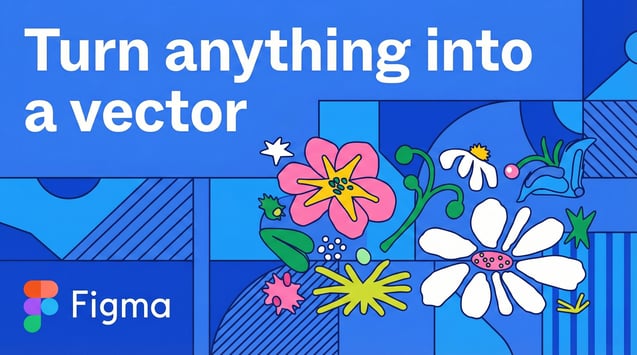
Promo Pros Rejoice: Figma’s Raster-to-Vector is Your Power Move
You know when that client sends you a JPEG with a dozen colors for art and you’re supposed to use it for your 3-color spot logo? Well, Figma just quietly solved one of your most annoying headaches. Their new feature converts raster images to editable vectors and gives you tight control over color output, right inside Figma. That means faster logo cleanups, quicker mock paths, and fewer “we need a better file” back-and-forths that stall approvals. Pro move? For AI-forward promo shops, it’s a perfect partner for AI-generated concepts: ideate wild layouts with your model of choice, then snap them into vector reality without a full Illustrator workout. This isn’t just a neat design trick; it’s minutes shaved off every proof, multiplied across every client, all year.

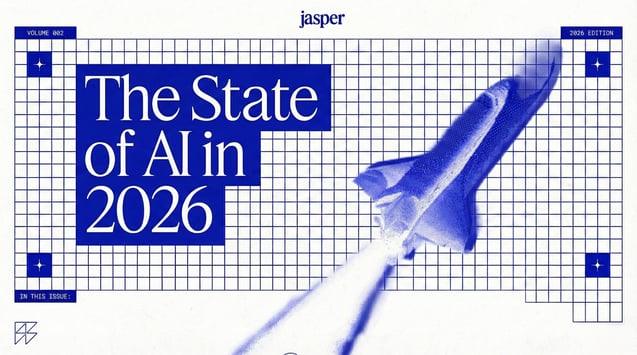
Are You Actually as AI-Ready as Your Clients?
Kara, our SVP of Marketing, is always dropping some brain snacks in our team’s slack channel and this one is crucial for distributors working with clients, it’s Jasper’s latest report, “The State of AI in Marketing 2026”, reads like a wake-up call for anyone still treating AI as a side project. It charts how AI has moved from “let’s test a tool” to “this runs the campaign,” with teams shifting budget and headcount toward AI-assisted content, performance optimization, and experimentation at scale. For promo leaders, the signal is clear: brands now expect partners who can plug into AI-driven marketing ops, not just ship boxes. The report pushes hard on governance, measurement, and training, which maps directly to distributor reality: you don’t need 20 tools, you need three that everyone actually uses—and a plan. Treat this as a benchmarking mirror: where does your AI maturity honestly land on Jasper’s curve?

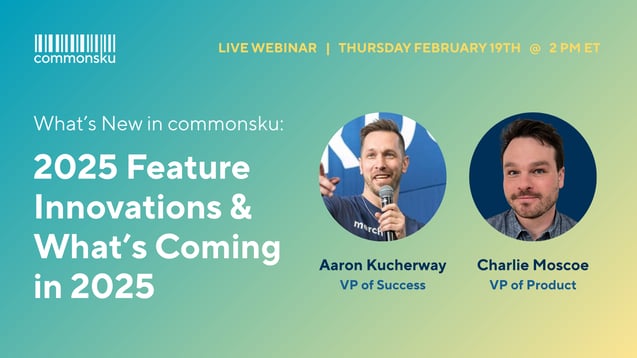
What Dropped & What's Coming!
Ready to squeeze more juice out of commonsku in 2026? Join Aaron Kucherawy (VP of Customer Success) and Charlie Moscoe (VP of Product) for a tactical walkthrough of the biggest feature innovations from 2025—plus a sneak peek at what's coming next. Quick wins, workflow upgrades, and a transparent look at our roadmap. Thursday, Feb 19 at 2 PM ET. Reserve your spot here.
This one's exclusive to commonsku customers. Not one yet? Let's chat.


Big Drops This Past Week: Codex vs Opus: Choose Your AI Workhorse
This week, OpenAI and Anthropic both dropped major model upgrades—GPT 5.3 Codex and Opus 4.6—giving you two powerful AI workhorses to choose from, each with its own strengths. When big stories like this hits all at once, the media gets really noisy, which is why we love Every’s comprehensive breakdown. In “GPT 5.3 Codex vs. Opus 4.6: The Great Convergence”, Every’s team stress-tests both models on real engineering tasks and finds they’re converging in capability—but with different personalities. Opus 4.6 shows a higher ceiling and more creativity, especially on ambiguous, open-ended builds, while Codex 5.3 comes across as the reliable grinder: a bit less spectacular, but faster and more consistent on long, complex tasks. For promo teams, that maps neatly: use an “Opus-type” model for concepting new client programs, packaging themes, and campaign hooks, and a “Codex-type” model for automation work. The smart play isn’t picking a winner; it’s assigning each model to what it’s best at.
Why OpenAI’s Frontier Matters More Than Another New Model
OpenAI Frontier is basically the moment AI stops living in a chat window and starts living inside real tools. Think Salesforce-style CRMs, ServiceNow-ish ticketing, Workday-type HR systems—the boring-but-critical stuff that actually runs their business. Frontier lets companies drop AI “coworkers” directly into those systems so agents can read and write records, file tickets, move deals, update billing, and follow real approval flows, not just draft emails on the side. Frontier isn’t another shiny model; it’s the wiring that makes AI show up where your work, and yes, we’re keeping an eye on the developments here!

🧠 Cool prompt hack from Machina: spin up a fresh Opus 4.5 chat, dump your entire project brain into it, and ask Claude to "ask me 5." Instant briefing machine that finds the gaps you missed.
👁️ Every.to argues your taste is trained pattern recognition—and when AI can generate 200 options in seconds, the person who picks the right one wins. That's your edge, promo pro.
👻 SaaS isn't dying—it's going invisible. Former Microsoft exec Steven Sinofsky says software is disappearing into experiences so seamless you forget it's there. Sounds familiar? That's our whole M.O.
🔀 Perplexity's Model Council runs your question through multiple top AI models at once, blends the answers, and shows which model did what. No more guessing which chatbot to trust.
🏈 The OpenAI vs. Anthropic Super Bowl beef is juicy: one bets you'll pay for privacy, the other bets you'll tolerate ads. The TV spots are hilarious. The implications? Less so.
🤝 Agent teams let multiple AI agents split a big task and work separate pieces at the same time—like assigning different jobs to different people on your crew.
🫶 Anthropic CEO Dario Amodei says AI is in its awkward teenage years—powerful but still figuring out responsibility. His essay "The Adolescence of Technology" is worth the read.
📣 Your exclusive commonsku roadmap preview drops Feb 19 at 2 PM ET—the features you missed and the ones coming next. Customers, save your spot.
RELATED RESOURCES
